


Filter by Categories
The Coming Anglo-American Crisis
CGG Weekly by David C. GrabbeA palpable sense of impending doom hangs over the nation, as it seems to unravel at the seams and spiral out of control. Political leaders pursue their own agendas, disregarding the welfare of those they claim to represent. The wealthy and powerful continue to amass more wealth and influence, indifferent to the struggles of the common person unless it poses a threat to their convenience. National borders erode, and cultural clashes create intense friction rather than the seamless integration often promised. Debates on once-unthinkable topics dominate public discourse, intensifying the sense of crisis. Many wonder silently how much longer this chaos can persist, instinctively knowing the answer: not long. Something must give, leaving unanswered questions of how much time remains, how severe the fallout will be, and what the nation will become in the aftermath. Historical patterns reveal that societies often cycle through predictable phases, including a Crisis period of chaos and existential threat. Currently, the Anglo-American peoples stand at the brink of what has been termed the Millennial Crisis, the seventh iteration of this cycle. Past Crises have brought massive economic hardship and total war, a daunting prospect given today's advanced weaponry. Six times before, these peoples have rallied and sacrificed to overcome enemies and hardships, ensuring national and cultural survival. However, this seventh crisis carries a critical difference: God is largely unwelcome on the Anglo-American side. Secularization has deepened, with public acknowledgment of the Creator barred in many spheres since the 1960s, and the consequences are already evident. The Creator, who has blessed this nation beyond any other due to His promises, has been rejected, and those who trust in Him are often scorned. Without God's presence, the chances of emerging intact from this crisis are slim, especially if the nation views Him as an adversary.
Crisis? What Crisis?
CGG Weekly by Richard T. RitenbaughIn the context of global events, it is striking to consider the mounting economic woes of nations like China, where the question arises: If this isn't a crisis, what would a crisis look like? Historical cycles suggest that major crises descend on English-speaking peoples with regularity, approximately every 80-100 years, once in every four generations. Since the last significant crisis occurred during the Depression and World War II, another major crisis looms on the horizon. Yet, many fail to recognize past crises, such as the Cold War, which, despite the absence of direct battlefield confrontations, was a real war marked by dangerous political games and arms races. This period kept nations on a war footing for decades, highlighting how crises can unfold without widespread acknowledgment. Taking a step back to view the broader picture of world affairs is essential to understand the true nature of current and impending national crises. Key questions must be asked: Where are the real points of conflict in the world? Who are the antagonists, and what are their aims? How stable is the world's economy? How are major alliances configured, and are they shifting? What is the true spiritual, cultural, political, and financial condition of significant nations? Such a perspective helps in regaining bearings as the world moves toward the coming crisis and beyond.
The Present and Future Crisis (Part Two)
Sermon by John W. RitenbaughThere is a crisis of potentially huge proportions that already exists and appears to be building toward the biblically prophesied crisis at the close of the age when Christ returns. We are in an economic circumstance where threatening clouds, described as an economic perfect storm, have gathered but have not yet unleashed their deluge of economic woes. Key factors include a record and growing demand for oil, the world's most important non-renewable resource, combined with an historically low supply and little hope for substantial increase, alongside political instability in oil-producing states such as Saudi Arabia, Iraq, Nigeria, Venezuela, and Cameroon. Additionally, the deficit and debt in the economy of the United States, the world's largest consuming nation, trigger inflation, leading to rises in interest rates and eventually deflation. At the storm's vortex, in the climax of these elements, will be war. This critical situation in the modern world's economic condition is evident as information regarding the world's oil supply and demand becomes known, along with the resulting impact on the American economy. The potential for conspiracies among those in seats of power in modern nations like America, Britain, and France, whether in the economy, education, media, or military, cannot be ignored. Such conspiracies often involve multinational elites in corporate business, banking, and media, pushing toward globalism or a New World Order, driven by secularism and anti-God sentiments. These powerful groups, informed of crises like the oil shortage decades ago, have developed plans to secure their survival and extend their power, often at the expense of the powerless. The driving forces behind this national crisis include survival and greed, with leaders pursuing carnal wisdom for their own benefit, not for the establishment of God's kingdom. Their vision, global in scope, aims to maintain and expand control over those who may survive, sometimes through extreme measures. Despite internal divisions and competition, world affairs are gradually moving in a direction orchestrated by satan, the great conspirator, toward a confrontation with God. It is essential to remain vigilant as events worsen, preparing both physically and spiritually to face the challenges ahead.
Distress of Nations
Sermonette by Clyde FinkleaBefore Christ's return, we will see dramatic signs in the heavens, while on earth distress of nations and uprisings will be symbolized by roaring waves.
The Present and Future Crisis (Part One)
Sermon by John W. RitenbaughOur nation faces a looming national crisis driven by the critical dependency on oil, a resource that underpins the Western world's high standard of living. The war in Iraq and the rising cost of oil-derived products are interconnected events that significantly impact the quality of life and cost of living. Without cheap oil, the lifestyle we know could unravel swiftly, affecting everything from farming to transportation, hospitals to household goods. Oil powers one-third of the world's energy for lighting, fuels the machinery of agriculture, and is essential for fertilizers, medications, and plastics. A sudden cutoff would halt planes, trains, trucks, and buses, making food scarce in supermarkets and potentially shutting down essential services. The concept of Peak Oil, when a nation can no longer meet its oil demand internally, is already a reality for the United States, which reached this point in 1971 and has since relied on imports. Globally, 51 oil-producing countries have peaked, with only 16 yet to do so, but their peaking dates are imminent due to rising demand, especially from industrializing nations like China and India. The United States consumes 25% of the world's oil production, and China's demand is projected to match this within five years, straining global supply further. Saudi Arabia, despite claims of vast reserves, may have far less than reported, with their major field possibly lasting only 61 days if solely relied upon to meet world demand. Their Peak Oil date is now estimated at 2011, just seven years away, intensifying the crisis. This scarcity drives international tension and conflict, as seen in the U.S. presence in Iraq, motivated by securing the world's second-largest oil reserves. Nations are maneuvering in anticipation of diminishing supplies, engaging in a frantic competition for remaining resources, which explains global anger and the seeds of war. New oil discoveries are plummeting, with none found in 2003, and even a massive new reserve would only delay the inevitable by two years due to soaring consumption rates. Geologists predict that worldwide demand will permanently outstrip supply as early as late 2005 or mid-2006, with the last barrel potentially gone by 2029, accompanied by skyrocketing prices due to declining crude quality and refining costs. Economically, this crisis is the precursor to broader turmoil, with inflation and heavy indebtedness already emerging as consequences of war and resource scarcity. The U.S. government's deficit is staggering, spending over $1.37 billion daily beyond its budget, sustained only by foreign investment in treasury bonds. If these investors withdraw, the economy could deflate rapidly, dwarfing past depressions. Rising crude prices are already inflating consumer goods costs, threatening industries like airlines with bankruptcy and causing job losses. Food prices may soar due to transportation costs, and the government is unlikely to prioritize civilian needs over military demands for oil, hinting at future rationing reminiscent of World War II. In the face of this economic storm, characterized by record oil demand, low supply, political instability in oil-producing regions, and massive U.S. debt, we must act with diligence. The crisis is not yet at its peak, but it approaches like a freight train, demanding preparation. We cannot rely on external aid but must take responsibility to weather the coming challenges, recognizing that the quality of life may drop tremendously if these warnings prove true.
The European Financial Crisis
'WorldWatch' by David C. GrabbeAs the world's recession deepens and the United States struggles financially, the notion that a united Europe, led by Germany, will swiftly replace America as the dominant economic power is flawed. Europe faces its own severe financial crises, with major institutions suffering massive write-downs and losses comparable to those in the U.S. The eurozone's unemployment rate surpasses that of the U.S., and smaller countries, previously boosted by low interest rates, now face bursting economic bubbles, exemplified by Spain's real-estate collapse and soaring foreclosure rates amidst a 14.4% unemployment rate. European housing markets, overheated beyond those in the U.S., await painful price corrections. The central role of banks in Europe's economy, closely linked to businesses, means that banking losses quickly drain funds essential for business operations, amplifying the crisis. The European Union's fragmented structure, with 27 diverse economies and bureaucracies, hinders a unified response to the crisis. The European Central Bank lacks the authority to set comprehensive financial policy, merely adjusting interest rates, often benefiting some nations while harming others. During recent eurozone meetings, nationalism prevailed over solidarity, with no Europe-wide solutions offered, leaving each nation to fend for itself under guidelines that can both help and hinder. Designed for prosperity, the EU and its institutions falter in crisis, deferring to individual capitals like Berlin and Paris, unable to act cohesively or even establish a founding document. Despite expectations, Germany declined a proposed economic government role that would have positioned it as the eurozone's leader, unwilling to sacrifice national sovereignty or bear the financial burden of supporting weaker economies. Compounded by vulnerability to a resurgent Russia wielding natural gas as a weapon, forcing individual energy deals, Europe is neither united nor immune to the market forces and weaknesses of the fractional reserve economy it shares with the U.S. Currently, Europe is not poised to rise, nor is Germany positioned to assume effective leadership while tied to a struggling eurozone economy.
The Handwriting is on the Wall (2017): The Fourth Turning
Feast of Tabernacles Sermon by John W. Ritenbaugh (1932-2023)In the cycle of generational turnings, the fourth turning, termed the crisis, aligns with the harshness of winter and marks a period of intense national distress. This phase, lasting approximately 20 to 25 years, is characterized by significant governmental and economic challenges, though not a full depression. The nation faces fiscal difficulties, with the government claiming greater federal tax monies, federal marshals enforcing orders, tax rebellions, and the beginnings of a constitutional crisis. These issues are already underway, reflecting a persistent inability to resolve the crisis due to a lack of character and will among leaders to issue necessary directives. Additionally, this crisis period includes predictions of terror attacks on the nation involving an airliner and a building, alongside an increase in international military responses. The nation finds itself entangled in conflicts abroad, unable to extract itself due to the quality of leadership lacking resolve. Economic disasters involving Wall Street institutions and federal budget impasses leading to stalemates further compound the crisis, as evidenced by past financial crashes that nearly overwhelmed the system. An eco-environmental malaise emerges, with the Centers for Disease Control announcing the spread of new communicable viruses, leading to quarantines and relocations. This health crisis builds rapidly, exacerbated by poor handling of national health problems. Internationally, growing anxiety surrounds anarchy in former Soviet Republics, with Russia emerging as a significant concern, alongside predictions of alliances with Iran, soaring gold and silver prices, and escalating global military responses. The breakdown of trust within the nation, established by earlier generations, is torn down during this fourth turning. Internal divisions and cultural shifts towards individualism further erode national unity, with no positive resolution foreseen until the emergence of the next generational high. The influence of globalist agendas and the resistance to strengthening the nation independently highlight the deep-seated challenges of this crisis period.
Every Which Way But Up
CGG Weekly by David C. GrabbeThe aftermath of Katrina has exposed the raw carnality and human nature within the nation, revealing both the worst and the best in people's hearts. Calamity uncovers what lies within—violence, theft, and destruction, or charity, kindness, and service—though the international media has highlighted more of the former than the latter. The shouting and blamestorming that followed have magnified the existing strains, tensions, and worldviews, with accusations flying between leaders and groups, each pointing fingers at the other. Amidst this cultural noise, few voices have turned to God, though His mercy is evident in how Katrina's impact was less severe than it could have been, downgrading from a Category 5 to a Category 4 before landfall and avoiding a direct hit. The destruction of the vital New Orleans port complex, crucial for global agriculture and industrial trade, was narrowly averted, sparing a greater threat to the world's food supply and industrial imports. This calamity serves as a warning, a foretaste of greater challenges for an unrepentant nation, reflecting a pattern of God's dealings in which He seeks to draw His people back to Him through such events.
September 11 One Year On
CGG Weekly by Richard T. RitenbaughA year after the tragic events of September 11, 2001, America reflects on a national crisis that initially united the nation in shock, grief, and patriotism. The country rallied with a surge of support, helping, giving, and praying, standing behind plans for retaliation against terrorism. Yet, now, the nation seems to have returned to normalcy, with only tightened airport security and reduced freedoms as lingering evidence of change. God declares in Amos 3:2 that America, identifying as a Christian nation with pervasive religious symbols and practices, is held to a higher accountability for its iniquities. He questions if two can walk together unless they are agreed, implying a disconnect due to sin, as a righteous God cannot align with a sinful nation. Further, in Amos 3:6, He challenges whether calamity in a city is not of His doing, especially among a people claiming closeness to Him, asserting that disasters are divine interventions meant to provoke fear and awareness of danger. In Amos 4:6-12, God highlights that America has missed the meaning behind recent disasters, including famine, drought, epidemics, and natural crises, intended as wake-up calls for repentance and revival of true worship. He laments that the nation has not returned to Him. Despite the profound impact of September 11, a Barna Research Group poll from September 3, 2002, reveals that 90% of Americans report no lasting impact on their religious beliefs, indicating spiritual complacency. The solution lies in seeking good over evil to live in alignment with the LORD God of hosts, as urged in Amos 5:6, encouraging individual commitment to return to God's path even if the nation as a whole does not heed the divine warning.
Preparing for Bad Times (Part 2)
Sermon by John W. RitenbaughGod does not promise His children an easy path through national crises, economic downturns, or natural disasters. A prudent person foresees potential dangers and takes steps to prepare, while the unprepared suffer the consequences. History and current indicators suggest that economic booms do not last forever; a crash is inevitable, and signs point to its nearness. The massive indebtedness of governments and individuals must be reckoned with, as power and wealth concentrate in the hands of a few selfish individuals who will likely intensify their control. Such concentration often leads to upheaval, whether economic, political, or even violent conflict between nations, bringing confusion, interrupted business, job losses, depleted savings, and potential social unrest. Due to global interconnectedness, a crisis in one region will impact a larger portion of the world than ever before, affecting commerce and daily life on an unprecedented scale. A specific looming threat is the Y2K computer problem, which poses a serious risk to economic stability and societal function. This glitch, stemming from early computer programming limitations, causes systems to misinterpret dates beyond 1999, potentially leading to widespread failures in critical infrastructure. Experts warn that this issue could slow productivity, increase inflation, and trigger a recession, with estimates of its economic impact ranging from minor disruptions to catastrophic global consequences. Costs to address this problem are staggering, potentially reaching trillions of dollars worldwide, and many companies and governments are unprepared due to procrastination, lack of resources, or underestimation of the issue. Critical sectors such as utilities, communications, transportation, and banking face significant risks, with potential disruptions to electricity, water, phone services, food deliveries, and financial systems. While some progress is being made, the readiness is uneven, and smaller entities and government departments lag behind, risking major breakdowns in social services and regulatory functions. The scope of this national crisis is vast, and its effects will likely be felt unevenly across regions and industries. God warns that calamity will touch the entire nation, and no area will be entirely safe from its impact. As part of this broader chastening, individuals must take responsibility to prepare, evaluating their circumstances and setting aside emergency supplies. Storing food and maintaining paper records of important documents are practical steps to mitigate potential hardships. Keeping a relationship with God as the first priority, seeking His guidance, and trusting in His direction are essential during such times of uncertainty. Preparation, both practical and spiritual, aligns with God's way of foreseeing and addressing challenges before they fully manifest.
Struggling to Coexist
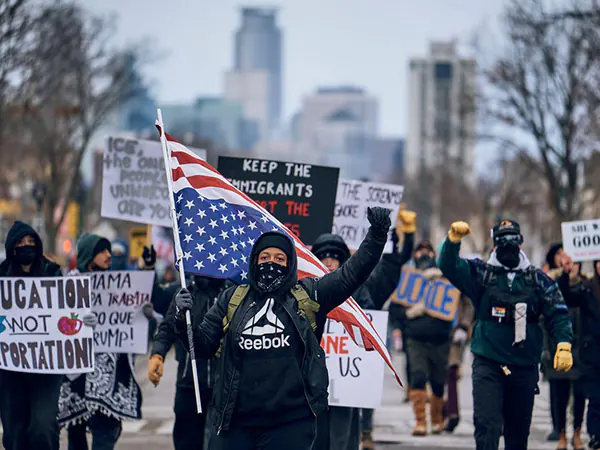
'WorldWatch' by Joseph B. BaityAmerica finds itself once again in the midst of great civil turmoil in 2026, with debates designed purely for division and no easy compromise in sight. Radical elements on either side of these debates show less concern for coexistence and more for a staunch refusal to coexist at all. The assassination of Charlie Kirk and the attempted assassinations of President Trump highlight the root issue: compromise is welcome only if the other side concedes. There is less talking and more shouting, with few willing to consider opposing viewpoints. The lines are drawn primarily between Nationalists, who desire a traditional approach to governance with defined borders, laws, values, private property, and American sovereignty, and Globalists, who seek to blur national borders, promote unfettered immigration, diminish private property, and abandon traditional values and national sovereignty. From 2021 through 2024, America faced an unsustainable influx of illegal immigrants, with an estimated eleven to twenty million crossing the southern border, facilitated by globalist-leaning politicians. This has cost billions in taxpayer dollars and uncovered widespread fraud within the immigration industry, allegedly benefiting those same politicians. The current White House, while escalating acrimony with unrestrained attacks on the political left, is determined to deport as many illegal immigrants as possible and investigate the alleged fraud, increasing animosity from the opposition while allies demand persistence. American people, both well-intentioned and less informed, join the fray in growing numbers, with financial and political support fueling a prolonged clash. Politicians and media, claiming to ease tensions, only stir more unrest. Fierce clashes occur on America's streets between the United States Border Patrol (CBP), Immigration and Customs Enforcement (ICE), and illegal immigrants alongside their political and civilian allies. Several states, including Minnesota, Washington, California, Illinois, New York, and Oregon, and cities like San Francisco, Chicago, Boston, New York City, and Minneapolis, have declared themselves sanctuaries for illegal immigrants, obstructing ICE's deportation efforts in defiance of the administration. The political vitriol is deafening, lawsuits are mounting, and calls for violent upheaval grow louder. State and federal courts and legislatures grapple with what some call the greatest Constitutional crisis since the Civil War. Observers question whether America is approaching a point of no return, potentially heading toward another bloody Civil War, with some believing this is the desired outcome of Globalists to weaken America for their international goals. Others declare globalism dead in America. The unresolved question remains whether Americans possess the will for a protracted, bloody conflict to settle political differences, or if cooler heads will prevail.
Panicked Yet?
CGG Weekly by Richard T. RitenbaughAmerica faces a purported national crisis with the economy teetering on the brink, prompting the U.S. government to propose a $700 billion bailout for quasi-governmental mortgage lenders Fannie Mae and Freddie Mac. Details of this plan remain unclear and in flux, with potential outcomes including a massive governmental takeover of the financial sector, limited oversight of the Treasury Secretary driving the effort, and minimal accountability for those responsible for the situation. Urgency from leaders to act immediately often masks whether a crisis is as severe as claimed or entirely fabricated. Similarly, the health care crisis is presented as dire, with claims that forty million Americans lack insurance, necessitating government intervention to provide it for free. However, a closer look reveals that only about twelve million are involuntarily uninsured, a far less critical number. This so-called free health care would burden the American taxpayer, potentially increasing taxes by as much as 20%, following models like Canada's, where families pay about 48% of their income in taxes, with a significant portion funding health care. Additionally, government-run systems often lead to diminished service quality, long waiting lists, rationed care, and bureaucratic inefficiencies that stifle innovation. Regarding the economic crisis, questions linger about its true nature and the hidden costs or political agendas behind the bailout. Concerns arise over whether this will create another unwieldy bureaucracy, if lawmakers will add extraneous debt and regulation, and whether the government can oversee better than the market. The involvement of Fannie Mae and Freddie Mac in the housing market, by restricting investors with stringent loan conditions, is actually prolonging the crisis rather than resolving it. Time will reveal if this financial turmoil is genuine or a contrived calamity to consolidate power or shield responsible parties, but the escalating rhetoric of fear among the populace is evident, potentially leading to hysteria and panic.
America's Imminent Perfect Storm
CGG Weekly by Richard T. RitenbaughIs there a leader in the wings who will have the fortitude to face the coming crisis? Perhaps there is, though it appears that he has not shown his face in public.
What Does It Say?
CGG Weekly by Richard T. RitenbaughWhat does it say about a nation that lacks both the heart and the leadership to stop itself from committing suicide? God says we are headed for a fall.
What's the Endgame?
Commentary by Richard T. RitenbaughLeaders will use crises to consolidate their power and further their agenda. The real devastation may occur after the coronavirus runs its course.
Fukushima: Aftermath and Implications
'WorldWatch' by David C. GrabbeHistory shows that an energy crisis can strike at the very core of Japan's existence and cause it to respond in dramatic ways to guard its energy lifeline.
The Handwriting Is on The Wall (2003)
Feast of Tabernacles Sermon by John W. RitenbaughEven as Paul admonishes us about the night being far spent, we must make careful and judicious use of our time in anticipating the return of Jesus Christ.
The Reset
Sermonette by Joseph B. BaityThe World Economic Forum, has been conspiring for years to establish a globalist New World Order, revamping all the world's institutions.
The Handwriting Is on the Wall (2005)
Feast of Tabernacles Sermon by John W. RitenbaughThe family is under savage attack, with more and more children born out of wedlock. With the destruction of the family, we are witnessing the death of the U.S.
The Patterns of God
Sermon by John O. ReidIn the unfolding of end-time events, the Seven Seals mark a critical sequence of divine judgments as depicted in Revelation. The opening of the first six seals reveals escalating catastrophes that set the stage for the trumpets. The first seal unveils a white horse, symbolizing a false Christ and deceptive religion, initiating the beginning of sorrows with misleading miracles. The second seal brings forth a red horse of war, stripping peace from the earth through global conflicts. The third seal introduces a black horse, representing famine, with ruined vegetation and contaminated water supplies following in war's wake. The fourth seal releases a pale horse named Death, accompanied by Hades, bringing widespread destruction through sword, hunger, death, and beasts, affecting a fourth of the earth. The fifth seal reveals the persecution of the faithful, with the souls of martyrs crying out for justice, indicating a time of intense opposition to God's truth. The sixth seal triggers cosmic disturbances—a great earthquake, a blackened sun, a blood-red moon, falling stars, and a sky receding like a scroll—causing terror among all people as they hide from the wrath of the Lamb. The seventh seal, when opened, ushers in a profound silence in heaven for about half an hour, signaling the gravity of the events to follow. This silence precedes the sounding of the seven trumpets, each heralding further divine judgments upon the earth. The first trumpet brings hail and fire mixed with blood, destroying a third of the trees and all green grass. The second trumpet sees a burning mountain cast into the sea, turning a third of it to blood, killing a third of sea creatures, and destroying a third of the ships. The third trumpet causes a great star to fall, poisoning a third of the rivers and springs. The fourth trumpet darkens a third of the sun, moon, and stars, diminishing light for both day and night. The fifth trumpet releases locusts from the bottomless pit, tormenting those without God's seal for five months with unbearable suffering. The sixth trumpet unleashes four angels bound at the Euphrates, leading a vast army of two hundred million to kill a third of mankind through fire, smoke, and brimstone, yet survivors still refuse to repent. These seals and trumpets collectively portray a crescendo of divine wrath, culminating in the ultimate correction of humanity, leading to the final trumpet that heralds the return of Jesus Christ and the establishment of His kingdom.

The Time of Jacob's Trouble
Sermon by David C. GrabbeThe curses of Leviticus 26 and Deuteronomy 28 are warning shots over moral decay and national sins. Jacob's trouble will force a total reliance on God.
A Dry and Weary Land
Commentary by Martin G. CollinsDrought has perennially been evidence of God's displeasure toward people who have blatantly forsaken Him for false gods.
The Second Exodus (Part Three)
'Prophecy Watch' by David C. GrabbeAt some point in the near future, the modern descendants of Israel will learn of their true identity—and have to face the consequences of that knowledge.
A Time for Thanksgiving (2008)
Commentary by John W. Ritenbaugh (1932-2023)Modern Israel seems to have great difficulty managing money because of an addiction to greed. Wealth, without a powerful character, is a destructive drug.
Everywhere But Up
Commentary by Joseph B. BaityWestern society is looking to technology, medicine and government for solutions to its seemingly unsolvable problems, looking everywhere but up.
The Unshakable Kingdom!
Sermon by Martin G. CollinsBecause all things will be violently shaken, God commands His people to place their trust in the unshakeable Kingdom of God which will displace all empires.