


Filter by Categories
The Momentum of Sin
Sermonette by Joseph B. BaityBoth David and Eve failed to slow down the momentum of their carnal lusts. The momentum of sin is dangerous, especially when the consequences appear to be far away.
The Offerings of Leviticus (Part Six): The Sin Offering
'Personal' from John W. RitenbaughThe concept of sin's penalty stands at the heart of the distinction between the sweet-savor offerings and the sin and trespass offerings. Unlike the burnt, meal, and peace offerings, which portray devotion without reference to sin, the sin offerings exist because sin has been committed, and God, though merciful, takes no satisfaction in sin itself, which He regards as abominable. The order in which the offerings were actually performed at the altar—sin offering first, then burnt offering—reveals that a perfect sin offering must precede any acceptable devotion before God, since sinful humanity cannot approach Him through flawed works. This mirrors how believers first learn that Christ died for their sins before appreciating the perfection of His life. Atonement, as applied to the sin and trespass offerings, means expiation or payment for a legal debt, since the wages of sin is death and God's broken law demands a life. The offerer's hand laid upon the animal symbolized the transfer of guilt, so the animal's death represented the sinner's judgment being paid vicariously. This foreshadowed Christ, who, though sinless, became sin for humanity, bearing the penalty and being cut off from God so that justice might be satisfied. Because He was judged in the sinner's place, those who are in Him are already judged and free from the death penalty. The requirement that sacrificial animals be without blemish underscores that only a flawless substitute could adequately represent Christ's sinless life, since any imperfection—visible or hidden—disqualified an offering. Yet no animal, regardless of purity, could truly pay for human sin, for a human life is of far greater worth than a beast; only the infinite value of the Creator's life could satisfy the debt owed for all mankind's sin, once for all, unlike the repeated, insufficient animal sacrifices that only reminded people of their guilt. This payment carries lasting obligation: forgiveness through Christ's blood does not abolish the requirement to keep God's commandments, and sinning without appreciation for the price paid risks the danger of the unpardonable sin. God's justice is portrayed as unbending—even His own Son was not spared the full penalty, being led outside the camp and suffering separation from the Father, as reflected in His cry, "My God, My God, why have You forsaken Me?" This forsaking illustrates the seriousness of the penalty Christ bore in the sinner's stead. Through this once-for-all sacrifice, reconciliation with God becomes possible, and believers are called to proclaim both the reality of sin and the completeness of its remedy. The sin offering, therefore, is not merely a ritual lesson but the very means by which access to God, fellowship, and spiritual life are restored, established permanently by the blood of Christ rather than through repeated, inadequate animal sacrifices.
The Sin of Self-Deception
Sermon by John W. RitenbaughThe consequence of departing from God's truth emerges as a central warning woven throughout the account of Jeroboam and Israel's history. Though God does not execute judgment immediately, Ecclesiastes 8 makes clear that delayed punishment does not mean absent punishment; rather, because the sentence against evil is not executed speedily, the heart of man becomes emboldened to continue in wrongdoing. This same deception ensnared Adam and Eve, who became convinced that disobedience would not truly result in death, and when death did not fall instantly, their confidence in escaping consequence only grew—yet death and other evils did eventually come upon them. This principle applies directly to Israel's trajectory under Jeroboam. His political innovations—new worship centers, non-Levitical priests, and an altered feast—constituted a small initial departure from God's commanded way, yet this small crack, like the first fracture in a dam, eventually burst into full idolatry and Sabbath-breaking, the very sins for which the nation was ultimately judged and sent into captivity. God mercifully intervened, giving Jeroboam miraculous signs and a direct call to repentance through a man of God, demonstrating that He does not passively watch a person's decline without appeal. Yet Jeroboam refused to turn back, and every subsequent king—Nadab, Baasha, Zimri, Omri, and Ahab—continued walking in "the sin of Jeroboam," until God finally rejected Israel and delivered them into captivity in Assyria. Jeremiah 17 deepens this understanding by revealing that the deceitful, tortuous heart is what drives people to evade truth and break faith with God's word, weakening their trust that His commands are truly reliable and that disobedience carries real cost. This mirrors the reasoning that persuaded Adam and Eve to distrust God's warning in the Garden. Jeremiah 17:10 affirms that God searches the heart and gives to every man according to his ways, establishing that there is individual accountability with no possibility of hiding, even when spiritual leaders themselves speak falsely. Those who trust in man and depart from the Lord are compared to a shrub in the desert that cannot grow, and their names are described as written in dust, destined to blow away, in contrast to those who trust in the Lord and flourish like a tree planted by the waters. Ultimately, the consequence facing Israel—and any nation, church, or individual who forsakes God's way—stems not merely from the failures of leaders like Jeroboam but from the willingness of the people themselves to embrace convenience and evasion over obedience. Jeremiah 5 captures this reality starkly: the people "loved to have it so," even though such love for deception invites the very penalty they hoped to avoid. The lesson stands as an admonition that yielding to God's truth in faith, though it may prove costly in the moment, is what secures genuine prosperity and life, whereas evasion of that truth—however reasonable it may seem—inevitably leads toward the very penalty of sin that Scripture repeatedly warns against.
Innocent Victims?
'Personal' from John W. RitenbaughThe penalty of sin stands at the center of a discussion that begins with everyday tragedies—tornadoes, shootings, explosions—where victims are commonly called "innocent." Ecclesiastes 9:11-12 confirms that time and chance happen to all, and death can fall suddenly and unexpectedly on anyone. Yet a closer examination of Scripture reveals that no human being is truly innocent before God. Ecclesiastes 7:20 and Psalm 14:2-3 declare that there is no one who does good, no one who is just, for all have turned aside and become corrupt. Since Romans 6:23 states that the wages of sin is death, God, as Sovereign Ruler, has the right to execute or permit that penalty upon anyone at any time, and in doing so He remains perfectly just. Several biblical incidents illustrate this principle with dramatic immediacy: God struck down Aaron's sons for offering profane fire, killed Uzza for touching the ark, and caused Ananias and Sapphira to fall dead for lying about their offering. In each case, sin was directly and swiftly connected to death, showing what God has every right to do at any moment. The only real difference between these dramatic judgments and other seemingly random tragedies is the time lag—God can rightfully claim any life for unrepented sin. Jesus reinforced this truth in Luke 13:1-5, using the deaths of the Galileans killed by Pilate and the eighteen crushed by the tower of Siloam to teach that all sinners are equal in their guilt. He rejected the notion that those who died violently were worse sinners than others, warning His listeners that they too would perish unless they repented. This teaching exposes a human tendency toward extremes of judgment: either declaring tragic victims wholly innocent or assuming they deserved death because of exceptional wickedness—both attitudes falsely implying one's own righteousness. The heart's deceitfulness, described in Jeremiah 17:9-10, compounds the problem, since people convince themselves that "little" sins are harmless or that God's mercy excuses casual disobedience. Yet Hebrews 4:12-13 and Psalm 139 affirm that God sees and judges the intents of the heart, discerning whether sin stems from weakness or deliberate self-centered indulgence. Because all have sinned and deserve death, forgiveness comes only through God's graciousness and the sacrifice of Jesus Christ, granting entrance into His sin-free presence. This grace must not be taken casually. Each individual bears personal responsibility to stop sinning, since no government or other person can do it for him. The call, rooted in Amos 5:14, is to seek good and reject evil in order to live, fighting sin as seriously as God regards it, since a sinner remains as unwelcome in God's Kingdom as the devil is unwelcome in holiness.
Should We Ignore Our Feelings of Guilt?
Bible Study by Martin G. CollinsMany try to undermine the credibility of Scripture. If they can overturn it, they reason, they will be free to have all the fun non-Christians supposedly have.
Biblical Principles of Justice (Part One)
Sermon by Richard T. RitenbaughAll authority for law and justice resides in God; when God is taken out of the picture, darkness and chaos dominate. God's laws create a better life and character.

Playing With Fire
Article by John O. ReidSolomon uses the analogy of taking fire to his bosom or walking on hot coals to describe sinning. In particular, he warns against sexual sins.
The Traditions of Men
Sermonette by Craig SablichChrist did not end the law, but fulfilled the law, providing a lasting pattern for His saints to follow. We have a responsibility to seek biblical proof.
Don't Cherry Pick God's Law
Feast of Tabernacles Sermon by Kim MyersWhile many people like some of God's laws, they like to pick and choose, preferring a blend of their own preferences with some of God's laws added in.
Genesis 3:16: Consequences for Eve
Sermon by Richard T. RitenbaughSpiritually, male and female have equal potential. Rights and legalities are far less important than spiritual development, subject to God-ordained gender roles.
God Is Preparing Us For the Kingdom
Sermon by Kim MyersToday, the church is experiencing more overwhelming trials than ever before, indicating that God is preparing His people for the end time.
Acts (Part Fourteen)
Sermon/Bible Study by John W. RitenbaughThe people of Lystra and Derbe mistake Paul for Hermes and Barnabas for Zeus. When Paul convinces the crowds that he and Barnabas are not gods, they are rejected.
Jesus in the Feasts (Part Four): Atonement
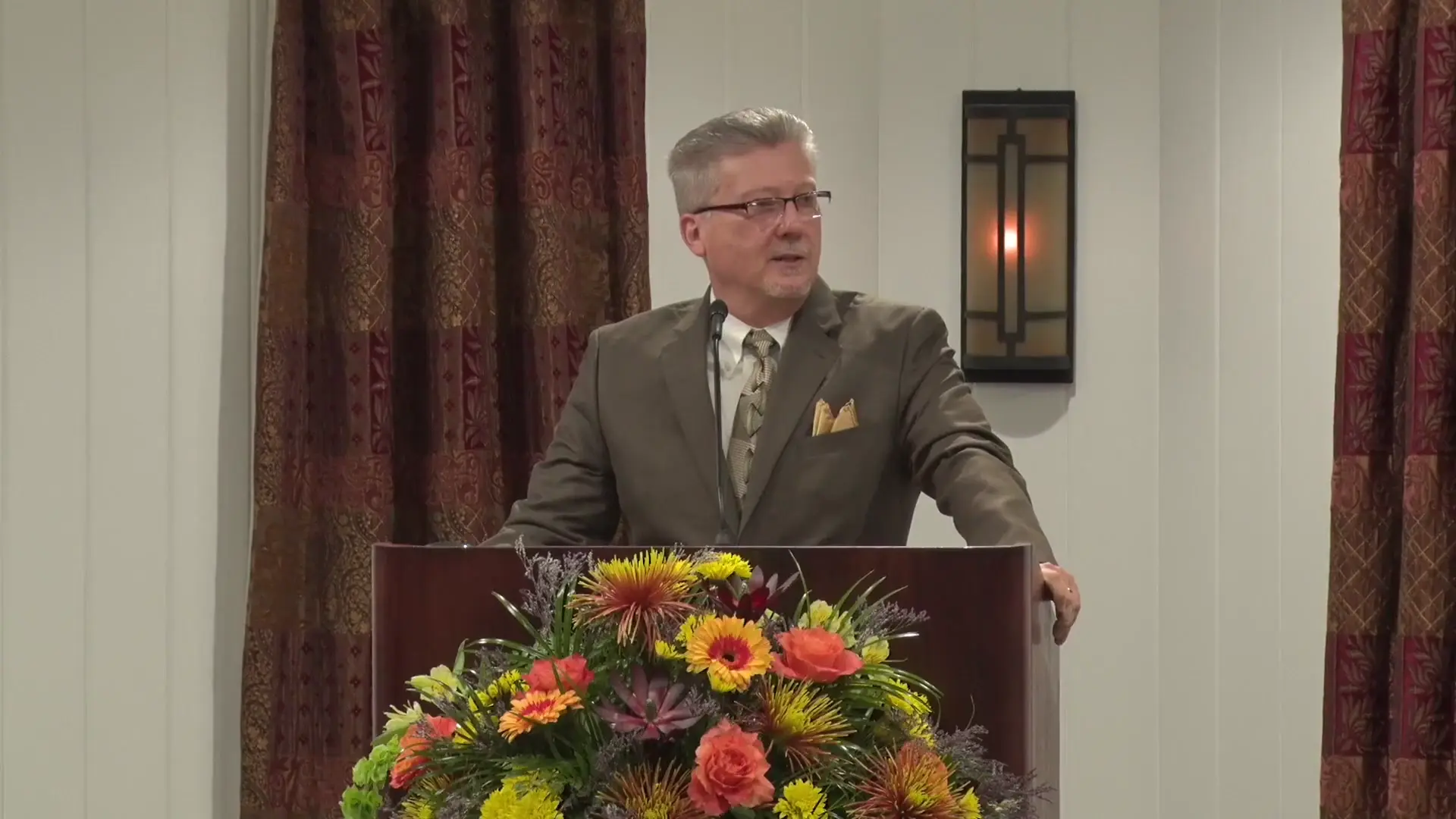
Sermon by Richard T. RitenbaughIsaiah 53 and passages from the New Testament substantiate Christ's dual role in shedding His blood and bearing away sins, thereby reconciling humanity to God.
Elements of Judgment (Part Four)
Sermon by John W. Ritenbaugh (1932-2023)We need to learn to judge in a godly manner, putting merciful restraints on our tendency to condemn or jump to conclusions. One size does not fit all.
Benefits of the Third Resurrection
Feast of Tabernacles Sermon by Richard T. RitenbaughThe Lake of Fire (Second Death or Third Resurrection), dreadful as it initially appears, produces both immediate as well as ultimate benefits or good.
Biblical Principles of Justice (Part Two)
Sermon by Richard T. RitenbaughAre we ready, at this stage in our spiritual growth, to apply chapter and verse all the biblical principles that apply to a case?