


Filter by Categories
God Is Writing His Law
Sermonette byGod promises to write His Law on our hearts and minds. When we experience the consequences of our or others' sins, we learn the depth of how bad sin is.

Was God's Law Nailed to the Cross?
'Ready Answer' by Earl L. HennMany people point to Colossians 2:14 to argue that Christ nailed God's law to the cross, claiming that the handwriting of requirements refers to the law that was against us and that Christ abolished it. However, a careful examination reveals that Paul is not referring to the law itself but to the record of our transgressions—our sins. In the context of verses 11-13, Paul discusses our justification through Christ, explaining that through repentance and baptism, our sins are forgiven, and we are made alive with Him. The phrase "handwriting of requirements," translated from the Greek "cheirographon tois dogmasin," refers to a note of debt or guilt we owed due to our sins, stemming from a past way of life governed by worldly standards. By His death, Christ wiped out this debt, taking it out of the way and nailing it to the cross, as symbolized by His body bearing our sins. Far from abolishing God's law, Paul emphasizes in Romans 7:12 that the law is holy, just, and good, and David in Psalm 19:11 highlights its value as a warning and a source of great reward. Thus, Colossians 2:14 affirms the profound truth of justification, showing that our Savior paid the debt of our sins, allowing us to live a new life of righteousness and service to Him.
Our Need for God's Law
Sermonette by Austin Del CastilloThe present breakdown of social order, evident in the collapse of morality among leaders and the rejection of biblical standards in society, mirrors a deeper spiritual problem that has infiltrated God's own congregations: the abandonment of God's law. Mainstream Christianity teaches that Christ's crucifixion abolished God's law, replacing it with grace and mere belief in Jesus, allowing believers to remain unchanged while still expecting salvation. This idea, though widespread, is not biblical and stems from an ancient ideology called Gnosticism, a philosophy holding that the physical universe is evil and only special knowledge (gnosis) can free the divine spark within humanity to return to a purer spiritual realm. Gnosticism teaches that the physical world, and therefore God's law governing it, was created by a lesser, invalid authority, giving rise to antinomianism, the rejection of God's law, often placing law instead under human authority to be manipulated at will. This philosophy predates Christianity, tracing back through Hellenistic influence to Plato, and is suspected to have been set in motion by Satan after the sin of Adam and Eve. Its influence explains the origin of ideas like the immortal soul and the notion that law was nailed to the cross, and it is precisely this Gnostic corruption that the apostle Paul confronted in Galatians and Colossians among believers who carried Hellenistic Jewish thinking into the Church. Scripture itself refutes this rejection of law by demonstrating its own consistency and completeness. Jesus affirmed that "the scripture cannot be broken," and Paul taught that all Scripture, including what is called the Old Testament, is inspired, profitable, and able to make one wise for salvation through faith in Christ. Old Testament saints such as Job, Noah, and Daniel attained righteousness without the New Testament, and Jesus Himself defeated Satan in the wilderness using only Old Testament Scripture, proving its enduring authority. Christ explicitly stated He did not come to destroy the Law but to fulfill it, declaring that not even the smallest part of it would pass away until all is fulfilled, and warning that those who break or teach against His commandments would be least in the Kingdom. When a young man asked what he must do to gain eternal life, Jesus directed him to keep the Ten Commandments, showing that obedience to God's law remains central to New Testament teaching, though it is preceded by faith in Christ's atoning sacrifice. Ultimately, God's law serves as the guide for spiritual growth throughout Scripture, and believers will be judged by the righteous fruit they produce in life. Revelation affirms that the saints are those "who keep the commandments of God and the faith of Jesus," underscoring that law and faith are not opposites but companions in the pursuit of eternal life in God's Kingdom.
Mr. Darby, Mr. Scofield, and God's Law
Sermonette by Charles Whitaker (1944-2021)Several destructive heresies have crept into Western religious culture, including the rapture lie, the dispensationalist theory, and the immortality of the soul.
God's Law Is Eternal
Sermon by Martin G. CollinsGod's law expresses the expectations for the moral and spiritual conduct of Israel and the church. It embodies the commands God has given to enable His people to live as He created us to live. God's law is not temporary but is in every way a permanent, perpetual, and eternal law. Various terms such as testimonies, precepts, statutes, commandments, ordinances, ways, and word describe the law, highlighting its comprehensive nature. These terms assume that God provides the law in a form that allows people to order their lives by it. The law comes from God, is intended for human benefit, serves as a reliable guide to living, and illuminates one's mind and understanding. It is a delight to live by, bringing joy and serving as a counselor, a song, an object of love, and a lamp to guide one's path. Obeying God's law is like walking down a path that guards a person's life. God's laws retain practical and spiritual application to this day and will forever. They remain necessary and useful for living the Christian life, reflecting the image of God, and knowing Him. Jesus Christ confirms the full authority of the law, stating that not even the smallest component will lose its vitality or authority until heaven and earth pass away. The law is eternal and perpetual, with no nullifying or amending; it abides forever in its righteous judgments. Christ declares that He did not come to abolish the law but to explain and show how to keep it, affirming its continued relevance. Through faith, the law is established in our hearts and minds as the only way to live. Christ amplified the law's spiritual character, showing that it reaches inward to thoughts, desires, and imagination, demanding subjection to God's will. His teachings, such as on the Sabbath, clarified its true purpose, emphasizing acts of mercy and necessity as honoring God, without altering the command itself. Jesus embodied the law in His life, living in perfect conformity to it, demonstrating that it was not a burden but His natural way of life. His obedience and ultimate sacrifice bore the penalty for humanity's transgressions, vindicating the law's perfection and uncompromised nature. God's law, if kept, produces a peaceful and happy society, though no human has kept it perfectly due to sin. The law defines sin for all time, revealing our deviations from righteousness and showing how far we fall short of God's glory. It serves to demonstrate that salvation cannot come by works but by grace through faith in Jesus Christ. Altering or abolishing the law diminishes its power to convict and convert, leaving no true standard for morality. God's law stands fast forever, fulfilled in Christ, who lived it perfectly as our example and representative, enabling us through faith to strive toward conformity to His will.
The Beauty of God's Law
Sermon by Richard T. RitenbaughGod's law embodies a profound beauty that often goes unrecognized by the worldly, who view it as a curse rather than a blessing. This beauty lies in its harmony, purpose, and the wonderful outcomes it produces when followed. It is not merely a set of rules but encompasses the whole counsel of God, reflecting the breadth and depth of His truth. Many, however, harbor a natural antagonism and conditioned aversion toward God's law, seeing it as obsolete and harsh, a relic from a distant past. This hostility stems from human nature, which is inherently set against God's instructions, making it impossible for the unconverted to subject themselves to His law. They reject it, preferring a theology that demands nothing of them and offers rewards without obedience, ignoring the abundant evidence of its goodness and benefit. Yet, God's law is holy, just, and good, a tool provided by Him to guide us toward righteousness. It defines sin without causing it, revealing what is good and what is evil. When followed with the aid of His Spirit, it leads to life through sanctification, whereas to the unconverted, it brings death due to their own carnality. The law's beauty is in its capacity to produce communal harmony, benefiting not just the individual but everyone around them, fostering trust, peace, and stability in relationships and society. Moreover, keeping God's law results in abundant blessings and His favor, promising a life enriched with both physical and spiritual benefits. It provides insight into our own nature, illuminating the path forward, offering guidance, revival, strength, encouragement, hope, delight, liberty, good judgment, knowledge, and understanding. The law of God is an expression of His very mind, surpassing description in its perfection and beauty, holding the words of eternal life that draw us closer to Him.
Loving God's Law: The Thread of Reality
Feast of Tabernacles Sermon by David F. MaasGod's holy spiritual law, the Torah, encompasses not only the Pentateuch or the Ten Commandments but the entire instruction and counsel of God, referred to in Psalm 119 as His precepts, statutes, commandments, judgments, ordinances, testimonies, and words. God the Father deemed His holy and spiritual law so vital that He sent His Son to pay for the penalties we have accrued against it, providing a model for keeping the law and granting us His Holy Spirit to empower us to observe it both in letter and spirit, leading to spiritual growth and the development of godly character. As God's Holy Spirit displaces our carnality, we receive the foundation of our new spiritual bodies at our resurrection. All the problems in the world stem from breaking God's laws, which include not only spiritual principles but also the laws governing aerodynamics, thermodynamics, music, and nuclear physics. These eternal principles, established by God before the foundation of the earth, are discovered by humanity, not invented, and we must conform to them. God's holy Torah possesses a compactness and expansiveness, derived from eternal principles applicable to every conceivable situation in life, as Jesus Christ explained when identifying the greatest commandment. In contrast, man's laws are obtuse, complicated, and numerous, fostering a hatred for law when the spirit of the law is ignored. As God's called-out ones, we must not embrace anarchy or lawlessness, and if a man-made law conflicts with God's law, we are to obey God rather than men. We are to embrace and internalize God's holy law, making it an integral part of us. This law, once an external code on stone tablets, is now an inner code, illuminated from within by God's Holy Spirit, guiding us through the storms of false doctrine and misinformation to the safety of God's Kingdom, as we follow the lead of our Elder Brother, Jesus Christ.
God's Law in Our Mouths
Sermon by Richard T. RitenbaughThe significance of God's law stands as a central point of divergence between the faithful churches of God and nominal Christianity. Many in the world harbor a deep-seated enmity toward God's law, reflecting a resistance to submit to what God commands, whether it be directives to act or prohibitions to refrain. This hostility stems from human nature, which, without God's Spirit or calling, seeks to avoid subjection to His will. Contrary to interpretations that suggest God's law has been abolished, it remains a vital guide for Christian living. The notion that Christ nailed the law to the cross is a misreading; rather, what was nailed there was the record of our sins, the handwriting of requirements that documented our transgressions. God's law continues to define sin, serving as a hedge and a guide to help us avoid wrongdoing and pursue righteousness. Without this standard, determining what is right becomes impossible, leading to subjective morality where individuals decide for themselves what is good. God's law is not merely a set of rules but a reflection of His holy and righteous character, pointing us toward the goal of living as Christ lived. It acts as boundary markers, ensuring we do not stray from the path toward righteousness. The Feast of Unleavened Bread reinforces this annually, reminding us to purge sin and embrace sincerity and truth, emphasizing that the law has not been done away with, even under the New Covenant. God desires His law to be in our mouths and hearts, meaning we internalize it through study and application, so it shapes our speech, actions, and conduct. This intimate connection with His Word unites us with Him, aligning our thoughts and behaviors with His will as we strive toward the image of Christ. The law, therefore, is integral to the process of becoming His people, a perpetual reminder through holy days like the Feast of Unleavened Bread to reject corruption and live out His pure and truthful standards.
Don't Cherry Pick God's Law
Feast of Tabernacles Sermon by Kim MyersAcross all nations and peoples, there is a universal appreciation for some of God's laws, regardless of whether they are followed. From Ethiopians to Russians, South Africans to Chinese, and across all beliefs—Hindus, Christians, Buddhists, Jews, Muslims, and even Atheists—mankind acknowledges certain laws of God as valuable. Every country and religion incorporates some of these laws into their own codes, selectively embracing those they find agreeable. One such law, widely accepted, prohibits murder. This commandment resonates with the innate desire to preserve life, as no sane person wishes to be killed. The pain and suffering caused by murder are universally recognized, leading every society to establish laws and penalties against it. Similarly, the law against stealing is upheld globally. Nations have created their own rules, distinguishing between petty and grand larceny, with varying penalties, reflecting a shared agreement with God's command not to steal, as no one desires to lose their possessions. However, mankind often picks and chooses among God's laws. The law against adultery is liked when it protects personal relationships, yet many disregard it when opportunity arises, especially since human laws often lack strict penalties for this transgression. This selective adherence brings grief, destroys families, and spreads disease. In contrast, laws like keeping the Sabbath holy are largely rejected by mankind, who view one day as good as another and dismiss this commandment as irrelevant. The first three commandments—having no other gods, not making graven images, and not taking God's name in vain—are also frequently ignored or misunderstood, with mankind showing little regard for them in legal or personal practice. From the beginning, God's laws were known. Adam and Eve, along with their descendants like Cain, understood these laws. Cain's reaction to his wrongdoing—his anger and fallen countenance—demonstrates his awareness of breaking God's law and the impending consequences. Mankind did not originate these laws; they stem from God, yet humans adapt them, adding or subtracting based on preference. Most human laws trace their origins to God's laws, but they are altered to suit human desires, often doing what is right in their own eyes. For God's people, the expectation is different. They are called to live by every word that proceeds from God's mouth, not selectively choosing which laws to follow. God does not accept a mixture of worship or partial obedience. Disregarding God's laws, whether inside or outside His church, brings penalties. These consequences may not be immediate, but they manifest over time, affecting lives profoundly. God's warnings against foolishness, drunkenness, and improper child discipline highlight the need for control and adherence to His words. His laws cover all aspects of life and worship, and while some are harder to follow than others, the call remains to strive daily to keep them at the forefront of thought and action. God pleads with His people to live by all His words, knowing what is best for them as their Father. He promises blessings for obedience and warns of the decline seen in nations moving away from His laws. As examples to mankind, God's people must not conform to human ways but instead read, study, and live by every word of God, making decisions aligned with His will. This path leads to a joyful, exciting life and a bright future, fulfilling the great purpose for which God has called them.
What Was the Law 'Added Because of Transgressions'?
'Ready Answer' by Earl L. HennIn Galatians, Paul addresses the significance of God's law within the context of the Old and New Covenants. He questions whether the law, which David cherished as more precious than thousands of shekels of gold and silver, and which Paul himself described as spiritual, holy, just, and good, is no longer to be obeyed. Paul explains that the law was added because of transgressions until the Seed, to whom the promise was made, should come. He describes the law as a tutor to bring us to Christ, so that we might be justified by faith, and states that after faith has come, we are no longer under a tutor. He emphasizes that the Old Covenant, synonymous with the law, was temporary and meant to preserve the knowledge of God's laws in Israel to prepare them for the coming of Christ. Paul clarifies that God's laws have been in full force since Creation and remain vital. He asserts that the purpose of the Old Covenant was to guard Israel from sinful, pagan cultures until Christ came, protecting them as a separate nation. Now that Christ has come, enabling us to keep His laws in their spiritual intent through His Holy Spirit, we must be even more motivated to overcome, grow, and diligently keep those laws, which are more desirable than much fine gold.
Is God a False Minister?
'Personal' from John W. RitenbaughJesus strongly warns us to beware of false prophets and false christs who will rise and show great signs and wonders to deceive, if possible, even the elect. As prophecy moves toward the return of Jesus Christ, false ministers and false teaching will intensify, making it difficult to hold onto the truth. Subtle deceptions have already weakened the understanding and faith of many in the church, leading some to agree to break laws found in the Ten Commandments, even without the aid of signs and wonders. The true God is not a man that He should lie, nor does He change. His faithfulness and reliability are the foundation of our faith. He declares, "For I am the LORD, I do not change; therefore you are not consumed, O sons of Jacob." Jesus Himself upheld the law, stating of tithing, "These you ought to have done," and admonished all, "But if you will enter into life, keep the commandments." God's law, primarily the Ten Commandments, has always been the standard by which He judges men's lives, and His purpose and plan remain unchanged.
Colossian Law-Keeping
Sermon by Richard T. RitenbaughGod's Law is a profound mystery hidden in plain sight within the Scriptures, often overlooked due to preconceived notions. Many fail to see the truth, as their eyes have not been opened to the whole counsel of God. Yet, by comparing Scripture with Scripture, we can uncover the full truth of God's Word and grow in understanding over time, as His Spirit reveals these hidden realities to us. We must live by every word that proceeds from the mouth of God, seeking the truth, the whole truth, and nothing but the truth, and then put it into practice. In the letter to the Colossians, Paul admonishes the church to keep God's Law, though it is subtly woven into his writing. Many have missed these instructions, misusing the text to support a no-works religion. Paul avoids direct references to the law in the early chapters, focusing instead on the greatness of Christ, but he transitions to practical Christian living in later chapters. In Colossians 2:11-17, he speaks of spiritual realities like the circumcision of the heart, indicating the New Covenant, which binds us to follow God's dictates in our worship throughout our lives. He confirms the law indirectly by addressing sin and trespasses, showing that it remains in force since sin still exists and needs forgiveness. Christ did not nail the law to the cross but rather the record of our sins, wiping out the certificate of debt that accused us and bearing our trespasses away. In Colossians 3, Paul transitions to practical application, urging believers to seek and think on things above, orienting all aspects of life toward godly goals. Though he avoids explicit mention of law or commandments, the Ten Commandments are present, hidden in plain sight, as he addresses sins that break these laws. Eight of the commandments are referenced in this chapter alone, underscoring their relevance. Paul also encourages letting the word of Christ dwell richly within us, pointing to teachings that endorse God's Law as vital for Christian life. Finally, in Colossians 4:17, Paul calls each believer to fulfill their God-given ministry, a purpose to be transformed into Christ's image amidst a world of godlessness. We must take heed to this purpose, filtering out anti-God influences and setting our minds on heavenly things to complete the work God has entrusted to us.
The Covenants, Grace, and Law (Part Twenty-Nine)
Sermon by John W. RitenbaughGod's Law stands as a cornerstone of divine order and righteousness, not to be dismissed or deemed obsolete. It is holy, just, good, and spiritual, ordained to life rather than death, revealing sin rather than provoking it. God's Law does not stimulate or arouse sin but makes us aware of our wrongdoings, provoking a deeper understanding without inspiring more frequent transgression. The carnal mind, in its enmity against God, often reviles this Law, labeling it a yoke of bondage and claiming it is done away with, yet this reflects a prejudiced position against His standards. God's commandments embody righteousness, and He, as a God of love and concern, legislates with kindness, not unkindness, even if His laws may feel constrictive to human nature. The Law's purpose is not to give life, for life comes from the living; instead, it reveals what sin is, guiding us to recognize our need for correction rather than rebellion. God's Law remains eternal, as Jesus Christ Himself declared that not one jot or tittle would pass from it. Sin, defined as the transgression of this Law, still exists, and thus the Law must endure, for without it, there can be no recognition of sin. Jesus, the Head of the church, laid foundational principles affirming the Law's relevance, specifically referencing commandments that indicate its enduring code. Examples of Christ and His apostles keeping specific laws, such as the Sabbath and holy days, strengthen this understanding. The Sabbath, part of God's eternal, spiritual, moral Law, is holy to the Lord, sanctified by Him from Creation, not merely as a later reminder. Jesus declared the Sabbath was made for man and affirmed His authority as its Lord, keeping it as His custom, instructing us to follow in His steps. The apostles and early church continued observing these laws, showing no antagonism toward them, further confirming their lasting significance. God's overall purpose in creating us in His image underscores the Law's importance. His creation reflects an orderly, law-abiding mind, functioning according to unchanging laws. The Law provides a basic description of His character and way of life, exemplified sinlessly by Jesus when He became man, teaching us to live accordingly. To deny God's Law is to deny God Himself, for through it, He reveals much about His nature and expectations for those being shaped into His image. The Old Covenant's purpose was to lead to Christ, added because of transgressions to guide Israel until His coming. While the Old Covenant is obsolete, its moral laws, including the Ten Commandments, remain in force under the New Covenant, written into hearts and minds. Breaking these laws is sin, while keeping them is righteousness. Even laws that may indirectly apply still carry the spirit and intention of love, aiming to bring us to holiness and the image of God. Obedience to these laws, though it cannot justify or save, embodies the wisdom and love of God, guiding us to live holier lives.
The Covenants, Grace, and Law (Part Four)
Sermon by John W. RitenbaughGod's law remains a vital standard for alignment and righteousness, even in the context of justification by grace through faith. Justification does not nullify the law but brings us into alignment with it, establishing its importance as a guide for our conduct. As Romans 3:31 declares, faith does not make void the law; rather, it establishes law in general, encompassing God's commandments as the measure against which we are aligned. The law continues to define sin, as seen in Romans 4:15, where it states that the law works wrath, for where there is no law, there is no transgression. If justification by grace through faith were to eliminate the law, sin would cease to exist, rendering Christ's sacrifice meaningless. Yet, sin persists, as evidenced by the ongoing need for repentance and the exhortations of Jesus Christ and the apostles to avoid sin even after forgiveness. Jesus Himself upholds the law, as shown in John 8:10-11, when He tells the woman caught in adultery to go and sin no more, affirming that forgiveness does not abolish the law but reinforces the call to obedience. Similarly, in Matthew 5:17-20, He asserts that He has not come to destroy the law but to fulfill it, warning that breaking even the least of the commandments and teaching others to do so results in being called least in the kingdom of heaven. God's law serves as a framework for choices, narrowing the path to life, as Jesus teaches in the Sermon on the Mount that narrow is the way that leads to life. Deuteronomy 30:15-19 echoes this by presenting the choice between life and death, blessing and cursing, urging obedience to God's commandments while maintaining free moral agency. God's purpose in limiting choices, as illustrated by providing only manna to Israel in the wilderness, is to guide His children toward the right path for their good. The law's administration may differ under the New Covenant, as the church lacks civil authority to enforce penalties like death for sins such as adultery, yet the law itself remains intact. Romans 6:23 still declares that the wages of sin is death, though the penalty is delayed, not removed. Hebrews 10:26-30 delivers a stern warning to Christians not to sin willfully after receiving grace, emphasizing that such rebellion invites severe judgment, affirming the law's enduring relevance. Justification, while a critical step, does not equate to salvation but aligns us with God's law, providing access to Him and the opportunity to receive further grace. It does not grant license to disregard the law, as Paul in 1 Corinthians 6:10 urges obedience to God's commandments precisely because we are justified. The law remains essential as a guide to prevent misalignment and to support our journey toward perfection, underlining that God's work in us continues beyond justification.
The Covenants, Grace, and Law (Part Ten)
Sermon by John W. RitenbaughGod's law holds a central and enduring place in the relationship between God and His people, as seen across the covenants. In Psalm 111, the commandments of God are described as standing fast forever and ever, done in truth and uprightness, indicating their permanence and unmovable nature. This enduring quality is tied to a covenant that lasts forever, suggesting that God's law is not abolished with the introduction of a new covenant. The notion that God's law was done away with alongside the Old Covenant is incorrect; instead, His commandments remain integral to the covenant that endures. The fault with the Old Covenant lay not in God's law, but in the people who failed to keep its terms, as highlighted in Hebrews 8:7-8. The law itself was not the problem, but the weakness of the flesh, the inability of the people to uphold their part, as noted in Romans 8:3. God's law was not too harsh or enslaving; rather, the responsibility rested with the people who would not adhere to the covenant's conditions. Under the New Covenant, as prophesied in Jeremiah 31:31-34 and reiterated in Hebrews 8:10, God's law is to be written in the hearts and minds of His people, addressing the failure of ancient Israel to internalize it. This covenant does not eliminate the law but transforms its application, making it a core part of a personal relationship with God. Jesus Christ Himself affirms this in Matthew 19:16-22, declaring that to enter into life, one must keep the commandments, underscoring their necessity for eternal life within the framework of the New Covenant. Thus, God's law remains a vital component of His covenant with His people, not discarded but internalized and upheld through the better promises and provisions of the New Covenant, ensuring a deeper connection and commitment to His will.
How Does Faith Establish the Law?
Sermonette by David C. GrabbeThe book of Romans is like a song in which some lyrics are popular but others are unfamiliar and hummed through, obscuring the overall message.
The Covenants, Grace, and Law (Part Twenty-Eight)
Sermon by John W. RitenbaughGod's Law, as presented in this discussion, is not a burden or a yoke of bondage, contrary to some misunderstandings. The carnal mind harbors enmity against God, as it is not subject to His law, nor can it be. However, God's commandments are not grievous; they are described as a law of liberty, guiding us toward life and all good things. The Scriptures affirm that the love of God is demonstrated through keeping His commandments, which are not burdensome but essential to building character and preparing for His Kingdom. The yoke of bondage mentioned in Galatians 5:1 is not God's law but rather a misrepresentation stemming from human traditions and rituals added to it, such as the halakah, which includes the Old Covenant plus the burdensome traditions of the fathers. Jesus Himself criticized the scribes and Pharisees for binding heavy burdens on people through these additions, which He did not consider part of His law given in love. Instead, He offers a yoke that is easy and a burden that is light, emphasizing that being under obligation to God's law is not wrong but a positive responsibility. Paul clarifies that keeping God's law is not for justification, which comes by grace through faith in the sacrifice of Jesus Christ, but it remains vital. He instructs that faith works through love, and love is defined as keeping God's commandments. Walking in the Spirit aligns with God's law, as the Spirit and the law are not in conflict; they emanate from the same divine source. Thus, if one is led by the Spirit, they are not under the penalty of the law or striving for justification through legalistic means, but they are still called to obey God's commandments as evidence of their faith. The works of the flesh, which oppose the Spirit, produce actions contrary to God's law, such as adultery, hatred, and envy, leading away from the Kingdom of God. In contrast, the fruit of the Spirit—love, joy, peace, and others—reflects a life aligned with God's commandments, bringing harmony and preparation for His Kingdom. Paul emphasizes that the solution to sin lies in a spiritual relationship with God, rooted in faith and love, which begins with keeping His commandments as an imitation of His character.

Was Jesus Christ Born Under the Law?
'Ready Answer' by Earl L. HennThe life of Jesus Christ serves as a perfect example for us to follow in every detail. Some have argued that He was born under the law, implying He was bound to keep the Old Covenant rules, rituals, and ceremonies that God designed for the Israelites to remind them of their need for a Savior and to set them apart from Gentile nations. This false teaching suggests that if Christ adhered to these ordinances while we do not, then we may not need to follow His example fully. However, Jesus Christ was not under the condemnation of the law except at the time of His crucifixion, when God the Father laid the burden of the world's sins upon Him. He led a perfect, sinless life, and thus the Old Covenant regulations, meant to highlight sin, did not apply to Him. Likewise, a Christian who repents and receives forgiveness through Christ's sacrifice is not required to keep those Old Testament laws related to priesthood or sacrifices. The deeper meaning of being "made under the law," as referenced in Galatians 4:4, points to His humanity and subjection to the same conditions as any man, not to an obligation to Old Covenant rituals. Jesus Christ did not keep the ceremonial law, but He did uphold the spiritual law of God. Everything He did, we must do, following His perfect example in all respects, including observing the Sabbath and holy days.
The Covenants, Grace, and Law (Part Fourteen)
Sermon by John W. RitenbaughUnder the New Covenant, the law of God remains a vital component, as it is to be written in our hearts through the work of Jesus Christ. This process is not automatic but requires obedience, forgiveness, the receipt of God's Spirit, Christ's intercession, and access to God's presence. The law is not merely a set of rules but encompasses an entire way of life, guiding us in how to live righteously now and prepare for Christ's return or our death. God's purpose through the New Covenant and its laws is not only to save people but to prepare them to live and function in God's Kingdom and Family. As stated in Matthew 4:4, man shall live by every word that proceeds from the mouth of God, emphasizing that no part of God's Word can be disregarded or considered obsolete. The source of this spiritual bread is paramount, and dismissing any portion of Scripture undermines the fulfillment of this command. Scripture itself, as noted in II Timothy 3:15-17, declares its value, stating that all Scripture is inspired by God and profitable for doctrine, reproof, correction, and instruction in righteousness, equipping the man of God for all good works. Even the Old Testament, often dismissed by some, is essential for salvation through faith in Christ Jesus, providing grace and examples of obedience and disobedience for our learning and admonition, as seen in Romans 15:4 and I Corinthians 10:11. Specific laws from the Old Testament, such as those in the law of Moses, are cited by Paul in I Corinthians 9:8-10 as authoritative for New Testament Christians, demonstrating their continued relevance. Similarly, Malachi 4:4, set in an end-time context, urges remembrance of the law of Moses, indicating its importance for God's people even at Christ's return. Jesus Himself affirms in Matthew 5:17-20 that He did not come to destroy the law or the prophets but to fulfill them, asserting that not one jot or tittle shall pass from the law until all is fulfilled, and connecting good works and righteousness directly to law-keeping. Psalm 119 offers a profound meditation on the practical benefits of God's law to the godly, using various synonyms like commandments and statutes to praise the Word of God in its broadest sense. Psalm 19:7-14 further extols the law as perfect, converting the soul, sure, right, pure, and enlightening, providing warnings and great rewards in keeping it. The law reveals God's nature, character, and purpose more clearly than creation, guiding mankind in conduct and holiness, and remains eternal, enduring forever. David's plea in Psalm 19:12-14 to be cleansed from secret faults and kept from presumptuous sins underscores the law's role in exposing human depravity and leading to repentance. Without the law, one cannot fully see personal sinfulness or be humbled before God. While certain duties commanded in former ages may no longer apply, the spirit and principles of those laws remain binding, magnified by Jesus to be more personal and relevant under the New Covenant.
The Covenants, Grace, and Law (Part Eight)
Sermon by John W. RitenbaughGod's Law forms part of the terms of the new covenant. God states that He will put His laws into the mind and write them in the heart. The word rendered law in the source passage from Jeremiah is torah, which refers to the whole five books rather than only the Ten Commandments. The commandments of God in general must serve as a constant companion in thought, word, and work. They are to be laid up in the heart and soul, bound as a sign upon the hand, kept visible as frontlets between the eyes, taught to children throughout the day, and written on door posts and gates. This process inscribes the law into daily life. Living and using God's law in daily experience while keeping it by the Spirit of God produces transformation into the image of Christ. Laws supply the discipline required for sanctification. Relationships require rules and laws; otherwise they degenerate into chaos. Laws connected to the new covenant provide the guidance needed for purification and holy obedience. The revelation of the law sets the rules for the relationship with God and prepares people to inherit what He promises. Removing the law of God eliminates the elements necessary for purification. The Sabbath supplies the instruction required for sanctification. Keeping the commandments is the expression of the love of God, and those commandments are not grievous.

How Does Faith Establish the Law? (Part One)
'Ready Answer' by David C. GrabbePeter cautions that some of Paul's writings contain elements hard to understand, which untaught and unstable people twist in ways that lead to destruction and apostasy by disregarding the established standards of God's law. This warning highlights the need for diligence in pursuing genuine spotlessness and blamelessness after justification, rather than assuming that imputed righteousness removes all obligation to obey. Nominal Christianity selectively emphasizes certain passages from Romans that appear to indicate justification by faith apart from the deeds of the law, while downplaying or ignoring other sections of the same book that affirm the law's continuing authority. Verses stating that the doers of the law will be justified, that sin must not reign because believers are under grace rather than free to transgress, and that the law itself is holy, spiritual, and good receive far less attention. The same pattern appears in statements that the carnal mind remains at enmity with God precisely because it is not subject to His law. Paul does not contradict himself across these passages; instead, he presents different aspects of one consistent message, exploring justification by faith in one context and the necessity of obedience and works in another. When the full arrangement of material is considered, the result demonstrates that God's law retains its role in defining sin and guiding righteous conduct, even as faith in Christ provides access to grace. The selective emphasis on certain lines while glossing over others produces the very error Peter identifies, leading some to treat the fourth commandment differently from the rest and to label Sabbath observance as legalism.
Paul: Grace, Law, and Obedience
Sermon by John W. RitenbaughThe apostle Paul stresses that God's law defines righteousness, love, and sin while setting standards of conduct that guide believers along the path God intends. It reveals what is right and wrong, exposing the carnal mind's inherent enmity against God and its refusal to submit to the law. The law itself remains holy, just, and good, yet its function never includes justification. No one is cleared of guilt or aligned with God's standard through obedience to any law, because that purpose belongs exclusively to the blood of Jesus Christ through faith and repentance. When a person sins after seeking justification by Christ, the fault lies not with the law but with the transgressor who rebuilds what was destroyed in baptism. Paul consistently teaches that departing from the law's path began humanity's trouble with God and required Christ's death, while returning to obedience after forgiveness demonstrates that lessons have been learned and provides evidence of genuine conversion. Those who twist his statements to claim the law is optional or abolished misjudge its role and fall into the error of setting personal standards above God's requirements. In reality, everyone who is saved will keep God's laws, because the law details the conduct that pleases God and prepares one for His Kingdom.
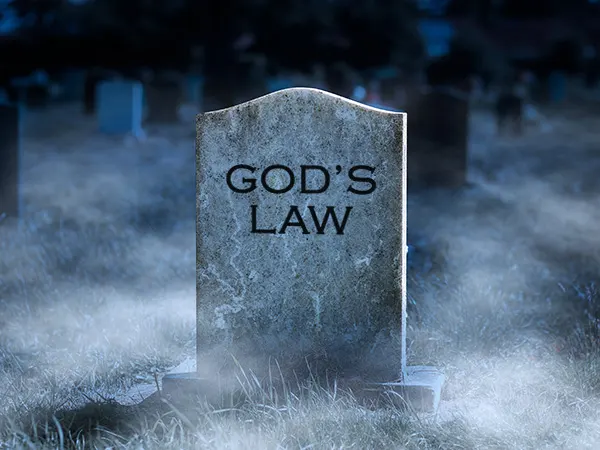
Dead to the Law?
'Ready Answer' by Earl L. HennSome people twist the apostle Paul's writings to claim that God's law is abolished, often targeting Romans 7:4, where Paul states that a Christian is dead to the law and now married to another. In Romans 6, Paul lays the foundation by explaining that through baptism, we are buried with Christ, our old man of sin is crucified with Him, and we are freed from sin to serve righteousness. In Romans 7:1, Paul clarifies that the law has dominion over a man only as long as he lives, meaning it has the power to condemn us to death for our sins while we are alive, but once we die with Christ, that power ceases. Using the analogy of marriage in verses 2 and 3, he illustrates that just as a woman is bound by the law to her husband until his death, after which the law cannot condemn her for remarrying, so too are we freed from the law's condemnation when our old man of sin dies at baptism. Specifically, Paul references the seventh commandment against adultery, showing that this law remains binding on Christians. In verse 4, he explains that through the body of Christ, we have become dead to the law, no longer subject to its penalty, and are now free to be married to Him who was raised from the dead, bearing fruit to God. In verse 6, Paul concludes that we are delivered from the law's power to condemn us because our old man of sin has died, and with God's Holy Spirit, we serve in the newness of the Spirit, keeping God's laws in their full spiritual intent and purpose. Far from being abolished, God's laws are even more binding on Christians as we live transformed lives through the indwelling power of the Holy Spirit.
The Covenants, Grace, and Law (Part Eighteen)
Sermon by John W. RitenbaughGod's Law is scattered throughout the Bible and is not contained in one section. The first five books were written with the New Covenant church in mind. God's Law defines sin as failure to live up to the standard set by every word of God. There is a general progression in application from the letter of the law to its magnification into spiritual intent. The intent of the law is always love toward God or love toward fellow man. The sacrificial system was added after the making of the Old Covenant and was imposed only until the time of reformation. These temporary laws did not define sin unless the offerings themselves were broken. The ceremonial regulations have been set aside because sin is dealt with by the sacrifice of Jesus Christ. The law of Moses originally had no sacrifices but came to have two parts: the civil and the ceremonial. The civil law remains binding in its spirit. The ceremonies are set aside until God intends to use them again. All biblical law is from God. The law of Moses is an extension of the Ten Commandments designed to guide communities. There is one law for the Israelite and the stranger. The New Covenant has laws that are written in the heart. The change is one of administration from letter to spirit.
The Law's Purpose and Intent
Sermon by Martin G. CollinsGod's Law stands in sharp contrast to human laws, which target specific actions through voluminous regulations that address effects rather than underlying attitudes. The Bible presents God's Law as a single volume of principles governing every human activity, proper relationships with the Creator and fellow human beings, the causes of suffering, and warnings against mistreating others. Its true effectiveness lies in purpose and intent rather than the letter alone, so that the spirit of the law embodies God's original design behind each commandment. Keeping the Ten Commandments teaches believers to think as God thinks and develops His character, preparing them for responsibilities in His future government on earth. Jesus upheld both the letter and the spirit, declaring it lawful to do good on the Sabbath and affirming that not one jot or tittle would pass from the law until all is fulfilled. He magnified the law by emphasizing its weightier matters—justice, mercy, and faith—while exposing the Pharisees' focus on external technicalities that neglected human need and created burdensome traditions. The law remains a holy, just, and good standard of righteousness. Love fulfills it, summing up every commandment in the royal law of loving one's neighbor as oneself, so that the spirit of the law becomes a positive principle of blessing rather than condemnation. Under the New Covenant the law is written on hearts and minds through the Holy Spirit, enabling believers to serve in newness of spirit rather than the oldness of the letter. This inward dynamic transforms conduct, grants liberty, and produces the fruit that flows from applying the spirit of the law. For those preparing to take the Passover, the critical areas of examination involve attitudes aligned with this spirit, since outward adherence to the letter is already expected. The Holy Spirit supplies the power to recognize secret faults, overcome sin, and live according to the mind of Christ, so that the law functions as an appealing vision of understanding and blessing rather than a stern taskmaster.

How Does Christ Fulfill the Law?
'Ready Answer' by Charles WhitakerThe examination of God's law centers on Matthew 5:17, where Christ declares He did not come to abolish the Law or the Prophets but to fulfill them. This statement directly confronts supersessionism, the theology claiming that grace supersedes law and that Christ's coming rendered the law obsolete or unnecessary to obey. While Scripture does contain genuine supersessionist elements, such as the Old Covenant giving way to the New, Christ's sacrifice replacing Old Testament ritual offerings, and baptism replacing circumcision, these truths must not be confused with the false notion that God's law itself has been abolished. The Greek verb pleroo, translated "fulfill," carries meanings of filling up, completing, or bringing into effect, though it can also mean to finish in a temporal sense. Context determines its meaning in Matthew 5:17. Since Christ explicitly contrasts fulfilling with abolishing (katalyo, meaning to destroy or dissolve), He cannot be saying He came to end the law, for that would contradict His own statement in the same breath. Verse 19 reinforces this, warning that those who disobey and teach others to disobey the law will be least in God's Kingdom. Verse 18 further clarifies that only the passing of heaven and earth, when all is accomplished, could bring an end to the law, not Christ's earthly ministry, death, or resurrection alone. Romans 10:4 is frequently mishandled by translations claiming Christ "brought the Law to an end." However, the Greek word telos properly means goal, object, or culmination, not termination. Christ is the target at which the law aims, its consummation and fulfillment, not its destroyer. More accurate translations render Him as the "completion," "goal," or "culmination" of the law, meaning that all the law points toward Him and describes His character. Taken together, Christ is understood as the object and exemplar of the law. Before His coming, understanding of the law's letter and spirit was incomplete, like a cup not yet filled. Through His teaching and the enabling power of the Holy Spirit, believers can now obey the law fully, in both letter and spirit. Romans 3:31 reinforces this by affirming that faith does not destroy the law but establishes what the law truly intends. Law and faith are not opposites but work together: the law, described as a schoolmaster, reveals sin and displays God's character, while faith, empowered by the Holy Spirit, enables obedience to that law. In this way, believers embody God's character and live according to His purposes, showing that the law remains valid and operative rather than abolished.
The Law Continues
CGG Weekly by Charles WhitakerOne of Moses' final thoughts emphasizes that the secret things belong to the Lord our God, but the revealed things belong to us and to our children forever so that we may do all the words of this law. This connection shows that God has revealed His law for people and their descendants to obey it perpetually. Consequently, the law spans many generations and extends throughout history rather than being confined to a single period. Although some propose different dispensations where the law does not apply today, this view contradicts the consistent obedience to the law by God's people across time. Noah observed distinctions between clean and unclean animals and offered burnt offerings long before the law was given through Moses. Similarly, Abraham kept God's commandments, statutes, and laws centuries earlier. Looking ahead, the law will proceed from Zion during the Millennium, and physical circumcision will remain in practice as part of God's requirements. Since God does not change and Jesus Christ is the same yesterday, today, and forever, His law endures as the standard of conduct. Jesus Christ affirmed that He came not to destroy the Law or the Prophets but to fulfill them, demonstrating through His life the path to the Kingdom of God, which requires walking as He walked.
The Covenants, Grace, and Law (Part Five)
Sermon by John W. RitenbaughGod's purpose from the beginning has been to restore all things by reproducing Himself in children made in His image and by restoring His government to the earth. The New Covenant fits into this purpose rather than standing alone as a device merely to save people. God's government was removed through the rebellion of Helel, and Adam and Eve rejected the opportunity to submit to it, following instead their own way under the influence of Satan the Devil. From the Garden of Eden onward, government, law, and sin have defined relationships with God, for refusal to submit to His government severs the relationship and sin separates man from Him. Justification by grace through faith does not nullify any law, whether man's, the church's, or God's, but establishes law in general. The carnal mind remains enmity against God and is not subject to His law, revealing itself in an anti-law attitude that surfaces against even the least important requirements when they restrict personal desires. God's law is spiritual, holy, just, and good, with fair requirements that the obedient keep His commandments and love Him with all the heart, mind, soul, and strength while loving neighbor as self. Justification aligns man with the law by condemning sin in the flesh so that the righteousness of the law might be fulfilled in those who walk after the Spirit, imputing Christ's perfect righteousness to balance the account and grant access to God. The law serves as friend and guide given by a loving Father to protect and direct His children toward maturity and prosperity, not to hinder them. Keeping its requirements contributes to stable society now and prepares people to be in God's image when He restores all things. Jesus kept the law perfectly, and the New Covenant supplies the circumstances in which faith is enhanced so that the law's intent is fulfilled through willing submission. Without perfect laws alongside a loving government and intelligent obedience, no government succeeds for long. The New Covenant therefore brings God's purpose to perfection by enabling growth toward holiness rather than doing away with law.
The Covenants, Grace, and Law (Part Three)
Sermon by John W. RitenbaughGod's Law forms an essential element of the package by which He transforms human beings into His children and creates a kingdom family in His image. Grace brings salvation while also disciplining believers through verbal instruction, repetitive training, and corrective measures so that they deny ungodliness and live soberly, righteously, and godly. This disciplined life produces good works that include commandment keeping, which both witness to others and inscribe God's way upon the heart. The Ten Commandments constitute a single package within the larger body of beliefs that constitutes the faith once delivered. Offending in one point renders a person guilty of the whole law because each commandment serves a distinct purpose in forming the character God requires. These commandments existed before Sinai and were not added as new requirements at that time. They remain part of the royal law that must be fulfilled rather than set aside. God's Law is not harsh or burdensome in itself. Any burden arises from prior disobedience, and repentance brings the necessity of alignment with the law. Justification cleanses and clothes a person with righteousness so that he or she may stand in God's presence, yet this alignment does not abolish the law or remove the obligation to keep it. The same principle that requires the entire law to remain intact also shows that alterations to any part of the package affect the whole outcome of what God is producing. Thus the law stands as the clear, unambiguous standard that defines the way of life believers must continue in until the appearing of Jesus Christ.
The Law of Liberty
Sermonette by James BeaubelleProtestant theologians have created an artificial divide between mercy and law-keeping, asserting that 'the law of liberty' does away with God's Law.
The Covenants, Grace, and Law (Part Seventeen)
Sermon by John W. RitenbaughGod's law forms the central concern, and Paul's own testimony before Felix establishes the foundation: even after writing Romans and Galatians—the very books Protestants cite as proof the law is abolished—Paul declared he believed "all things which are written in the law and the prophets." This demonstrates that Paul never held the position modern theologians attribute to him. Salvation by grace does not nullify God's law; rather, grace exists precisely because God's justice demands a penalty for sin that cannot be undone through human effort, requiring Christ's sacrifice and God's merciful application of it. Paul's varied use of the word "law"—sometimes meaning a single law, the Mosaic law, the Pentateuch, the Ten Commandments, or even natural law written on Gentile hearts—must be read contextually. When discussing justification, Paul says law cannot save, since no one can undo sin already committed. When discussing sanctification, he affirms the law's necessity for right living. The first major principle established is that God's law defines sin, functioning broadly across all 66 books of Scripture, not confined to the Ten Commandments or the Pentateuch. Romans 3:19-20 shows the law's purpose: it reveals duty and sinfulness, fostering the humility and repentance that lead to a rightly educated conscience—one shaped by God's standard rather than cultural opinion. Crucially, sin differs from mere crime because behind God's law stands a holy, personal God; sin is disobedience against His Personality, as David acknowledged in Psalm 51:4. The law also reveals God's greatest attribute, love, and encompasses justice, mercy, and faithfulness, as Jesus indicated regarding the "weightier matters of the law." The second principle addresses whether Scripture explicitly states that something no longer needs to be physically performed. The Bible unfolds progressively, with later revelation moving toward the spiritual. Judgments, statutes, and ordinances—such as tithing and the Holy Days—magnify aspects of the Ten Commandments and remain binding, even though sometimes denigrated as mere ceremony. Failing to tithe constitutes theft from God and a rejection of His sovereignty. The Passover sacrifice, though embedded in the Old Covenant, continues under the New Covenant because it predates that covenant, is commanded by Christ's example, and belongs to the statutes governing the Fourth Commandment. Jeremiah 7:22-23 clarifies that God never commanded burnt offerings and sacrifices when He made the Old Covenant; these were added afterward because of transgression, as Galatians 3:19 confirms, serving as a schoolmaster until Christ came. These sacrifices, detailed in Numbers 28-29, were largely voluntary and never defined sin themselves—they reminded Israel of sin already committed, since animal blood could never remove sin. Hebrews 10 explains that Christ's singular, sufficient sacrifice replaced this shadow-system, making further offerings unnecessary. This temporary sacrificial law never touched the Ten Commandments themselves—murder, theft, Sabbath-breaking, idolatry, lying—which remain permanently in force, distinguishing what has been set aside from what continues as God's abiding standard of right and wrong.
The Covenants, Grace, and Law (Part Sixteen)
Sermon by John W. RitenbaughPersonal instruction plays a central role in this teaching, which insists that the Old Testament was written specifically with the Christian in mind, not merely as the foundational text of Judaism. Judaism itself represents a corruption of the religion God gave Moses, blending truth with paganism and human tradition, which is why Jesus repeatedly condemned the Pharisees, Scribes, and Sadducees for rejecting God's commandments in favor of their own traditions. God called people out of Judaism to bring them into true Christianity, just as He now calls people out of nominal Christianity into authentic faith. Christianity's roots therefore lie in the truth of God as revealed in both Testaments, not in Judaism, which rejects the New Testament, nor in mainstream Christianity, which largely ignores the Old. In Luke 16, Jesus confronts covetous Pharisees by declaring that heaven and earth would sooner pass away than one tittle of the law fail, showing that people would be judged according to the standards given in the Old Testament law, not dismissed from it. He reinforces this with the Parable of the Rich Man and Lazarus, where Abraham insists that if people will not hear Moses and the prophets, neither would they be persuaded even by a resurrection. This teaches that miracles do not produce saving faith; only the Word of God, Moses and the prophets, can guide conduct and produce the kind of enduring faith God seeks. The Sabbath was made for man, including Christ Himself in His humanity, refuting the claim that Jesus only kept the law because He was a Jew. Salvation remains entirely by grace through faith, since all have already sinned and cannot pay the death penalty themselves; justification and salvation are not earned through law-keeping. Yet grace does not diminish the law's importance but clarifies its true purpose: it is the guide to the good works for which believers were created. Psalm 119 portrays the law repeatedly as a path or way, illustrating that without such rules, life descends into chaos, just as the world is now experiencing. Hebrews 12 and 2 Corinthians 6-7 warn that grace can be received in vain if one fails to actively pursue this path through repentance and holiness. Romans 2 clarifies that the law defines sin, and both those with and without formal knowledge of it will be judged by the same standard, since God is impartial. Peter's writings demonstrate that God has always judged sin consistently, from the angels to Sodom and Gomorrah, showing that the godly are distinguished by lawful conduct. Sin itself is defined broadly as unrighteousness, or wrongdoing, the failure to do what is right, yet not all sin carries equal weight, as seen in the distinction between sins of ignorance and presumptuous sins in Leviticus and Numbers, and in God's own comparative judgment of David's adultery versus his murder of Uriah. The Ten Commandments themselves reflect a descending order of seriousness, with idolatry and dishonoring parents being especially destructive. Ultimately, God desires perfection and honest effort, with the determining factor in judgment being the attitude and motive behind persistent failure or faithfulness to His law.
The Covenants, Grace, and Law (Part Two)
Sermon by John W. RitenbaughGod's law occupies a central place in the purpose God is working out, and recent doctrinal shifts within the Worldwide Church of God have deliberately obscured this by over-emphasizing grace and faith "alone"—terms never actually found in Scripture—while claiming that certain laws, even some of the Ten Commandments, no longer need to be kept. This is exposed as a modern perversion of true Christianity, parallel to how the Pharisees and Sadducees perverted the religion given to Moses. Ephesians 2:8-10 reveals that grace was given for a specific purpose: believers are created in Christ Jesus, in union with Him, unto good works which God ordained beforehand. If salvation were merely a finished transaction, this "created for good works" purpose would be meaningless. Removing law from the equation is equivalent to claiming "all roads lead to heaven," ignoring that Scripture establishes real conditions for eternal life—repentance, belief, and overcoming, as Christ stated in Revelation 2-3. Romans 6 makes clear that grace does not permit continuing in sin, since sin is the transgression of God's law. Christ came to save people "from" sin, not to leave them "in" it. This is illustrated through John 14, where Christ tells His disciples He is going to prepare a place for them and declares, "I am the way," indicating that Christianity itself is not merely a belief system but a way of life with a defined route, as confirmed repeatedly in Acts, where believers are described as belonging to "the Way." Psalm 119 reinforces this, showing that God's way is defined by walking in His law, commandments, testimonies, precepts, judgments, and statutes—all essential, inseparable components of that way, including the Sabbath and holy days. A "way" is defined as a course, method, or route governed by rules; removing any rule—as with a game, a mechanical assembly, or the Ten Commandments—causes the intended result to degenerate or fail to be produced. Isaiah 11:9 depicts the millennial community as one governed by shared knowledge of the LORD's rules, while Genesis 6:5 shows the chaos and violence that result when every person is a law unto himself. Five hypothetical societal scenarios illustrate that the most peaceful and fulfilling community is one where God's laws are fully internalized, not merely tolerated or selectively obeyed. The claim that believers should obey God merely "because they love Him" is shown to be insufficient, since even converted Corinthians were still carnal, and human nature remains "incurably sick" (Jeremiah 17:9). Fruit—not sentiment—reveals true relationship with God, and the fruit of Western Christianity, marked by violence, abortion, war, and social breakdown, betrays a system cut off from God's law. Titus 2 confirms that grace itself teaches denial of ungodliness and zealousness for good works, which necessarily includes commandment keeping. Removing law from the "package" of covenant, doctrine, and belief destroys God's larger purpose: not merely saving individuals, but forming a righteous community fit for His Kingdom.
The Covenants, Grace, and Law (Part Fifteen)
Sermon by John W. RitenbaughThings written in the Old Testament were written for us. The differences in the covenants focus on justification and access to God, not doing away with the law.
The Covenants, Grace, and Law (Part Twenty-Four)
Sermon by John W. RitenbaughThe days, months, and times of Galatians 4:10 do not refer to God's Holy Days (which are not weak or beggarly), but to pagan rites the Galatians came out of.
Law and Spirit Together
Sermon by Richard T. RitenbaughOver-emphasis on law produces rigidity and loophole hunters, while over-emphasis on spirit produces emotional imbalance, permissiveness, and lack of structure.
Natural Law
CGG Weekly by David C. GrabbeGravity is but one of the many natural laws. These cause-and-effect principles operate continuously in our lives. We either comply, or we suffer the consequences.
Keeping God's Standards
Sermon by John O. ReidGod's law will be the spiritual weights and measures in the Kingdom, but until then, we must glorify God by keeping these standards as a bright light.
The Covenants, Grace, and Law (Part Nineteen)
Sermon by John W. RitenbaughThe spirit of the law does not do away with the letter of the law; without the letter, there is no spirit because there is no foundation. Examples show God's will.

Does Paul Condemn Observing God's Holy Days?
'Ready Answer' by Earl L. HennGalatians 4:9-10 is a favorite crutch of those who claim Christians no longer need to observe God's holy days. However, Paul's meaning is quite different.
The Covenants, Grace, and Law (Part Twenty)
Sermon by John W. RitenbaughGod has given us His Law, which shows us the way of sanctification and holiness. God is in the process of reproducing His kind — the God-kind.
The Oracles of God
'Ready Answer' by Charles WhitakerThe oracles of God in Romans 3:2 are the revelation of God to mankind. These oracles are the message that gives us instruction for salvation.
The Covenants, Grace, and Law (Part Twenty-One)
Sermon by John W. RitenbaughThe Colossian Christians were criticized by ascetics for the way they were keeping the Sabbath and holy days. Paul argues against a philosophy, not the law of God.
God's Sense of Justice
Sermon by John W. RitenbaughGod is absolutely justified in what He decides regarding the judgment and punishment of us all. However, He is merciful and always rewards righteousness.
God's Rest (Part 3)
Sermon by John W. RitenbaughLust begets a guilty conscience, agitation, anxiety, depression, grief, torment. Wrong desire leads to lying, adultery, and murder—eventually leading to death.

Prepare to Meet Your God! (Part Seven): The Prophesied Blow Falls
Article by John W. Ritenbaugh and Richard T. RitenbaughBy refusing to repent of their apostasy from God's way of life, the Israelites could only expect the coming of God's fearsome punishment. We should never forget that God's punishment falls upon Israel because of disobedience, rebellion, and sin. Metaphorically, when God draws near with the plumb line, He is looking for those people from top to bottom who are living and abiding in His grace and His law. The Israelites' moral standards had degenerated, so their religious profession was not verified by the right kind of works. They were not upright; they failed the test. Through their spiritual harlotry, they abused grace, the free, unmerited gift of God, including His pardon, and rejected His law. Jeroboam turned away from the law of God, causing the people to sin. Amos describes the insecurity, bitterness, and death that result from failing to hold to God's absolute standards. God's law is the primary vehicle He uses to reveal His nature; it defines how He lives. If we want to be in His Kingdom and live as He does, we must obey His law. Grace precedes law, for God revealed Himself to Israel first as Redeemer and then as Lawgiver. He freed His people from their slavery in Egypt before He gave them the standard of His law. The plumb line combines grace and law, and God will test us against both. If either is abused, we will not measure up to the standard. Since God is holy, His law is holy, and if we follow His holy law, we can grow to be holy like our holy God. He expects it will result in obedience to His law, the reflection of His nature, so on occasion, He holds a plumb line against them to check their progress. But when He sees that they have rejected His way of life, He has no choice but to try to guide them to repentance by any means necessary.

Prepare to Meet Your God! (Part Two)
Article by John W. Ritenbaugh and Richard T. RitenbaughBecause of God's intimate relationship by covenant with Israel and His church, His people have a greater responsibility to follow His instructions.
Liberty Under the Law
Sermon by Mark SchindlerWe must discipline ourselves to live within the hedge of God's law, knowing that His Spirit provides the motivation to stay free by submitting to that law.
The Importance of God's Word
Commentary by Charles Whitaker (1944-2021)II Thessalonians 2:6-7 speaks of a force capable of restraining the emergence of the man of lawlessness. God's word and revelation is what restrains iniquity.
The Beauty of the Law
CGG WeeklyThe law of God possesses a harmony that comprise a beautiful system—one both corrective and constructive—that works toward achieving an even more beautiful goal.
Immigration and the Kingdom of God
'Prophecy Watch' by David C. GrabbeUnlike Europe and the United States, God ensures that all His potential citizens will conform to His culture.
Would Our God Do That?
Sermon by Richard T. RitenbaughThe distorted perception of Jesus as an effeminate and ineffective Savior fails to understand that He is the so-called stern God of the Old Testament.
God Has a Dream
'Ready Answer' by StaffWe might think that God's mind is unfathomable. However, we often fail to realize that God's mind is an open book—the Bible!
Image and Likeness of God (Part Five)
Sermon by John W. RitenbaughThe true nature of God differs greatly from the trinitarian concept. Having created us in His form and shape, God is developing us into His character image.
In Honor of the Father
Sermonette by Austin Del CastilloFather's Day is a time to not only honor our physical fathers, but also our Heavenly Father who established the family and the sanctity of marriage.
The Ten Commandments
Bible Study by Martin G. CollinsGod's Ten Commandments are the divine law and standard that regulate human conduct. As our world testifies, they are still very much needed today!
Works of Faith (Part One)
'Ready Answer' by StaffMany think works and faith are incompatible, but the Bible tells us to do works of faith. What are they? These are things we must do during the salvation process.
A Conversation With Paul
Sermonette by Craig SablichAn imaginative, story-driven narrative on the apostle Paul's true teachings about law, grace, and obedience, clarifying misunderstood scriptures.
What Is Repentance? (Part Two)
CGG Weekly by David C. GrabbeTo understand repentance, we must understand what sin is, since sin is the behavior that we need to turn from when we repent. Simply, sin is breaking God's law.
Forms vs. Spirituality (Part 4)
Sermon by John W. RitenbaughThe yoke grievous to bear (Acts 15:10) was not God's law, but an entire package of Pharisaic regulations that had been elevated to the level of God's law.
Were the Ten Commandments in Force Before Moses?
Herbert W. Armstrong BookletIt is commonly believed that the Ten Commandments are part of the ritualistic law, and that they lasted only until Christ. But here is the rest of the story.
Elements of Judgment (Part Four)
Sermon by John W. Ritenbaugh (1932-2023)We need to learn to judge in a godly manner, putting merciful restraints on our tendency to condemn or jump to conclusions. One size does not fit all.
Works of Faith (Part Two)
'Ready Answer' by StaffGod's spiritual law, encapsulated in the Ten Commandments and demonstrated in the life of Jesus Christ, reveals His way of life, which we must emulate.
The Doctrine of Israel (Part Two): The Old Covenant
Sermon by Richard T. RitenbaughGod made the New Covenant because Jacob's offspring did not have what it took to fulfill the terms of the Old Covenant. The carnal mind is hostile to God's law.
As I Breathe
Sermonette by Austin Del CastilloSome in the church of God have succumbed to the lie that we do not need to be overly concerned about sinning because we are under God's grace.
Elements of Judgment (Part Two)
Sermon by John W. Ritenbaugh (1932-2023)None of God's law has been 'done away', though there is not always a literal application. Not every law of God has the same weight of importance.
Saved By Faith Alone?
'Ready Answer' by Earl L. HennMany believe that salvation comes by faith alone, asserting that one's way of life has no bearing on being saved. Yet, the question arises: can we enter God's Kingdom while spurning His laws and ignoring His holy commandments? Paul, in his letter to the Romans, addresses this by stating that we are justified by faith apart from the deeds of the law, which might seem to suggest that obedience to God contributes nothing to salvation. However, when studied in context, Paul clarifies that it is not the hearers of the law who are just in the sight of God, but the doers of the law who will be justified. He emphasizes that the manner in which we conduct our lives greatly impacts whether we will receive eternal life. Paul further explains that all of mankind stands guilty before God, having broken His law and being condemned by it. He asserts that by the deeds of the law, no flesh will be justified in His sight, for the law brings the knowledge of sin. Present obedience cannot wash away past iniquity, indicating that forgiveness of past sins must come through another means if sinners are to have hope of entering God's Kingdom.
What Do You Mean . . . Salvation?
Herbert W. Armstrong BookletNot one in a hundred knows what salvation is—how to get it or when you will receive it. Don't be too sure you do! Here is the truth, made plain.
Our Part in the Sanctification Process (Part Ten): Cultivating the Fruit of Self Control
Sermon by David F. MaasIt is impossible to cultivate self-control unless one uses God's Spirit to reprogram the desires of the heart from self-centeredness to submission to God.
What Must We Do When We Recognize Our Guilt?
Bible Study by Martin G. CollinsWhen we do something against the law or our own conscience, guilt is triggered, and we suffer, not just a gut-wrenching emotion, but also a descent into sin.
Faith Without Works
'Ready Answer' by StaffEvery single word, phrase, sentence, and paragraph written in God's Word, the Holy Bible, is important. Works toward God are to do His will and His work and, yes, to obey His laws. Doing them promotes growth of godly character and provides a shining example of true Christian living. Faith without works is dead. Faith with works is life—eternal life!
Basic Doctrines: Salvation
Bible Study by Earl L. HennAre you saved already or are you being saved? What is salvation anyway? What part do we play? Here is a study of God's Word on salvation.

Does Jesus Recognize Today's Christianity?
'Ready Answer' by Craig SablichMost Christian groups agree that Jesus abolished the Old Testament law on the cross, viewing it as a burden irrelevant to believers today and claiming it began only with Moses at Sinai. Scripture shows otherwise. Centuries earlier, God told Isaac that Abraham had obeyed His voice and kept His charge, commandments, statutes, and laws, and Noah preached righteousness long before Abraham. Weeks before the Ten Commandments were given, God instructed the Israelites about the Sabbath and rebuked their disobedience by asking how long they refused to keep His commandments and laws. Jesus, the Head of the church, declared that He came not to abolish the law but to fulfill it. He rebuked religious leaders for nullifying God's Word through human traditions and taught that eternal life requires keeping the commandments. He linked love for Him directly to obedience, explaining that hatred violates the command against murder and lust violates the command against adultery. Thus He magnified the law by requiring its observance in spirit as well as letter. Paul delighted in the law of God, and John wrote that knowing Christ is proven by keeping His commandments while those who do not keep them are liars. If the law had been abolished, sin would cease to exist because the law defines sin, leaving nothing to repent of and no need for grace. Revelation describes the dragon making war against those who keep the commandments of God, indicating that such obedience distinguishes the faithful. Jesus fulfilled the law by demonstrating perfect love for the Father through complete obedience, even to the point of laying down His life. He defined this fulfillment as loving God with all the heart, soul, and mind and loving one's neighbor as oneself, the two commandments on which all the Law and the Prophets hang. Therefore the law remains the standard by which He will recognize those He knows when He returns, for only those who do the will of the Father and practice obedience rooted in love will be acknowledged as His friends.
Is Jesus Christ a Christian?
Sermonette by Craig SablichJesus would not align with the vast majority of doctrines taught in the major branches of Christianity. Here's why.
Leadership and Covenants (Part Nineteen)
Sermon by John W. Ritenbaugh (1932-2023)The seven 'I will' promises Got made to Abraham were truly foundational promises, impacting the lives of multiple billions of people up to the present day.

The Jerusalem Council's Conclusion
Sermon/Bible Study by Richard T. RitenbaughGod's Law remains fully in force for both Jew and Gentile under the New Covenant. It is holy, just, good, and spiritual, defining sin and guiding righteous conduct as the standard of holiness and purity that God requires of His people. The Jerusalem council addressed a different matter entirely, the man-made customs and traditions of Judaism that had accumulated around the written Word and become an unbearable yoke no one could keep. These additions, often called the law of Moses or halaka, had turned circumcision into a supposed work of justification rather than the simple sign of the Abrahamic covenant that God originally gave. The apostles rejected any requirement that Gentiles must become Jews through such works in order to be saved, affirming instead that justification comes solely by grace through faith in the same manner for all. This decision did not abolish or diminish God's Law. James explicitly noted that the Gentiles were already hearing Moses preached in the synagogues every Sabbath, indicating their ongoing exposure to the commandments. The four prohibitions listed in the letter merely highlighted areas of rampant Gentile practice that would especially offend Jewish brethren and hinder fellowship within the one body. Far from replacing the law, these reminders underscored the need for practical holiness so that Jew and Gentile could worship and live together without offense. Throughout the New Testament the commandments continue to be upheld as binding, with specific instructions against murder, adultery, theft, false witness, idolatry, covetousness, and other violations, along with positive commands to keep the Sabbath and the annual festivals. Justification by grace does not void the law; it establishes the law in its proper place as the enduring standard by which God's people walk in righteousness after receiving His unmerited favor.
Completing Sanctification
Sermon by Richard T. RitenbaughAn emphasis on hyper-grace is wrong-headed, denying any need for repentance and overcoming, and totally at odds with the teachings of Jesus Christ.
Elements of Judgment (Part One)
Sermon by John W. Ritenbaugh (1932-2023)The last days of the Worldwide Church of God demonstrated a dearth of righteous judgment. God expects us to judge wisely within the parameters of His Law.
Psalms: Book Five (Part Six): Psalm 119 (Part Three)
Sermon by Richard T. RitenbaughThe keeping of the law is a practical response to God, providing us with principles for our lives, establishing our character and implanting God's values.
Elements of Judgment (Part Five)
Sermon by John W. Ritenbaugh (1932-2023)We dare not 'do away' anything that is part of God's mind, or we will not be in His image. Acts 15 did not give Gentiles exemption from keeping God's Law.
Does Doctrine Really Matter? (Part Ten)
Sermon by John W. RitenbaughThe vast majority of Christian-professing churches has been saturated with pagan doctrines (like antinomianism and dispensationalism), derived from Gnosticism.
Deuteronomy and History
Feast of Tabernacles Sermon by John W. Ritenbaugh (1932-2023)The Israelites lost their identity when they went into captivity. They failed to teach their children, to keep the Sabbath, and to remember who they were.
Is the Christian Required To Do Works? (Part Five)
'Personal' from John W. RitenbaughJesus came with a message of salvation, called 'the gospel of the Kingdom of God.' Here is the relationship between the gospel and Christian works.
Acts (Part Fourteen)
Sermon/Bible Study by John W. RitenbaughThe people of Lystra and Derbe mistake Paul for Hermes and Barnabas for Zeus. When Paul convinces the crowds that he and Barnabas are not gods, they are rejected.
Hebrews (Part One): The Stage Is Set
Sermon by John W. Ritenbaugh (1932-2023)Early converts from Judaism claimed to accept the Law but had difficulty accepting the Lawgiver. Today, many claim to accept Christ, but will not accept His Law.
The Second Exodus (Part Three)
'Prophecy Watch' by David C. GrabbeAt some point in the near future, the modern descendants of Israel will learn of their true identity—and have to face the consequences of that knowledge.
Hebrews (Part Eight)
Sermon/Bible Study byJesus Christ's priesthood is superior to the Aaronic priesthood because Christ tenure is eternal rather than temporal, guaranteeing both continuity and quality.
What Do You Mean . . . the Unpardonable Sin?
Herbert W. Armstrong BookletCan a Christian commit a sin, and still be a Christian? Or would this be 'the unpardonable sin'? Or would it prove he never was a Christian?
Our Part in the Sanctification Process (Part One)
Sermon by David F. MaasMisguided theologians have tried to create a false dichotomy between grace and works. We do works of obedience to build character, not to earn salvation.

The Elements of Motivation (Part Four): Obligation
'Personal' from John W. RitenbaughUnderstanding our obligation to Christ leads to a deeply held loyalty to Him. Our redemption should make us strive to please Him in every facet of life.
The Commandments (Part One)
Sermon/Bible Study by John W. RitenbaughWhat have we accepted as our authority for permitting ourselves to do or behave as we do — our value system, our code of ethics or code of morality?