


Filter by Categories
Truth-Based Worship Vs Spiritual Confusion
Sermon by Martin G. CollinsTrue worship of God and Jesus Christ must be rooted in spirit and truth, as God is Spirit, invisible, omnipotent, pure, and holy, and cannot be worshipped through human reasoning or material representations. Worship in spirit and truth starts with God as the primary consideration, recognizing Him as light with no darkness, and accepting the revelation of His truth found in the inspired written Word. This truth is not derived from human traditions or philosophies but from the message declared through Christ and His apostles, emphasizing that fellowship with God and His Son is only possible through this divine revelation. Pagan celebrations and humanly devised holidays like Christmas are incompatible with worshipping in spirit and truth, as they are based on lies and syncretism that God finds abominable. God does not accept worship mixed with idolatrous practices, and true Christians must resist the works of the flesh promoted by worldly traditions, instead manifesting the fruit of the Spirit through adherence to God's holy days. The truth embodied in Jesus Christ, who is the way, the truth, and the life, must guide thoughts and actions, ensuring that worship aligns with God's commands rather than human desires or societal customs.
Spirit and Truth
CGG Weekly by David C. GrabbeGod is very specific in the way that He wants to be worshipped. He has not given us permission to worship Him in just any way that seems right to us. He warns His people specifically not to add to His instructions, nor to take away from them, especially within the context of adopting pagan practices in conjunction with worshipping Him. The question arises, is trying to Christianize something blatantly anti-God from the beginning truly worshipping God in spirit and in truth? Moreover, is celebrating traditions not instructed or exemplified in the Bible, such as birthdays, worshipping God in spirit and in truth? Our Savior laments that many draw near to Him with their mouth and honor Him with their lips, but their heart is far from Him, worshipping in vain by teaching as doctrines the commandments of men.
True Worship of God
Sermonette by Craig SablichAny practice that does not give its loyalty to the Creator and is not devoted to His truth is nothing more than a method of worship created by men.
Worship Always
Sermonette by Bill OnisickWorship, not merely a set of behaviors performed in a religious service but a response to what God is, is a state of mind one must maintain 24/7.
Hearing and Understanding the Truth
Sermonette by Cody FordGod is Spirit, and those who worship Him must worship in spirit and truth. He would not command the observance of something rooted in falsehood. While the world devotes immense energy to holidays lacking truth, searching for purpose in them, those called by God are set apart to learn and grow in His truth. We are guided by His holy days, which align us with His will and reveal the coming Kingdom. It is our responsibility to guard this calling, to hold our ground, and to protect our families from worldly influences, ensuring that our worship remains in spirit and truth.
For the Love of the Truth
Sermonette by Ryan McClureChrist has never been in man's holidays, which are built on lies, and which teach children they cannot trust the veracity of their own parents.
Sincerity Without Truth Is Worthless
Sermon by Martin G. CollinsWorship acceptable to God requires both godly sincerity and truth, as zeal and fervor alone prove insufficient and even dangerous when disconnected from divine knowledge. The Jews of the first century illustrate this failure, possessing abundant zeal for God yet remaining ignorant of His righteousness and therefore establishing their own standards instead of submitting to His. Their sincerity, though genuine from a human perspective, lacked the guidance of truth and produced only futile efforts that could never justify them before God. The same error persists today whenever sincerity is exalted above knowledge, allowing people to pursue religious practices and holidays whose origins and customs contradict scriptural commands. Such worship, however earnest, amounts to following human traditions rather than the explicit instructions of God and results in self-righteousness rather than the righteousness He requires. Godly sincerity, by contrast, flows from purity of motive and freedom from hypocrisy; it is sincerity tested and directed by truth, comparable to unleavened bread that symbolizes moral and doctrinal purity. This form of sincerity enables believers to conduct their lives with simplicity and uprightness, motivated by love rather than selfish ambition or ulterior aims. Because truth determines the proper goal and direction, sincerity energized by truth leads to the kingdom of God, while sincerity without truth wastes energy, fosters deception, and ultimately separates people from the salvation they claim to seek. The necessity of aligning zeal with revealed truth therefore remains absolute for any worship that truly honors God.
Worship God!
'Ready Answer' by StaffTrue worship of God centers on Jesus' declaration that the hour has come when true worshippers will worship the Father in spirit and truth, for the Father seeks such worshippers, since God is Spirit and must be worshipped accordingly. This standard exposes the contrast between genuine worship and vain worship, the latter occurring when people teach as doctrines the commandments of men or approach God with lips that honor Him while their hearts remain far away. God is presently measuring His spiritual Temple to discern who worships Him in truth, making this distinction critically important. Worship itself, drawn from the Greek proskuneo and Hebrew shachah, carries the sense of prostrating oneself, bowing down, and doing reverence or homage to royalty or to God. Physical bowing appears repeatedly throughout Scripture—Abraham's servant, Job in his devastation, the assemblies under Solomon and Hezekiah, and even the twenty-four elders in heaven—yet worship is ultimately a matter of the heart and mind rather than mere physical posture. It is best understood as having a bowed-down head and heart, an attitude of total and unconditional surrender to God as Master and Lord, reflecting the poverty of spirit and mourning of one who recognizes his own spiritual bankruptcy before God. Genuine worship arises only after an awakening—a moment when a person becomes vividly aware of being in God's awesome presence. This pattern recurs throughout Scripture: Moses at the burning bush, Joshua before the Commander of the Lord's army, the disciples after Jesus calms the sea, the man born blind upon recognizing the Son of God, Thomas confessing "My Lord and my God," and Job after encountering God in the whirlwind and declaring, "Now my eye sees You." Without such a personal encounter and recognition of who God truly is, worship risks becoming empty ritual, mere lip service devoid of true surrender. This same awakening will one day extend to the whole world, when every knee bows at the name of Jesus and the nations go up to worship the King during the Millennium. This understanding carries direct practical weight for corporate worship on the Sabbath and at the Feast of Tabernacles. Since biblical examples consistently show people traveling to Jerusalem specifically to worship, believers should likewise recognize worship as a primary purpose for attending services. Awareness of God's presence should shape conduct—how one sings, dresses, listens, arrives punctually, and prepares one's heart—whether gathered in a formal hall or a home setting, since both constitute a sacred and solemn assembly. Once the songleader begins, formal worship has commenced, and the King's presence deserves undivided attention. When this reality is truly grasped, worship ceases to be confined to a moment or location and instead becomes a constant attitude of yieldedness, so that every act done for God's glory becomes itself an act of worship and reverence toward the Almighty.
A Search For Christmas Truth?
Sermonette byRejecting the Sabbath or embracing Christmas requires rejecting fundamental biblical truths. If we do not do what Christ did, we cannot claim to follow Christ.
Can You Handle the Truth?
Sermonette byWe must be willing to allow God to make changes in our thinking, even when those changes discomfort the beliefs to which we have acclimated ourselves.
Sincerity and Truth (Part Three)
Sermon by Richard T. RitenbaughWe should continually live and think on the same wavelength as God does, maintaining a close relationship with Him as we continue in the sanctification process.
Are You Part of the Spiritual Unity?
Sermon by Martin G. CollinsTrue worship of God is presented as flowing directly from sound doctrine and from a right understanding of the church as the spiritual Body of Christ. Because pagan worship, such as that practiced in ancient Rome, reduced religion to mere ritual performance—where correct ceremony mattered more than sincere belief—true Christians are called to a fundamentally different standard. Jesus declared unconditionally that the Father must be worshiped "in spirit and in truth," rejecting hypocrisy and empty form. Since God is Spirit, those who worship Him must do so with heart and mind fully engaged, not merely through external observance. This worship must be sincere, arising from gratitude, praise, and prayer, and marked by a genuine desire to glorify God rather than to be seen. Spiritual worship means offering the heart and mind to God for His use, not seeking personal spectacle. Hebrews 10:19-23 reinforces this by urging believers to draw near with a true heart in full assurance of faith, having consciences cleansed and bodies washed, holding fast to the confession of hope. Gathering for worship with the congregation is therefore essential to the faith, signifying that God is present among His assembled people. Only illness or genuine distance excuses absence, and even then, a family should strive to have a representative present, reflecting an understanding once commonly held that congregating before God's throne carries real significance, not something to be treated casually simply because online access exists. What is believed in the mind and felt in the heart must be expressed in action, "not in word or in tongue, but in deed and in truth." Obedience to what God has already revealed is the key to receiving further understanding, since God builds His people incrementally, teaching them by building on what they already know. Under the new covenant, God's law is not merely external but written on the heart, so that human nature's rebellion against obedience is transformed by the Holy Spirit, which gives new desires and makes serving God a joy rather than a burden. To revere God's name means honoring Him with the whole heart, so that work, relationships, finances, and desires all align with His will, not worship confined to formal gatherings alone. This worship is inseparable from doctrine, for false teaching inevitably devastates while sound doctrine shapes right attitudes and conduct. Believers are called to contend earnestly for the faith once delivered to the saints, holding fast the pattern of sound words, since doctrine that accords with godliness stands opposed to those who turn away for personal gain or itching ears. Ultimately, worship in spirit and truth is bound to the believer's identity as a member of Christ's spiritual body, uniting sincere inward devotion with faithful outward practice, all grounded in and inseparable from Christ, who is Himself the truth.
What is Truth?
Sermonette byTruth is a fundamental base of a relationship between God and His people. As the days grow evil, God's people must cling to the truth and love His holy law.
Sincerity and Truth (Part Two)
Sermon by Richard T. RitenbaughIn contrast to the world's embracing of fraud and deceit, God's called-out ones are obligated to eat the bread of sincerity and truth all our lives.
Jesus on the Holy Spirit
Sermon by Richard T. RitenbaughJesus taught about the Holy Spirit's function to carry out God's work, including inspiring one to speak the words of God and to resist the power of Satan.
The Holy Spirit and the Trinity (Part Seven)
Sermon by John W. RitenbaughGod personally handpicks individuals with whom He desires to form a reciprocal relationship. This relationship must be dressed, kept, tended, and maintained.
Law and Spirit Together
Sermon by Richard T. RitenbaughOver-emphasis on law produces rigidity and loophole hunters, while over-emphasis on spirit produces emotional imbalance, permissiveness, and lack of structure.
Pagan Holidays
Bible Study by Martin G. CollinsThe holidays of this world counterfeit God's holy days, but it is obvious that they are very different. God warns us not to be involved in them.

Cogitations on Christmas
Article by Richard T. RitenbaughMost recognize Christmas' pagan origins and its lack of biblical support. These facts should make us consider whether Christians should celebrate it.
What's Wrong With Christmas?
Sermon by Martin G. CollinsThe Catholic Church mixed truth and falsehood to have the 'official' birthdate of the Son of God coincide with the rebirth of the sun, the winter solstice.
The Crazy in Christmas
CGG Weekly by Ronny H. GrahamJesus tells us that we must worship God in spirit and truth. Where is the truth in Christmas? What is the Christmas spirit, and where does it come from?
Crazy or Christmas
Sermonette byIf Christmas is Christ's birthday, it is strange that everybody else except Christ receives a gift. All of its symbols derive from pagan sources.
Israel, Selfies, and Idolatry
Sermonette by Mike FordThe religious hobbyist Micah practiced his own self-devised hybrid of religion, amalgamating some orthodox truth with abundant noxious, pagan admixtures.
The First Commandment
Bible Study by Martin G. CollinsThe first commandment reveals our first priority in every area of life: God. Anything we place ahead of Him becomes an idol!
Is Valentine's Day Really About Love?
Commentary by Martin G. CollinsSt. Valentine's Day started as a lewd, sensual, pagan festival in Rome. Lupercalia is a rite connected with fertility, honoring Venus, the goddess of sex.
The Fourth Commandment (Part One) (1997)
'Personal' from John W. RitenbaughMost people think the fourth commandment is least important, but it may be one of the most important! It is a major facet of our relationship with God.
The Second Commandment: Idolatry
Sermon by John W. RitenbaughThe natural mind craves something physical to remind us of God, but the Second Commandment prohibits this. Any representation will fall short of the reality.
The Commandments (Part Three)
Sermon/Bible Study by John W. RitenbaughIdolatry derives from worshiping the work of our hands or thoughts rather than the true God. Whatever consumes our thoughts and behavior has become our idol.
The Second Commandment
'Personal' from John W. RitenbaughMost people consider the second commandment to deal with making or falling down before a pagan idol, but it covers all aspects of the way we worship.
The Covenants, Grace, and Law (Part Fifteen)
Sermon by John W. RitenbaughThings written in the Old Testament were written for us. The differences in the covenants focus on justification and access to God, not doing away with the law.
Extremes of Idolatry: Graven Images and Sacred Names
Sermon by Richard T. RitenbaughSome stretch the second commandment to condemn the use of all paintings, photographs, and sculptures. Others claim only Hebrew names for God can be used.
Why Hebrews Was Written (Part Four)
'Personal' from John W. RitenbaughWe often spend so much time engaged in our present-day trials that we fail to understand and learn from the experiences of Christians of the past.
Prepare to Meet Your God! (Part Five): Religion and Holiness
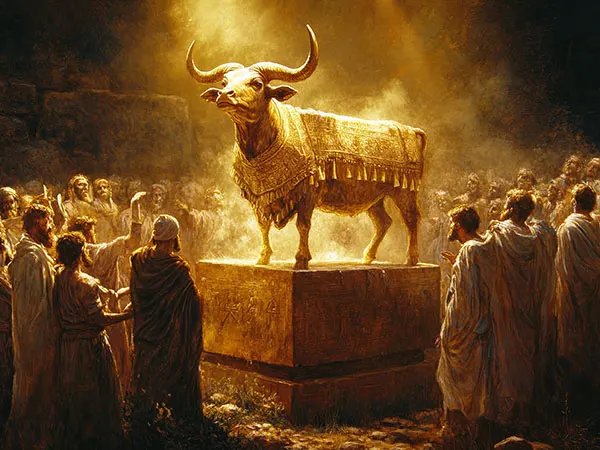
Article by John W. Ritenbaugh and Richard T. RitenbaughThe prophet Amos exposes the ancient Israelites' religion as syncretic, a blend of God's way and paganism, corresponding to this world's Christianity.
Born Again (Part 3)
Sermon by John W. Ritenbaugh (1932-2023)We have been adopted into the family of God and have become members of God's Kingdom. The Kingdom is here in the same way the church is a spiritual entity.
John (Part Eight)
Sermon/Bible Study by John W. RitenbaughThe woman of Samaria is like each of us, initially hardened, self-willed and skeptical when called, but afterwards zealous when enlightened by the truth.
Abel Glorified God!
Sermonette by Martin G. CollinsAbel offered his sacrifice in obedience to God's instructions. We must worship Him in a spirit of truth, bringing about a profound change in heart.
The Fourth Commandment: Idolatry
Sermon by John W. RitenbaughGod, not man, created, sanctified and memorialized the seventh day Sabbath from the time of creation, intending that man use this holy time to worship God.