


Filter by Categories
Darts
Sermon by John O. ReidWe must put on the full armor of God to stand against the demonic principalities, an army of 1/3 of the angels, bent on the destruction of God's elect.
Are You Fighting the Good Fight?
Sermon by Martin G. CollinsMainstream Christianity espouses the pernicious doctrine of, 'Let go and let God,'" which releases us from any obligation to overcome and build character.
Soldiers of Christ
Sermonette by Ryan McClurePaul enjoins God's people to enlist as soldiers of Christ, enduring hardship, keeping themselves from the world, and putting on armor for spiritual battle.
Against All Odds
Sermon by Richard T. RitenbaughWe are assured victory if we put on the whole armor of God, standing together as a spiritual phalanx and repelling all attacks, the waves of trials we face.
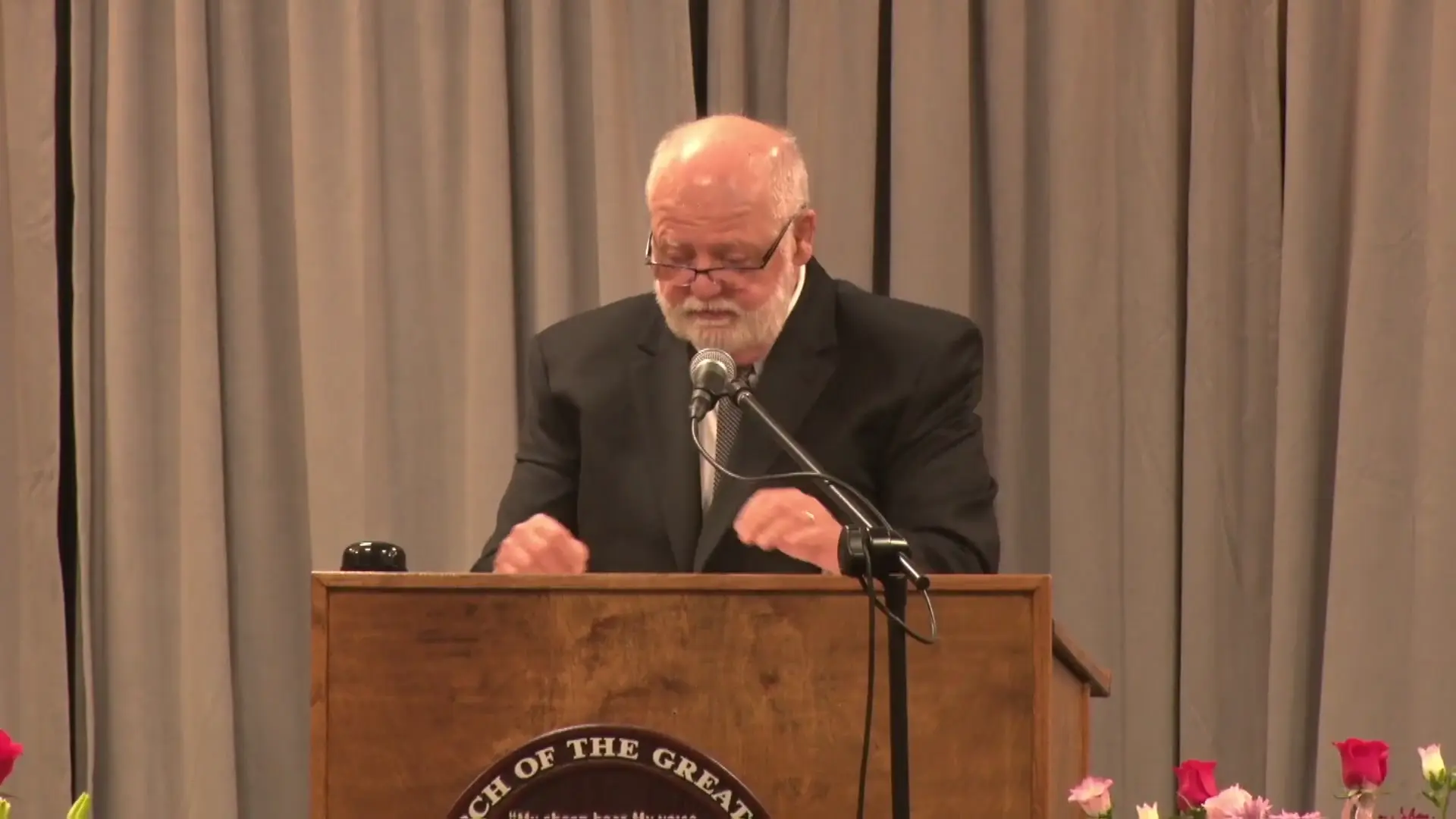
'Have You Considered My Servant [Insert Your Name]'
Feast of Tabernacles Sermon by Ted E. BowlingThe Book of Job reveals that suffering is not a sign of divine abandonment but a sovereignly orchestrated test of faith where God, not Satan, holds ultimate authority. By allowing limited trials within strict boundaries, God demonstrates His trust in His servants, using adversity to build endurance and character while proving that faithfulness is not merely conditional on blessings. This narrative transforms personal suffering into a cosmic witness, assuring believers that their trials are purposeful, manageable through God's provision, and undergirded by Christ's intercession. Ultimately, Job's story invites individuals to stand firm in the knowledge that every hardship is part of a larger spiritual reality, governed by a compassionate God who guarantees that no trial exceeds what one can bear and promises eventual restoration for those who hold fast to their faith.
'It Is Written'
Sermonette by Clyde FinkleaEvery believer stands in continuous spiritual warfare against invisible terrorists—Satan and his demons—far more relentless than any national terror alert, since Christians remain on constant "severe alert" from the moment of conversion. Ephesians 6:12 establishes that this battle is not against flesh and blood but against principalities, powers, and spiritual hosts of wickedness in heavenly places. While Ephesians 6:13-17 describes the whole armor of God, the offensive weapon given to believers is singular: the sword of the Spirit, identified in verse 17 as the word of God. Significantly, the Greek term used here is not logos (the whole word of God) but rhema, referring to specific portions or selected verses of Scripture. This distinction reveals that victory depends on becoming skilled in rightly dividing and applying particular passages of Scripture at the moment of attack, coupled with prayer as noted in verse 18. Jesus Christ demonstrated the proper use of this sword during His temptation in the wilderness, recorded in Matthew 4, revealing three specific areas through which spiritual terrorists will launch their attacks. The word "tempt" carries a dual meaning—both to test or prove, and to entice toward evil—with God never enticing anyone to sin, though Satan and his forces will, being evil by nature. The first attack came through the lust of the flesh, when Satan urged the starving Jesus to turn stones into bread, attempting to entice Him toward acting independently of the Father to satisfy natural need in an unnatural way. Jesus countered with Scripture: "Man shall not live by bread alone, but by every word that proceeds from the mouth of God." This same avenue—food, drugs, alcohol, sex—remains a primary point of attack against believers today. The second attack came through the pride of life, when Satan took Jesus to the temple pinnacle and twisted Scripture itself, using a counterfeit sword to suggest He throw Himself down, citing that angels would bear Him up. This is the only occasion where Satan quotes Scripture, and it correlates specifically with pride of life—a danger illustrated by believers becoming puffed up with knowledge and imagining themselves wiser than the teachers God has placed over them. Jesus responded, "You shall not tempt the LORD your God." The third attack came through the lust of the eyes, when Satan displayed all the kingdoms of the world and their glory, offering them in exchange for worship. This represents desire for what can be seen and possessed, and every time believers succumb to such temptation, it constitutes a form of falling down and worshipping Satan, exchanging eternal faithfulness for temporal gain. Recognizing these three specific fronts—lust of the flesh, pride of life, and lust of the eyes—gives believers a strategic advantage, since knowing an enemy's point of attack is essential in warfare. Victory requires becoming expert in wielding the rhema of God, for as 1 John 2:15-17 declares, the world and its lusts are passing away, but whoever does the will of God abides forever.
In the Woods
Sermonette by Austin Del CastilloIn the woods, or out in pristine nature, too many people project safety and serenity, prompting them to take no defense with them against predators.
Confronting the Field of Battle
Sermon by Martin G. CollinsWe must put on the entire armor of God, not just the defensive parts. We must proactively rather than reactively assume out part in the spiritual battle.
The Christian Fight (Part Two)
'Personal' from John W. RitenbaughThe Christian life is a constant battle against our own human natures, this evil world, and spiritual foes who do not want to see us inherit the Kingdom.
Imagination
Sermon by John O. ReidSatan works on us through our imagination; he broadcasts images to our minds. To counter this, we must resist him, practice humility and draw close to God.
When the Trumpet Blows
Sermon by John O. ReidJesus Christ states His office as the true and faithful witness and the one who began creation. He sees daily the mindset and works that are neither cold nor hot. He wishes they were one or the other so that He could work with them. Lukewarm can be described as complacent, compromising, slothful in study, selfish, making an idol of oneself and one's desires, self-satisfied, cozy, comfortable, indifferent, and inconsistent in one's relationship with God. Because they have lost their love for God and neglect to obey from the heart, He will vomit them out of His mouth. They say they are rich and increased in the knowledge of God and have it made, yet they are wretched, poor, blind, and naked. God counsels them to examine themselves diligently. They are to buy gold purified in the fire to be truly rich, to be clothed in white raiment, and to open their eyes to the reality of this world and how short the time appears to be. He corrects them as a loving parent because He loves them greatly and wants them to respond by repenting, getting back their first love, and being diligent in prayer, study, and fasting. He knocks on the door and wants them to admit Him into their lives not with lip service but with every fiber of their being. To him that overcomes there will be a reward to rule with Jesus Christ.

Are You Strong in the Lord?
Sermon by Martin G. CollinsHardship is not removed from our spiritual trek, but God strengthens us to endure and overcome through our afflictions. Suffering is a training ground.
Hope Is the Strategy
Sermonette byHope is the ability to expect positive outcomes despite current circumstances. Faith, hope, and love are the three elements of the fuel for our spiritual journey.
Stand Firm in the Truth
Sermon by John O. ReidIn this time of sharp religious confusion, it is good to hunker down in our spiritual foxhole until the deadly volleys of heretical shrapnel have ceased.
Elements of Motivation (Part Three)
Sermon by John W. RitenbaughIn the familiar triumvirate (faith, hope, and love), faith serves as the foundation, love serves as the goal, and hope serves as the great motivator.
Our Way Forward
CGG Weekly by Richard T. RitenbaughAs God's instruction manual, the Bible contains the answers and guidance we need in times of trouble. Scripture reflects His mind more than any other resource.