


Filter by Categories
Coveting and the Roots of Sin
CGG Weekly by Richard T. RitenbaughDesire, in its most basic form, is not sinful, as God built this feature into us. However, under the influence of human nature, inspired by the selfishness of the flesh and the anti-God hostility of satan's world, desire soon morphs into lust or inordinate desire. God forbids this in the tenth commandment, prohibiting coveting a neighbor's house, spouse, servants, animals, or anything that belongs to another. This commandment focuses on the internal attitude of intense desire for forbidden things, rather than the physical act of taking them, highlighting the unseen, inner wickedness that sows the seeds of societal breakdown. Sin starts within, out of the heart, spawning evil thoughts and actions that defile a person and destroy harmony among families, communities, and nations. Covetousness, as an internal sin, underlies the breaking of all commandments, setting up idols in the heart and placing objects or persons above a relationship with the true God. To counter this, one must hunger and thirst after righteousness, replacing evil desires with a zeal for godly ways, and strive to purify the heart to reflect God's nature. In the sanctification process, God works with us to prepare our hearts for eternal life, transforming our natures into the image of Jesus Christ.
How Does Temptation Relate to Sin?
'Ready Answer' by Martin G. CollinsTemptation begins the process to sin and ends in death. It is an appeal to think or do something contrary to God's law, drawing us away from truth, virtue, and God's standard of righteousness. Desires act as forces of attraction in the wrong direction, enticing us with the hope of reward or pleasure. These desires first attract our attention, persuading us to approach the forbidden thing, and then lure us to yield to the temptation. The closer one moves to a desired thing or the more one's interest grows, the greater the pull becomes. Satan, known as the tempter, uses temptation to entice us into sin. Illicit desire begets sin, which in turn spawns tremendous destruction and eventually death. Sin, once conceived through succumbed temptation, spawns death, suggesting a regression to a lower moral level. God plays no part in tempting us; rather, we are either drawn away by our own desires or enticed by satan. Resisting the temptations of satan, following Christ's example, causes him to flee from us. Temptation of itself is not sin; it becomes sin only when we enter into it, accept it, or submit to it. God does not expect us to resist temptation alone; He, through the mediation of our Savior Jesus Christ, understands our weaknesses and backs us with His omnipotent power to overcome temptations that lead to sin, if we stay close to Him spiritually by watching and praying.
How to Prevent Sin
Herbert W. Armstrong BookletDo you realize that if it is wrong to do a certain thing, it is wrong to harbor thoughts of that thing in your mind? Sin is often defined in a worldly way as thinking thoughts you ought not to be thinking about things you ought not to be doing while you are thinking that kind of thoughts. How does sin actually happen? Every man is tempted when he is drawn away by his own lust and enticed. Then, when lust, the desire in the mind, has conceived, it brings forth sin; and sin, when it is finished, brings forth death. The temptation is in the mind. When you think about the thing that tempts you, letting your mind dwell on it, turning it over in your mind—whether it be a desire to go somewhere, to do something, or to have something you know is wrong—that thinking about it finally conceives and leads to action, breeding sin. You finally do the thing you kept thinking about, wanting to do. If you keep thinking about it, after a while you'll be unable to resist it. That's why so many struggles against sin are lost—you kept thinking about it, desiring it, wanting it. The way to prevent sin is to let God's Spirit fill the mind. Set your affection on things above, not on things on the earth. The way to put a thing out of the mind is to put an opposite thought in the mind. Try using this method on yourself by opening your Bible and putting the study of some spiritual subject in your mind. Pray over it and ask God to help you. See how rapidly you begin to win the victory over temptation and sin.
On the Topic of Sin
Sermonette by James BeaubelleDeepening one's understanding of God's perfect holiness remains a continuous, vital call to engage seriously in spiritual warfare.
Do You Take Sin Seriously? God Does!
Sermon by Martin G. CollinsThe process of sin begins with dissatisfaction, which gives birth to disobedience as a person becomes discontent with God's ordering of affairs and the blessings already received. This internal attitude opens the way to temptation, which draws an individual away by personal desires and entices through the promise of advantage or pleasure. Desire then conceives and gives birth to sin. Sin, once full-grown, brings forth death. In Achan's case, dissatisfaction with the years of wandering produced coveting of the Babylonian garment, silver, and gold that belonged to God. Coveting led to stealing, deception, and concealment, actions that violated the covenant and brought immediate judgment on the entire nation at Ai. The identical sequence operated in Satan's rebellion, where dissatisfaction with his created position prompted the desire to ascend above God, and in Adam and Eve, where the suggestion of something withheld sowed discontent that resulted in transgression. Temptation itself is not sin; it becomes sin only when the suggestion is accepted and acted upon. The sources remain human nature, the world, and Satan, who uses deception to make God's provision appear insufficient. Because sin defiles the covenant community, one person's transgression affects the whole body, removing God's presence and strength until the accursed thing is removed. Yet when sin is acknowledged, repudiated, and judged, blessing returns. Jesus Christ entered the valley of troubling on behalf of sinners, bearing the judgment that would otherwise end in death, thereby transforming the place of Achor into a door of hope through which renewed fellowship with God becomes possible.
Who Is Responsible For Sin?
Sermonette by David C. GrabbeSin originates in the human heart and choice, not in Satan's authorship. Satan deceives and broadcasts his attitudes, and an outside spirit can influence the spirit in man, but it does not force anyone to act. Mankind keeps free moral agency, as when God set life and death before Israel and told them to choose. James 1 teaches that a man sins when he is drawn away by his own desires, and those desires give birth to sin. The problem is the human heart, which is not yet like God's heart. Sin may begin with heeding another voice, as Adam heeded Eve, but the one who heeds is the one who sins, and blame-shifting is the evasion God rejected in Eden. Romans 5:12 traces the entrance of sin into the world to Adam, and Paul in Romans 7 blames the sin dwelling in himself, not Satan. Being the devil's spiritual child, as in John 8:44 and I John 3:8-9, means sharing his character and living in sin as a way of life, not that he bears the guilt. Ezekiel 18 says fathers and sons each bear their own guilt. Scripture knows no co-sinner or divided guilt, and ignorance or deception does not lessen a sin. Whatever led up to it, the sinner earns the wages of sin and must fully acknowledge his guilt to repent truly. The belief that Satan authors human sin comes from Jewish tradition, such as the Book of Enoch, not from Scripture.
Our Part in the Sanctification Process (Part Ten): Cultivating the Fruit of Self Control
Sermon by David F. MaasIt is impossible to cultivate self-control unless one uses God's Spirit to reprogram the desires of the heart from self-centeredness to submission to God.
The Momentum of Sin
Sermonette by Joseph B. BaityBoth David and Eve failed to slow down the momentum of their carnal lusts. The momentum of sin is dangerous, especially when the consequences appear to be far away.

What Sin Does
Article by John W. RitenbaughSin is a progressive, destroying process driven by Satan, whose names Abaddon and Apollyon mean Destroyer. It begins with temptation, as James 1:13-16 shows: desire conceives and gives birth to sin, and full-grown sin brings forth death. At first a person regards sin with horror, but each sin makes the next easier until the conscience adjusts and he sins without a qualm. Sin is addictive. Because it is deceitful, it promises pleasure and fulfillment it cannot deliver, so people are driven into deeper perversions. The old adage holds: sow an act and reap a habit, sow a habit and reap a character, sow a character and reap a destiny. Along the way sin hardens the heart like a callus, making the person insensitive and unteachable, until repentance becomes impossible. Sin also enslaves, so that the sinner does what sin wants rather than what he likes (John 8:34; Romans 7). It spreads like leaven, producing more sin, as Jeremiah 9:3 says: people proceed from evil to evil. Jacob's favoritism toward Joseph led to jealousy, hatred, murder plots, slavery, and deceit. Sin also brings sickness and degeneracy, and finally death, the first death for the first sin and the second death for repeated, unrepentant sin. Only repentance stops the chain.
The Sin of Self-Deception
Sermon by John W. RitenbaughIn our relationship with God, we must emphasize principle over pragmatism. If we are led into deception, it is because our carnal nature wanted it that way.
The Momentum of Sin Redux
Sermonette by Joseph B. BaityLike Lot, many of us are rapidly running out of time to take corrective action. All of us are subject to inertia and momentum, resisting needed change.
Concupiscence
CGG Weekly by Richard T. RitenbaughEnglish-speakers do not use 'concupiscence' much these days, and when they do, it has a sexual connotation. Its scriptural meaning is far broader.
Ecclesiastes Resumed (Part Twenty-Six)
Sermon by John W. Ritenbaugh (1932-2023)To keep us secure from the temptations of the world, we must embrace our metaphorical sister, Wisdom, keeping us focused on our relationship with God.
God's Rest (Part 3)
Sermon by John W. RitenbaughLust begets a guilty conscience, agitation, anxiety, depression, grief, torment. Wrong desire leads to lying, adultery, and murder—eventually leading to death.
God's Rest (Part 4)
Sermon by John W. RitenbaughCoveting—lust—is a fountainhead of many other sins. Desiring things is not wrong, but desiring someone else's things promotes overtly sinful behavior.
God Works in Mysterious Ways (Part Five)
Sermon by John W. RitenbaughFor His Own reasons, God has chosen not to reveal His plan to those the world considers wise, but, instead, to work with the weaker sort of mankind.
In Search of a Clear World View (Part Five)
Sermon by John W. Ritenbaugh (1932-2023)The apostle John warns us to be vigilant about the world, not loving its attitudes, mindsets, and frame of mind. We cannot both love the world and love God.
Decide Now How You Will Respond!
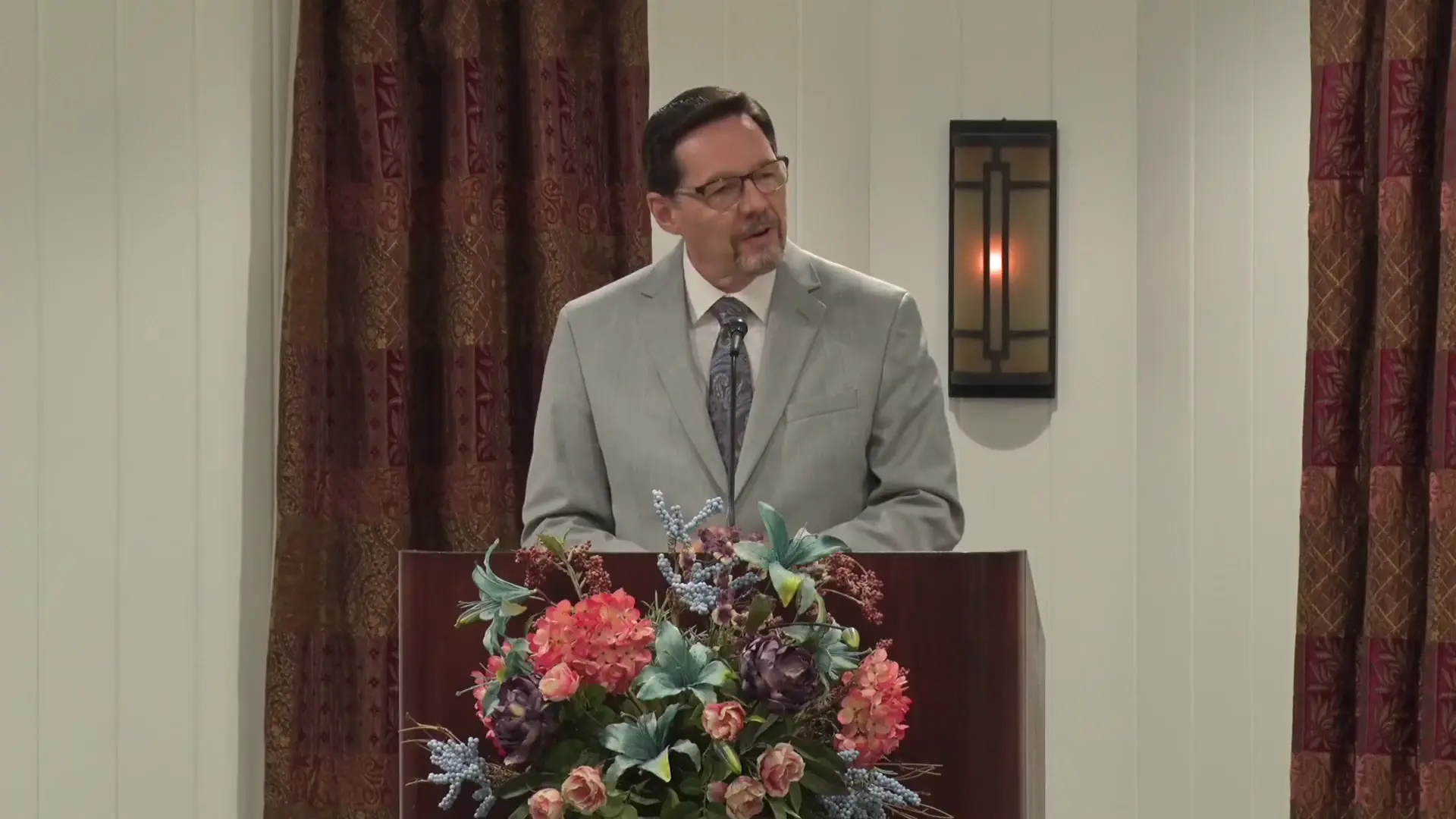
Sermon by Martin G. CollinsWhile temptation is universal, it is not irresistible; no one is forced to yield. Every temptation provides a choice between life or death, blessing or curse.
God Works in Marvelous Ways (Part Two)
Feast of Tabernacles Sermon by John W. RitenbaughGod's mysteries have been in plain sight from the beginning of time, but carnality has obscured them from mankind.
The Commandments (Part Nineteen)
Sermon/Bible Study byJesus taught that all outward sin stems from inner inordinate desire. What we desire or lust after automatically becomes our idol.

Spiritual Strongholds (Part One): Obedience
Sermon by Martin G. CollinsJoshua quickly acquiesced to God, realizing that it is not a question of God being with us; we must yield unconditionally to the sovereign will of God.
Trials: Much Needed Experiences
Sermon by John O. ReidGod uses trials to test our hearts, but He never places a trial before us to tempt us. God uses trials we bring on ourselves to draw us closer to Him.
The Elements of Motivation (Part Seven): Fear of Judgment
'Personal' from John W. RitenbaughOur fear of being judged negatively by God should spur us to greater obedience and growth toward godliness. The fear of God is a fundamental mindset.