


Filter by Categories
Is Passover on the First Day of Unleavened Bread? (Part Two)
CGG Weekly by David C. GrabbeThe Jews observed the Passover in two ways: at home in the evening as Abib 14 began, and at the Temple in the late afternoon of Abib 14. Jesus and His disciples observed the Passover in a private home at the beginning of Abib 14, which tradition calls the Last Supper. As Abib 14 was drawing near, the disciples observed people around them on the outskirts of Jerusalem in the process of sacrificing or engaging in the necessary preparations, prompting them to ask Jesus where He wanted them to likewise prepare for Passover.
Deuteronomy 16, Passover, and the Night to be Much Observed
Sermonette by John W. RitenbaughDeuteronomy 16:1-8 is often cited by those advocating for an Abib or Nisan 15 Passover due to the mentions of Passover. However, the text indicates that these verses do not apply to Passover but to the Days of Unleavened Bread, specifically the Night to be Much Observed. The term "Passover" in Deuteronomy 16:1 is misleading and may be a copyist's error. The instructions in these verses, including the sacrifice from the herd and flock, the location of the sacrifice, and the reference to the day Israel left Egypt, all point to the 15th of Abib, not the 14th, which is the actual date of Passover. Furthermore, the sacrifice mentioned is not to be made at home, unlike the Passover sacrifice, and the method of preparation specified is boiling, not roasting as required for Passover. The entire period covered by these instructions is seven days, aligning with the Days of Unleavened Bread, not the one day of Passover. Thus, Deuteronomy 16:1-8 clearly pertains to the Days of Unleavened Bread and the Night to be Much Observed, not to Passover on Abib/Nisan 14.
Is Passover on the First Day of Unleavened Bread? (Part One)
CGG Weekly by David C. GrabbeThe Jews combined Passover and the Feast of Unleavened Bread during the Babylonian exile, observing Passover late on Abib 14, just hours before the Feast of Unleavened Bread began. At the time of Jesus, there were two Passover observances: one led by the priests at the Temple late in the afternoon of Abib 14, and the other observed by the people in their homes at the beginning of Abib 14. Jesus and His disciples ate the Passover in a home, observing it as Abib 14 began, the evening before the priests did at the Temple.

Why Was Jesus Not Crucified as Passover Began? (Part One)
'Ready Answer' by David C. GrabbeHistorically, the church of God has observed the Passover just after sunset as the 14th day of Abib begins. The gospel accounts show Jesus observing the Passover with His disciples at the beginning of the 14th day of Abib, just after sunset. Matthew, Mark, and Luke confirm that Jesus intended to, and did, eat the Passover with His disciples at that time, emphasizing His great desire to share this meal with them before He suffered. Despite this, Jesus was crucified and died around 3:00 pm on the 14th day of Abib, during the daylight portion, which was the preparation day for the first day of Unleavened Bread. His death at this later hour does not align with the timing of the Passover lambs being slain at the beginning of the 14th day. Jesus set the example for observing Passover during the night of the 14th, instructing His disciples to partake of the bread and wine in remembrance of Him. Although His sinless blood was shed on Passover day, He did not fulfill every literal detail of the original Passover instructions given to Israel, such as being killed at the start of the 14th day or having His blood smeared on doorposts. Nevertheless, He fulfilled the Passover according to spiritual requirements that satisfied the Father, even if the physical timing and manner differed from the instructions given to a carnal people.
When Is Passover?
CGG Weekly by Pat HigginsThis year, Passover observance begins Monday evening, April 21, which is Nisan 14 on the Hebrew calendar. The evening of Nisan 14 is the correct time to observe the Passover, as multiple scriptures clearly instruct that Passover is on the fourteenth day of the first month. These verses not only specify the day but also the part of the day, at twilight or evening, which is the time that begins Nisan 14, before the daylight portion, as established in Genesis 1:5 where God reveals that His days begin with the evening followed by the morning. Sunset starts the evening, marking the start of a day in God's eyes. Additionally, Numbers 28:16-17 and Leviticus 23:5-6 distinguish Passover on the fourteenth day from the Feast of Unleavened Bread on the fifteenth day, assigning each a separate day. Exodus 12:5-6 further confirms this timing, instructing that the lamb shall be kept until the fourteenth day and killed at twilight by the whole assembly of the congregation of Israel. Those who observe Passover on Monday evening, Nisan 14, choose to follow the clear scriptural authority over any contrary tradition or reasoning.
Passover (Part Nine)
Sermon by John W. RitenbaughIn the month of Abib, also known as Nisan, the significance of the 14th day is tied to the observance of Passover as originally commanded by God. The Scriptures clearly indicate that Passover is to be observed at the beginning of the 14th, a practice exemplified by Jesus Christ Himself, who kept it one whole day before the majority of Jews, as recorded. This timing stands in contrast to later traditions that shifted the celebration to a Temple-centered sacrifice late on the 14th or even to the 15th. God's original intent, as seen in Exodus 12, Numbers 9, and Leviticus 23, was for a domestically-killed Passover lamb, sacrificed at the specific time of ben ha arbayim, which follows the going down of the sun, distinguishing it from other sacrifices. The biblical record shows that the Israelites did not leave Egypt on the 14th during Passover, but on the 15th, aligning with the Feast of Unleavened Bread, further clarifying that Abib/Nisan 14 is distinctly the day of Passover preparation and sacrifice, not the day of exodus.
Deuteronomy 16:1-8
Sermonette by John W. RitenbaughDeuteronomy 16:1-8 refers to Unleavened Bread rather than Passover (a scribal error, perhaps referring to the season). Ten clues clear up this misconception.

Head 'Em Up and Move 'Em Out!
Article by Mike FordSome believe that God instituted Passover on the 15th of Abib/Nisan, differing from the night observed as the Night to Be Much Observed. Under this new understanding, the events of the Passover and the beginning of the Exodus are compressed into half the time previously thought, raising questions about the logistics of 2.5 million Israelites leaving Rameses in just five hours. If the Israelites kept Passover on the wrong day, it could have been fatal for them. Even with concessions like beginning the day at full dark, assembling in Rameses for Passover, and completing all preparations in record time, the physical possibility of departing in the narrow window between 1 AM and 6 AM remains highly improbable. The deception surrounding the timing of Abib/Nisan 14 and the Passover depends on numerous twists of Scripture, yet it still fails to hold under scrutiny.
Should Passover Be Observed for Seven Days?
CGG Weekly by David C. GrabbeIn Ezekiel's Millennial vision, God's instructions for worship after Jesus Christ returns include the annual festivals. Passover is to be observed on Abib/Nisan 14, as clearly established in Exodus 12:1-20, Leviticus 23:5-6, 8, and Numbers 28:16-25. These passages confirm that Passover occurs on the fourteenth day of the first month, followed by the Feast of Unleavened Bread starting on the fifteenth day and lasting seven days until the twenty-first. Ezekiel 45:21, when properly understood through the Hebrew accents, separates the observance of Passover on the fourteenth day from the seven-day feast during which unleavened bread must be eaten. This distinction aligns with earlier scriptures, showing that Passover and the Feast of Unleavened Bread are distinct observances.
The Selfsame Day
Sermonette by John W. Ritenbaugh (1932-2023)God's precise control over time is evident in the significant events tied to Abib/Nisan 14, a date marking key moments in His purpose. In Genesis 14 and 15, the events involving Abraham and Melchizedek occurred on Nisan 14, just after sunset, setting the stage for God's covenant with Abraham. This covenant, confirmed by a maledictory oath as the sun went down, transitioned into the 15th, marking the beginning of the Night to be Much Observed. The timing of these events, culminating in the afternoon of the 14th with preparations for the feast, underscores God's meticulous scheduling. Furthermore, in Joshua 5:10-11, the children of Israel kept the Passover on the fourteenth day of the month at evening in the plains of Jericho, exactly 40 years to the day after leaving Egypt. This observance on the selfsame day highlights an exactly-dated anniversary, demonstrating God's faithfulness across generations. The term "selfsame" serves as a marker of significant anniversaries, showing that God is faithfully in control of time, ensuring events occur precisely as appointed within His purpose.

How Often Should We Partake of the Lord's Supper?
Herbert W. Armstrong BookletThe Lord's supper, as a sacred ordinance, was instituted by Jesus on the night of the 14th of Abib, also known as Nisan, in the Hebrew calendar, which marks the beginning of the Passover. This was the very eve of His death, a solemn memorial to remember His sacrifice. The original Passover, observed on the 14th of Abib, commemorated the exodus of the Israelites from Egypt, with the lamb killed at twilight, between the two evenings, as the new day commenced after sunset. Jesus, as our Passover, was sacrificed on this same day, continuing the significance of this set time. The ordinance is to be observed annually, after sundown on the 14th of Abib, following the example set by Jesus when the hour was come. This timing aligns with the scriptural command to keep this memorial at its appointed season from year to year. Observing it at any other time would be to take it unworthily, contrary to the precise order established by God. The first century Church of God under the original apostles continued to observe this ordinance once a year at this designated time, maintaining the connection to the Days of Unleavened Bread. The Lord's supper, as the New Testament continuation of the Passover with different emblems, should be observed after sunset on the evening of the 14th of Abib, before the Jewish feast on the 15th of Abib, adhering to the biblical instruction for this most solemn occasion.
Head 'Em Up and Move 'Em Out!
Sermonette byThe discussion surrounding Abib/Nisan 14 focuses on a critical examination of the timing of the Passover and the Exodus events as understood through different perspectives. Under the traditional understanding shown on the upper timeline, the 14th and 15th of Nisan are filled with significant events related to the Passover and the departure of the Israelites. In contrast, the new understanding, reflected on the lower timeline, presents the 14th as a relatively inactive day, compressing the events into a shorter timeframe. This new perspective suggests that the massive undertaking of moving 2.5 million people out of Rameses could occur in half the time previously thought, a notion that raises questions about logistical feasibility. The analysis specifically challenges whether such a large group could physically leave Rameses within a 5-hour window on the night of the 14th, highlighting the constraints of time and the conditions under which the Exodus occurred.
Passover (Part Ten)
Sermon by John W. RitenbaughThe scriptural evidence clearly indicates that God commanded the observance of Passover on the 14th of Abib/Nisan, as detailed in Exodus 12, Numbers 9, and Leviticus 23. These passages specify that the Passover lamb is to be slain between the two evenings, known as ben ha arbayim, which follows the going down of the sun, ba erev, at the beginning of the 14th. This timing is confirmed in Exodus 16:12-13, establishing that the sacrifice occurs immediately after sunset on the 13th, marking the start of the 14th. Jesus Christ observed Passover in accordance with this command, as seen in John 13:1, where the chronology places His last Passover on the evening of the 14th of Abib, aligning precisely with the instructions given in the earlier Scriptures. This observance is distinctly called the Passover, not the Passover of the Jews, highlighting a adherence to God's original command. Furthermore, the accounts in Matthew 26:17, Mark 14:12, and Luke 22:7, despite translation challenges, support that preparations and the killing of the lamb occurred at the mandated time at the beginning of the 14th, under the compulsion of God's law. In contrast, the Jewish tradition of a later observance does not align with the scriptural command for the 14th of Abib/Nisan. The evidence from John 18 and 19 shows two distinct Passovers being kept, with the Jewish leadership observing theirs after Jesus had already been on trial on the morning of the 14th, further illustrating the divergence from the original timing commanded by God.
The First Day of Unleavened Bread (Part One)
Sermon by John W. RitenbaughThere is a claim being made that Abib/Nisan 14, the day of Passover, is the first day of Unleavened Bread, which is contrary to the clear distinction between the two festivals. Passover is designated on the 14th of Abib/Nisan, while the Feast of Unleavened Bread begins on the 15th of Abib/Nisan, as a separate event. Scripture consistently shows that the 15th is the first day of Unleavened Bread, a Sabbath with no servile work to be done, whereas the 14th, Passover, is not designated as a Sabbath but as a preparation day. The events of Passover on the 14th, including the killing and consuming of the lamb, took up the entire day with solemn and time-consuming activities, preparing for the departure from Egypt, which occurred at the beginning of the 15th. This separation is evident as Israel was instructed to stay in their homes until morning on the 14th and could not physically leave until the night of the 15th began, marking the start of the Feast of Unleavened Bread. Thus, combining Passover on the 14th with Unleavened Bread starting on the 15th into a single event distorts their individual significance and the distinct timing established by God.
Passover (Part Five)
Sermon by John W. RitenbaughThe significance of Abib/Nisan 14 in relation to the Passover is rooted in the precise timing and sequence of events as described in God's Word. The lambs were killed at the beginning of the fourteenth, during the period of ben ha arbayim, which occurs after ba erev, marking the transition from sunset into twilight. This timing, at the very start of the fourteenth, is crucial and is supported by clear scriptural evidence, distinguishing it from any notion of occurring at the day's end. The killing of the lambs took place at the houses of the Israelites in Goshen, where they splashed the blood on their doorposts and lintels, further emphasizing the events of the fourteenth. Passover on the fourteenth encompassed a series of actions from about 6:00 p.m. to 2-3:00 a.m., including killing, skinning, roasting, eating, and burning the leftovers and entrails. This comprehensive process defined the observance of Passover on that day. The Israelites remained in their houses in Goshen throughout the night of the fourteenth, not departing shortly after midnight, highlighting their adherence to God's command during this critical time. The spoiling of the Egyptians, which began after the ninth plague and was interrupted by Passover, resumed after the killing of the firstborn on the fourteenth day of the first month, showing the continuation of events tied to this specific date. The distinction between Passover on the fourteenth and the subsequent Exodus on the fifteenth is evident, as the Israelites stayed in their houses until morning, assembling in Rameses during the daylight of the fourteenth in preparation for departure. Thus, Abib/Nisan 14 stands as the day of Passover, a memorial of God's passing over, separate from the act of leaving Egypt on the following day.
Why Wasn't Jesus Christ Crucified at the Start of Passover?
Sermonette byJesus was crucified late on Abib 14, yet the Passover lambs were to be killed at the beginning of the 14th. The time of Christ's death is highly significant.
The Lesson of the Night to be Much Observed
Sermonette byThe same God who exercised vigilance and care over our forebears does so over us. Israel's leaving Egypt signifies maintaining the relationship with God.

Why Was Jesus Not Crucified as Passover Began? (Part Two)
'Ready Answer' by David C. GrabbeJesus Christ kept His final Passover with His disciples at the beginning of Abib/Nisan 14, setting the example for when and how to observe it in remembrance of Him. However, His death, as our Passover, occurred much later, near the end of the 14th day of the first month, specifically in the afternoon. This timing of Christ's crucifixion on the afternoon of Abib 14 points to significant events centuries before the Passover in Egypt, aligning with the promises and preparations for the covenant God made with Abraham. On that same day and hour, during the daylight portion of the 14th in Abraham's time, a conversation about inheriting the land took place, and Abraham arranged animals for the covenant at God's command. The specific timing of Jesus' death on Abib 14 draws attention to the eternal inheritance promised to Abraham and his spiritual seed, confirming a New Covenant that advances the covenant made with Abraham.
Was Jesus Christ's Body Broken?
Sermonette by David C. GrabbeWas Jesus Christ's body actually broken? If so, it would have symbolized disqualification and a broken covenant. Only the bread of Passover was broken.
The First Day of Unleavened Bread (Part Two)
Sermon by John W. RitenbaughAbib/Nisan 14 holds a distinct and significant place in the biblical narrative as the day of Passover, separate from the first day of Unleavened Bread on the 15th. The events of Passover on the 14th are clearly marked by specific instructions, such as those in Exodus 12:22, where the Israelites were commanded to stay in their homes until morning after applying blood to their doorposts. This day, beginning in the dark of the 14th, focuses on the critical moment of the lamb's sacrifice and the protection from the Death Angel. Numbers 33:3 and Deuteronomy 16:1 further clarify that the departure from Egypt occurred on the 15th, 24 hours after the Passover events began, emphasizing the separation of these two days. It is impossible to merge the activities of staying indoors on the night of the 14th with leaving Egypt on the night of the 15th, underscoring that these are two distinct festivals with unique spiritual significance. Additionally, the narrative in Genesis 15, occurring 430 years prior, aligns with the timing of Abib 14, as it marks the beginning of the covenant with Abraham at night, transitioning into significant events that parallel the Passover day. This connection highlights the deep historical and spiritual importance of Abib 14 as a foundational moment leading to the fulfillment of God's promises.
Passover (Part Four)
Sermon by John W. RitenbaughConcerning Abib/Nisan 14, the timing and observance of the Passover are of utmost importance. The lambs were to be killed at the beginning of the fourteenth day of the first month, specifically at twilight, which is ben ha arbayim, the period between sunset and dark. This is established clearly in Exodus 12:6, where the instruction is given to keep the lamb until the fourteenth day and then kill it at twilight, marking the start of the Passover events on the fourteenth, not at the end or extending into the fifteenth. The location of the Passover observance was in the houses of the Israelites in the land of Goshen, as detailed in Exodus 12:7 and 12:21-24. The blood of the lamb was to be placed on the doorposts and lintels of their houses, and they were commanded not to leave their houses until morning, ensuring the entirety of the Passover occurred on the fourteenth. This reinforces that the Passover was a single-day event confined to the fourteenth, distinct from the Feast of Unleavened Bread which begins on the fifteenth, as noted in Leviticus 23:5. The process of killing, roasting, eating, and burning the leftovers of the Passover lamb spanned from twilight at the start of the fourteenth, around 6:00 p.m., to approximately 2:00-3:00 a.m., totaling 8-9 hours, all within the fourteenth day. This timeline, derived from Exodus 12:8-10, shows the meticulous observance carried out during the night of the fourteenth, with the Death Angel passing at midnight, as described in Exodus 12:29-30. Furthermore, the Israelites remained in their houses in Goshen throughout the night of the fourteenth, adhering to the command in Exodus 12:22 not to go out until morning, which is boqer, the period after night, lailah. This obedience ensured their safety as the Death Angel passed, and they did not depart their homes shortly after midnight, maintaining the observance strictly on the fourteenth day.
Passover (Part Three)
Sermon by John W. RitenbaughOn the fourteenth day of the first month, at twilight, is the LORD's Passover, as established in Leviticus 23:5. This specific timing, between the two evenings, marks the beginning of the Passover observance. According to Numbers 9:3, the Passover must be kept on the fourteenth day of the month at twilight, adhering to all its rites and ceremonies, which include more than just the killing of the lamb. These rites, having the force of law, encompass eight steps to be carried out on the fourteenth, such as killing the lamb, striking the doorposts with blood, roasting and eating the lamb, and not leaving the house until morning. Exodus 12:6 instructs that the whole assembly of the congregation of Israel shall kill the Passover lamb at twilight on the fourteenth day. The emphasis, however, is not solely on the killing but extends to the eating of the Passover, as seen in Exodus 12:47-48, where keeping the Passover is equated with eating it, and no uncircumcised person is allowed to partake. This focus on eating is reinforced in Luke 22:8-16, where Jesus Christ expresses a fervent desire to eat the Passover with His disciples on the fourteenth, highlighting that keeping the Passover means participating in the meal. Ezra 6:19-21 further confirms this practice, noting that the descendants of the captivity kept the Passover on the fourteenth day of the first month, with the emphasis again on eating it together with those who had separated themselves to seek the LORD God of Israel. The timing of these events, particularly the killing of the lamb, is clarified through the biblical definition of "between the two evenings," or ben ha arbayim, which follows sunset, or ba erev, as demonstrated in Exodus 16:12-13. This period of twilight at the beginning of the fourteenth day provided ample time for the Israelites to carry out the necessary steps of the Passover observance.
Truly Unleavened
Sermon by Richard T. RitenbaughThe Passover is observed on the 14th day of Abib, also known as Nisan, at twilight, marking the beginning of the day as understood in the Hebrew calendar. On this evening, the lamb or kid is to be slain, its blood smeared on the lintel and doorposts of the houses, and the flesh eaten that night after being roasted, accompanied by unleavened bread and bitter herbs. The 14th day itself is not a day of Unleavened Bread, though unleavened bread is consumed during the Passover service. Leaven may be present in homes and eaten on the 14th outside of the service, but it must be removed before the 15th day begins at evening, as the Feast of Unleavened Bread starts then and continues through the 21st day, during which no leaven is to be eaten or found in any place under one's authority.
Passover (Part Two)
Sermon by John W. RitenbaughThe importance of Abib/Nisan 14 in relation to the Passover is central to understanding God's commands. Leviticus 23:5 clearly states that on the fourteenth day of the first month at twilight is the LORD's Passover, distinguishing it from the Feast of Unleavened Bread which begins on the fifteenth day. This specific timing is reiterated in Exodus 12:6, where the lamb is to be killed at twilight on the fourteenth, followed by detailed instructions for its preparation and consumption that night. Numbers 9:1-3 further confirms that the Passover must be kept on the fourteenth day of the month at twilight, according to all its rites and ceremonies, with no changes to the original instructions even after the Israelites left Egypt. Additionally, for those unable to keep it at the appointed time due to defilement or travel, Numbers 9:9-12 specifies that the Passover is to be observed on the fourteenth day of the second month at twilight, maintaining all the ordinances including eating it with unleavened bread and bitter herbs. The command remains consistent that the Passover must be eaten on the night of the fourteenth, aligning with the significance of partaking in the sacrifice as a lifelong process.
The Wavesheaf and the Selfsame Day
Sermon by John W. RitenbaughAbib/Nisan 14 holds a pivotal place in the timeline of significant events demonstrating God's faithfulness to His promises. This date marks the beginning of Passover, observed at twilight just after sunset, as the Israelites killed the lambs in accordance with the instructions given in Exodus 12. Time-wise, this is at the very start of the 14th, when light still remains, aligning with the period known as ben ha arbayim, meaning twilight or dusk. The events of this day parallel the sequence in Genesis 14 and 15, where bread and wine were brought forth by Melchizedek, followed by darkness and Abraham's vision under the stars, clearly placing these occurrences into the night of the 14th. Furthermore, the daylight portion of Abib/Nisan 14 is a preparation day for the subsequent Night To Be Much Observed and the First Day of Unleavened Bread on the 15th. During this time, the Israelites prepared for the upcoming observances, just as they did historically, ensuring all was ready for the significant night that followed. The timeline progresses from the beginning of the 14th at sunset, through the night, and into the daylight hours, culminating in the late afternoon, which aligns with the timing of the sacrifice in Genesis 15 when the sun was going down, mirroring a key moment of ratification. In the sequence of events surrounding Christ's crucifixion, Abib/Nisan 14 also holds critical importance, as it was during the afternoon of this day that His sacrifice occurred, aligning precisely with the ratification of the covenant with Abraham in Genesis 15, rather than the initial Passover observance at the start of the day. This timing underscores the connection between the Old Testament events and the New Testament fulfillment, showing a consistent pattern across these historical moments. Additionally, in Joshua 5, the Israelites kept the Passover on the 14th day of the month at even in the plains of Jericho, following the same twilight observance, reinforcing the continuity of this significant date across different eras of God's covenantal history.
The Night to be Much Observed
Sermon by John W. RitenbaughAbib/Nisan 14 holds a significant place in the historical and spiritual narrative of God's plan for Israel, distinct from the events of the following day. On the fourteenth day of the first month, known as Abib or Nisan, the Passover of the Lord is observed, marking a pivotal moment as detailed in Numbers 28:16. This day begins with the evening, focusing on the killing and eating of the lamb, symbolizing a critical event in Israel's history. Deuteronomy 16:1 acknowledges the month of Abib as the time when the Lord brought Israel out of Egypt by night, though the specific departure is clarified as occurring on the fifteenth day. The events of Abib/Nisan 14, particularly the slaying of the firstborn in Egypt, set the stage for the exodus, culminating in the departure on the following day, as confirmed by Numbers 33:3, which notes the children of Israel leaving Rameses on the fifteenth day of the first month, the day after the Passover. The distinction between the fourteenth and fifteenth days is crucial, as one cannot stay in their house until morning on the fourteenth, as instructed in Exodus 12:22, and simultaneously leave Egypt by night. Thus, Abib/Nisan 14 stands as a separate observance with its own focus, leading into the significant events of the subsequent night.
Countdown to Pentecost 2001
'Personal' from John W. RitenbaughThe lamb slain on Abib/Nisan 14 holds a direct and powerful relationship to Passover, as this festival revolves around it, though its connection to other festivals becomes more distant in focus. On this day, Passover pictures Christ crucified for the forgiveness of our sins and the means of redemption from satan, sin, and this world. Although unleavened bread is required for the Passover meal on Nisan 14, the Bible never legally includes the whole day as part of the Days of Unleavened Bread. God made it clear in Leviticus 23:5-6 that Passover is on the 14th, and Unleavened Bread begins on the 15th, marking them as distinct and separate festivals despite their relation. Popular usage in New Testament times, as seen in Matthew 26:17, Mark 14:1, 12, and Luke 22:7, referred to Passover as the first of the unleaveneds due to the use of unleavened bread in the service, but Old Testament context does not support blending them into one festival. Thus, even when Passover on Nisan 14 falls on a weekly Sabbath, it is never legally part of the Days of Unleavened Bread and cannot be used to determine the wavesheaf day. Considering Passover as a day of Unleavened Bread to start the count to Pentecost introduces confusion and stretches the scriptural instruction.
Christ's Death, Resurrection, and Ascension
Sermon by Richard T. RitenbaughJesus of Nazareth, the Christ, our Savior, our Redeemer, the Messiah, died 1,964 years ago on the day of the Passover, Nisan 14. Without a doubt, He was crucified and died on Passover day, Nisan 14, as confirmed by scriptural accounts identifying Him as our Passover, sacrificed for us. The necessity of His death occurring on Nisan 14 is tied to the fulfillment of the Old Testament type of the Passover lamb, which was to be kept until the fourteenth day of the month and killed at twilight. For the type of the Passover lamb to be fulfilled perfectly in Jesus Christ, His crucifixion and death had to occur on Nisan 14, as there is no other day on which this type would have been fulfilled.

Passover: An Extraordinary Peace Offering
Sermon by David C. GrabbeEach year, we observe the Passover at the beginning of the 14th of Abib, commemorating the death of Jesus Christ as He and the early disciples did. This annual observance serves as a reminder of His sacrifice, prompting us to consider the various facets of His death as we partake of the bread and wine. Jesus fulfilled a significant aspect of His sacrifice on Passover afternoon, yet the Passover observance encompasses much more than a single element. Understanding the depth of Passover allows us to approach it with the proper mindset and receive the full intent of what God desires for us during this feast.
Remember: Truth and the Real Torch of Freedom
Sermon by Mark SchindlerDuring the daylight hours of the 14th day of the first month of God's calendar, we gather to continue our remembrance of the most significant preparation day in the history of mankind. Last evening, shortly after sunset marking the beginning of Abib/Nisan 14, we followed Christ's command to keep the Passover, reaffirming our commitment to Him and the New Covenant through the bread and wine. Today, on this Sabbath that falls within this day of remembrance, we sharpen our focus on our responsibilities amidst a chaotic world, memorializing the events that unfolded during the daylight portion of Abib/Nisan 14, when Christ's crucifixion occurred. This timing points back to God's covenantal promise to Abraham, with preparations made during the daylight of the 14th, culminating in Christ shedding His blood in the afternoon to establish the New Covenant. We commemorate these profound events, remembering His sacrifice and proclaiming His death until He returns.
Passover (Part Six)
Sermon by John W. RitenbaughPassover occurred at the beginning of the fourteenth day of the first month, Abib/Nisan 14. The entire day was devoted to preparations for coming out of Egypt, including the slaying, cleaning, and roasting of the lamb. The Israelites had to remain in their houses through the night as the Death Angel passed over, burn the remains, and stay until morning. The daylight portion of the fourteenth was used to gather along the route for their departure from Rameses and out of Egypt. It was a busy day of work, which is why Passover is not considered a holy day, though it is a festival. God demands work on that day in preparation for the feast that follows. The memorial of coming out of sin begins at sunset of the fourteenth, transitioning into the fifteenth. According to Numbers 9:1-3, in the first month of the second year after leaving Egypt, the Lord commanded the children of Israel to keep the Passover at its appointed time, on the fourteenth day of the month at twilight, following all its rites and ceremonies without change. Even with the tabernacle and priesthood in place, no alterations were made to the domestic observance of Passover. Numbers 9:9-12 further specifies that if anyone is unclean or on a journey, they may keep the Lord's Passover on the fourteenth day of the second month at twilight, adhering to all ordinances as in the first observance. Numbers 28:16-19 notes that on the fourteenth day of the first month is the Passover of the Lord, with no specific sacrifice mentioned for the tabernacle or temple, only the lamb slaughtered at home. This reinforces that God intended Passover to be a domestically killed sacrifice and observed festival, distinct from other offerings required at the tabernacle. Philo, a Jewish scholar from Alexandria, documented that during the time of Jesus and the apostles, the Jews observed Passover in two ways. The majority, the common people, performed the sacrifices themselves at home on the fourteenth, as God commanded, while a smaller group, including the Sadducees, Scribes, and Pharisees, kept it at the temple in the late afternoon of the fourteenth, eating it on the fifteenth. The original Passover, observed at the beginning of the fourteenth, involved killing the lamb at home, sprinkling blood on the doorposts, and eating it on the night of the fourteenth to commemorate the Passover event. In contrast, the traditional observance at the end of the fourteenth involved killing the lamb at the temple, sprinkling blood on the altar, and eating it on the night of the fifteenth to commemorate the Exodus.
Does Doctrine Really Matter? (Part Six)
Sermon by John W. RitenbaughThe disagreement regarding the date of Passover centers on whether it should be observed as the 13th day of the first month ends and the 14th begins, or when the 14th ends and the 15th begins. Leviticus 23:4-6 clearly states that in the fourteenth day of the first month at even is the LORD's Passover, while the fifteenth day marks the beginning of the Feast of Unleavened Bread. These are separate festivals, related in teaching and side by side in observance, but distinctly on different days. Some argue that the Passover service should be kept as the 14th ends, carrying into the 15th, claiming that since it begins at the end of the 14th, it is still observed on the 14th. However, this practice risks blurring the distinctive teachings of each festival over time, blending the two into one, as historically seen with the Jews who have largely forgotten the Days of Unleavened Bread in favor of a combined observance. The instructions in Exodus 12:10-12 and 12:21-23 emphasize that the Passover lamb is to be eaten in haste, with nothing remaining until morning, and the Israelites were to stay in their houses until morning, defined as the daylight portion of the day. This timing aligns with the events beginning as the 13th ends and the 14th starts, with the killing and eating of the lamb occurring in the night of the 14th. Twenty-four hours later, on the 15th, the Israelites celebrate their departure from Egypt on the first day of Unleavened Bread. The logistics of the exodus, involving a vast population and detailed preparations, further support this timing. The lamb was selected on the 10th, held until dusk or twilight as the 13th ended and the 14th began, then killed, roasted, and eaten while the Israelites were dressed to depart at the break of day on the 14th. This clear sequence underscores that Passover begins at the start of the 14th, maintaining the separation of the festivals as commanded.
Passover (Part Eight)
Sermon by John W. RitenbaughThe discussion on Passover includes specific references to Abib/Nisan 14 as a critical date in the observance of this festival. According to the original commands given by God in Exodus 12, the Passover lamb was to be slain at the beginning of the 14th day of the first month. During the daytime portion of Abib/Nisan 14, the people made preparations for leaving, which included marching and organizing to depart from the city of Rameses. Their exodus began near sunset of the 14th day, leading into the night of the 15th, when they left Egypt. Under King Hezekiah's reform, as recorded in II Chronicles 30, a unique situation arose where the Passover was observed in the second month due to the initial uncleanness of the people and the Temple. The Passover lambs were slaughtered on the 14th day of the second month, and this observance was at the command of the king, reflecting an unusual circumstance driven by a national emergency. Similarly, in II Chronicles 35, during King Josiah's reign, the Passover lambs were slaughtered on the 14th day of the first month, Abib/Nisan 14. Josiah personally supervised this observance, ensuring it was conducted under strict control at the Temple due to the pervasive pagan influences among the people. This was another instance of a national emergency where the king enforced the celebration to prevent deviation to Baal worship. Both instances under Hezekiah and Josiah highlight deviations from the original command due to extraordinary circumstances, yet the foundational timing of Abib/Nisan 14 for the slaughter of the Passover lamb remained consistent with the initial instructions given by God.
Passover (Part Seven)
Sermon by John W. RitenbaughThe original instructions for Passover, as detailed in the provided material, emphasize that the lamb was to be killed at the beginning of the fourteenth day of the first month, known as Abib/Nisan 14. This timing stands in contrast to later traditional practices where the lamb was killed at the end of the fourteenth day. The significance of this early timing on Abib/Nisan 14 is rooted in the domestic setting of the observance, where the head of the family performed the killing at home, not at a central location like the temple. Furthermore, the blood was sprinkled on the doorposts during this original observance on Abib/Nisan 14, and the meal was eaten on the night of the fourteenth, commemorating the Passover event itself. This adherence to the beginning of Abib/Nisan 14 for the killing of the lamb underscores the distinct separation of Passover from the Feast of Unleavened Bread, which begins on the fifteenth, highlighting the original intent and structure of these observances as separate yet sequential events.
Why Passover and Not Easter?
CGG Weekly by Richard T. RitenbaughThe observance of Passover on Abib/Nisan 14 holds significant importance for Christians, as it marks the evening when Jesus was betrayed, aligning with the Hebrew calendar as noted in Leviticus 23:5. This date was faithfully observed by the New Testament church during the lifetime of the original apostles. Even after their passing, the Ephesian church, under the guidance of John's disciples Polycarp and Polycrates, continued to honor Passover on Nisan 14 into the second century. However, those who persisted in this practice, known as Quartodecimans, faced opposition and were marginalized as most of Christendom shifted to Easter. The Roman Church eventually banned the observance of Passover on Nisan 14 at the Council of Nicea in AD 325, establishing rules for calculating Easter's date across the Church.
Chronic Difficulties
Sermon by Richard T. RitenbaughThe crucifixion of Jesus Christ occurred on Abib/Nisan 14, which fell in the middle of a literal week, specifically on a Wednesday. This day, known as Passover, served as a preparation day for the high holy day, the first Day of Unleavened Bread, which began at sunset. Joseph of Arimathea placed Jesus in the tomb just before sunset on Abib/Nisan 14, ensuring it was done before the onset of the annual Sabbath. The Passover meal with His disciples also took place on this significant day, marking the culmination of His preparation and the fulfillment of the Passover Lamb symbolism as He was selected by God the Father for this purpose.
Footwashing
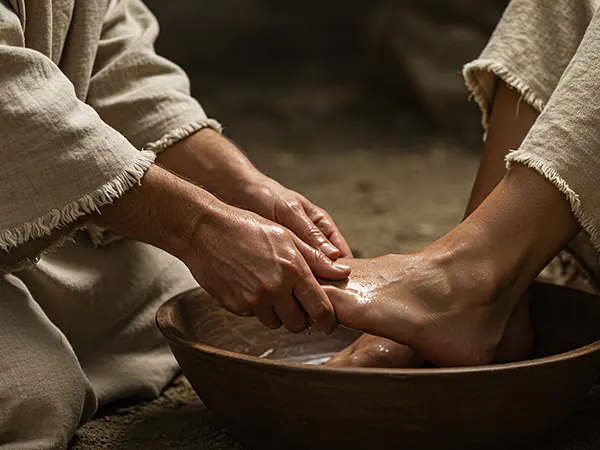
Bible Study by Richard T. RitenbaughOn the evening of Nisan 14, Jesus and His disciples partook of the Passover, often referred to as the Last Supper. After the meal, Jesus took a towel, tied it around His waist, and washed His disciples' feet, setting an example of humility and service. Later that evening, He introduced the symbols of bread and wine as part of the Passover service. Following this precedent, the church observes the footwashing ritual as the first act in the annual Passover service, emphasizing the importance of serving one another with the same attitude of humility that Jesus demonstrated.
Passover (Part One)
Sermon by John W. RitenbaughThe observance of Passover on Abib/Nisan 14 has been a point of contention throughout history, facing repeated attacks across different eras. In the second and third centuries AD, the Quartodecimani Controversy highlighted a significant effort to abolish Passover, with the western church under the bishop of Rome replacing it with an Easter observance following Good Friday, labeling the keeping of Passover as Judaizing. Despite this, eastern churches in Asia Minor continued to observe Passover on the fourteenth day. Long before Jesus Christ, the Jews had altered the timing of Passover, shifting it from the fourteenth to the fifteenth and blending it with the Days of Unleavened Bread, reducing an eight-day festival into seven or even six days in some instances. The significance of maintaining Passover on Abib/Nisan 14 is underscored by its foundational role in God's purpose, marking the beginning of the covenant relationship with Israel in the Old Covenant and the New Covenant relationship for Christians through Jesus Christ's introduction of new symbols on the last Passover night before His crucifixion. The Bible clearly establishes that Passover on the fourteenth day of the first month at twilight commemorates God's passing over the houses of the Israelites in Egypt, distinguishing it from the Feast of Unleavened Bread on the fifteenth day, which memorializes the exodus from Egypt.
The Second Passover
Sermonette by Richard T. RitenbaughThe Passover is a critical appointment with God, set for the 14th day of the first month, known as Abib or Nisan, at twilight, as commanded in Numbers 9:1-5. God emphasizes the importance of keeping this appointed time repeatedly, underscoring that it should be observed with all its rites and ceremonies on this specific day. However, provision is made for those who unavoidably miss this date due to uncleanness, such as defilement by a corpse, or being far away on a journey, as detailed in Numbers 9:9-10. These individuals are permitted to observe the Passover on the 14th day of the second month, called Iyar, at twilight, following the same ordinances as the first Passover, including eating unleavened bread and bitter herbs, leaving none until morning, and not breaking any bones, as stated in Numbers 9:11-12. This allowance reflects the significance God places on participating in the Passover, ensuring that even under dire circumstances, His people can fulfill this vital observance. Historically, during the time of Hezekiah, as recorded in II Chronicles 30:1-4 and 13-15, the Passover was delayed to the 14th day of the second month due to insufficient sanctified priests and the inability of the people to gather in Jerusalem at the regular time, demonstrating a rare but sanctioned exception to the standard timing. God's strictness is evident in Numbers 9:13, where He declares that anyone who is clean and not on a journey, yet fails to keep the Passover at its appointed time in Nisan, shall be cut off from the people, bearing their sin for neglecting this essential covenantal act.