


Filter by Categories
The Lamb of God
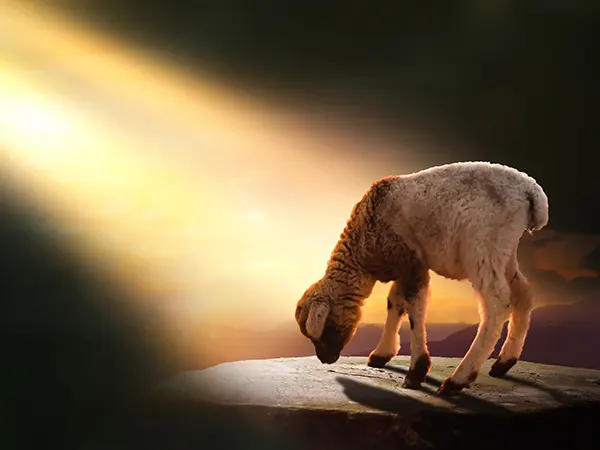
Sermonette byIn the Gospel of John, chapter one, John the Baptist, while preaching and baptizing in the River Jordan, saw Jesus approaching and declared, "Behold the Lamb of God who takes away the sin of the world." This profound identification marked the first public recognition of Jesus in His mission. The following day, as Jesus walked by, John, standing with two of His disciples, again proclaimed, "Behold the Lamb of God." This repeated designation emphasized a significant aspect of Jesus' purpose and character. The description of Jesus as the Lamb of God highlights His gentle and sacrificial nature. Unlike a display of power or might, He came embodying humility and submission, reflecting an attitude of restraint and silence in the face of abuse and revilement. Throughout His ministry on Earth, He maintained this demeanor, never retaliating when cursed or complaining when painfully mistreated. This initial portrayal of Jesus as a lamb, rather than a king or conqueror, underscores His role as a sacrifice and sets an example for His followers. His choice to come as a lamb, gentle and without guile, in need of God's protection and guidance, offers a model of humility and dependence on the Father. This imagery of the lamb, quiet, helpless, and sensitive, mirrors the traits of sheep, illustrating both His nature and the relationship of His followers to Him as their shepherd.
The Lamb of Revelation
Sermonette by David C. GrabbeIn Revelation, John refers to Christ as the Lamb more than any other designation because of His role of Redeemer, which is different from a sin offering.

The Lamb of Revelation (Part One)
'Prophecy Watch' by David C. GrabbeIn the book of Revelation, Jesus Christ is predominantly referred to as the Lamb, with twenty-eight instances identifying Him as such, far surpassing other titles like Son of God or Christ. Amidst the apocalyptic visions of beasts, plagues, and destruction, where Jesus is unveiled as King of kings against the resistance of men and demons, He is resoundingly called the Lamb. This title stands in stark contrast to the expected imagery of thunderous judgment, as lambs are typically associated with passive, uncomplaining submission, evident in Jesus' first coming when He was led as a sheep to the slaughter, silent before His shearers. The use of lambs in Scripture extends beyond sin offerings to various purposes, including redemption, as seen in the Passover and the law of the firstborn in Exodus. In this context, God claimed Israel as His firstborn, redeeming them from Pharaoh, and required the Israelites to redeem every firstborn male with a lamb, symbolizing an exchange of life due to a prior claim of ownership rather than atonement for sin. This theme of redemption through a lamb also appears in the life of Abraham, where God provided a ram to redeem Isaac, His firstborn, underlining God's claim on the firstborn as His portion. Applying this understanding to Revelation, the title of Lamb for Jesus Christ suggests a deeper significance beyond mere sacrifice for sin, pointing to themes of ownership and redemption. Just as Israel was redeemed from Pharaoh, and Isaac from sacrifice, the Lamb in Revelation embodies the act of buying back or rescuing, aligning with the broader narrative of God's purpose to redeem and claim His own amidst the cataclysmic events described.
Death of a Lamb
Article by StaffDuring the Passover season, the members of God's church ponder the Old Testament symbolism of the slaughter of lambs, which remains deeply relevant to modern-day Christians. The ancient ritual of sacrificing the Passover lamb carries profound spiritual principles, even though such sacrifices are no longer practiced. The purpose of the sacrifice of the Lamb of God will ultimately be fulfilled, marking the end of death, sorrow, crying, and pain. Our Savior will proclaim that the terrible agony He endured for His brothers and sisters was worth it, and our Father will joyfully affirm that even the risk of losing His Son was worth it. Let us keep the Passover with the death of the Lamb of God in mind, looking forward to that wonderful time when all will be made new.
The Lamb of Revelation (Part Two)
'Prophecy Watch' by David C. GrabbeJesus Christ is referred to as the Lamb in the book of Revelation more frequently than by any other name or title. This title emphasizes the theme of redemption, which involves transferring ownership, fitting the events depicted in Revelation. The Lamb, described as having been slain, is the only One worthy to take the scroll, which appears to be the title deed of all creation, and open its seals. This Lamb possesses seven horns, symbolizing perfect strength and power, and seven eyes, connected to the removal of iniquity and the restoration of true worship, both tied to future redemption. When the theme of redemption is applied to the mentions of the Lamb in Revelation, the imagery aligns. The Lamb's blood has redeemed individuals, forming them into a kingdom of priests, and the Lamb begins opening the seals, not as a sin offering, but as One redeeming what belongs to Him. The scope of this redemption extends beyond Israel or the church, portraying Jesus Christ as the Creator, Heir, and Owner of all things. The opening of the scroll's seals brings cataclysm, similar to the plagues upon Egypt during Israel's redemption, as not everyone accepts the Lamb's claim. Ultimately, the Lamb succeeds, as the kingdoms of this world become the kingdoms of our Lord and of His Christ, and He shall reign forever and ever. The description in the Sixth Seal reveals the Lamb filled with wrath, demonstrating zeal for what He possesses, which can include tremendous destruction when necessary. Here, the Lamb focuses on demonstrating ownership and realigning His creation with His government. In Revelation, the Lamb stands on Mount Zion with 144,000 redeemed from the earth and among men, singing before Him. Before the final judgments, those victorious over the beast sing the song of Moses and the song of the Lamb, both centered on God's redemption. In the concluding chapters of Revelation, the Lamb and His Bride are depicted, echoing stories of redemption, with Jesus Christ, the firstborn from the dead, as the Lamb of redemption who will redeem what is lawfully His, including the church, Israel, Jerusalem, the Land of Promise, and all who have not rejected Him.

Peace, Peace (Part One): Peace with God
Sermon by Richard T. RitenbaughThe concept of the Lamb of God is central to the redemptive purpose outlined in this message. John the Baptist declared in John 1:29, "Behold! The Lamb of God who takes away the sin of the world!" This statement underscores the mission of Jesus Christ to remove the burden of sin from humanity. Revelation 13:8 further emphasizes this eternal plan, describing Him as the Lamb slain from the foundation of the world, indicating that His sacrifice was predetermined to address the inevitable sinfulness of mankind. In Isaiah 53:7, the imagery of the Lamb is vividly portrayed as He was led to the slaughter, silent before His shearers, bearing the iniquities of all. This passage highlights His willingness to suffer and die as an offering for sin, fulfilling the role of the suffering Servant who justifies many by bearing their transgressions. Through this act, as stated in Isaiah 53:5, the chastisement for our peace was upon Him, restoring wholeness and enabling a renewed relationship with God. Jesus Himself affirmed this purpose in multiple declarations. In John 10:11, He stated, "I am the good shepherd; the good shepherd gives His life for the sheep," reinforcing His role as the sacrificial Lamb who lays down His life. Additionally, in Matthew 20:28, He connected His mission to ransom, saying the Son of Man came to serve and to give His life a ransom for many, linking His sacrifice to the prophesied suffering Servant who bears the sin of many. Through His death, as described in Colossians 2:13-14, He wiped out the record of sins against us, nailing it to the cross, thus providing a way of escape from the penalty of sin. This act of redemption, planned from the foundation, breaks the enmity between God and humanity, establishing the potential for peace through His blood, as He bore the wrath meant for sinners and opened the path to reconciliation with the Father.
The Angel of God
Sermon by Richard T. RitenbaughThe concept of the Lamb of God emerges as a significant element in the appearances of the Angel of the Lord, particularly in the narrative of Abraham and Isaac. In Genesis 22, when Abraham is instructed to offer Isaac as a sacrifice, he expresses faith that God will provide for Himself the lamb. This statement foreshadows a profound spiritual truth, pointing to a substitutionary sacrifice. God indeed provides a ram in Isaac's place, symbolizing not just physical deliverance but a deeper spiritual provision for many. This act on Mount Moriah introduces the idea of the Lamb of God, representing a sacrifice that would ultimately bless all nations through Abraham's seed. The Angel of the Lord, in orchestrating these events, reveals critical aspects of God's plan, embedding theological insights into the narrative that highlight the importance of faith and obedience in the unfolding of divine purpose.
Approaching God Through Christ (Part One)
Sermon by Richard T. RitenbaughJesus Christ stands as the central figure in our relationship with God, embodying numerous profound roles that connect the Old and New Covenants. Among these, He is the Lamb who gives His life for the sheep and for the whole world. This sacrificial aspect underscores His ultimate act of love and redemption, offering Himself as the means through which humanity can be reconciled to God. As the Lamb, He fulfills a vital purpose, pointing to the deeper spiritual significance of His sacrifice that transcends mere ritual, guiding us toward a true understanding of divine mercy and grace.
Is the Passover Just a Sin Offering? (Part One)
Article by David C. GrabbeGod's Word frequently pictures Jesus Christ as a lamb, more than any other animal, symbolizing quiet, accepting submission even in suffering and following without resistance. Within the sacrificial system, lambs fulfilled a wide variety of symbolic roles, and their significance varies depending on the context of the specific offering. Lambs were used for different purposes, such as in the Passover and the sin offering, but these roles are not identical despite the shared use of the animal. Each lamb served a distinct symbolic purpose as instructed, highlighting the rich details in God's Word that must be carefully understood to avoid blurring the fuller vision of Christ's sacrifice. If we limit Christ's sacrifice to only the sin offering, we miss the broader purpose God intends through His Son's death.
End-Time Cavemen
CGG Weekly by Charles WhitakerIn Revelation 6:16-17, Jesus Christ, the Revelator, quotes the words of some end-time cave dwellers. What do these two sentences tell us about them?
Remember Me
Sermonette by Ronny H. GrahamGod asks that we use the Passover to bring to remembrance His redemptive act, especially how our sins caused Christ to die in our stead.

Christ, Our Passover
'Personal' from John W. RitenbaughMany people believe that our sins are the focus of Passover—but they are wrong! Jesus Christ, the Passover Lamb, should be our focus. How well do you know Him?
Why Wasn't Jesus Christ Crucified at the Start of Passover?
Sermonette byJesus was crucified late on Abib 14, yet the Passover lambs were to be killed at the beginning of the 14th. The time of Christ's death is highly significant.
Christ's Death, Resurrection, and Ascension
Sermon by Richard T. RitenbaughJesus perfectly fulfilled the Old Testament types, slain as the Passover Lamb, resurrected with the cutting of the wavesheaf, and ascended to His Father at the time of the waving of the sheaf.

Purge Me With Hyssop
Article by StaffThe Bible frequently uses the hyssop plant as a symbol of cleansing and purification. In relation to Christ's sacrifice, this herb has a connection to the Passover.
The Awesome Cost of Salvation
Sermon by John W. RitenbaughWe need to be sobered at the awesomeness of the cost to set us free from sin—what the Creator endured. We have been purchased, and are obliged to our Purchaser.
Post-Historic Cave-Dwellers
'Prophecy Watch' by Charles WhitakerThe Sixth Seal of Revelation details the reaction of some people to the amazing heavenly signs they witness, giving us insight into what lies ahead.
Christ Our Passover
Sermon by John W. RitenbaughThe focus of our self-examination should not be self-centered or comparing ourselves with others, but on the awesome significance of His sacrifice.
By This We Know Love!
Sermon by Martin G. CollinsAs God's people keep God's law in its spiritual intent, they begin to think like the Father and His Son, both of whom habitually do good.
Worthy to Take the Scroll
Sermonette byThe sealed scroll most resembles a title deed, which can only be opened by the redeemer of the property. The rightful owner of the title deed is Jesus Christ.
Passover (Part One)
Sermon by John W. RitenbaughThe annual reaffirmation of the covenant through the Passover is at the core of an on-going relationship with the Father and Son, beginning the perfecting process.
Chronic Difficulties
Sermon by Richard T. RitenbaughHuman tradition and Bible truth regarding the timing of Christ's crucifixion and resurrection do not square. Here is the overwhelming chronological evidence.
The Sixth Seal
'Prophecy Watch' by Richard T. RitenbaughThe Sixth Seal of Revelation foretells of the sun turning black and the moon turning red, stars falling, and a terrible earthquake that moves mountains.
The Night to be Much Observed
Sermon by John W. RitenbaughThe Night Much to be Observed is a memorial of the covenant with Abraham, and God's watchfulness in delivering ancient Israel as well as spiritual Israel.