


Filter by Categories
Evaluating the Price of Redemption
CGG Weekly by John O. ReidGod displayed His mighty power by bringing His people Israel out of Egypt, the most powerful nation of that time, despite its wealth and strength. To achieve this redemption, He performed a series of miracles through Moses and Aaron over several months, beginning with wonders that Pharaoh's magicians could replicate, such as turning water to blood and calling up frogs. However, as the plagues intensified with lice, flies, cattle disease, and boils, the magicians could no longer counterfeit them. The severity escalated with hail, thunder, fire, locusts devastating crops, and a thick darkness lasting three days, immobilizing all except the Israelites in Goshen. The final blow came on the evening of the Passover, when God sent an angel of death to strike down Egypt's firstborn, from Pharaoh's heir to the servant's child and even livestock, resulting in widespread death and devastation. This immense price paid to free Israel from slavery to Egypt, pagan beliefs, and a culture of sin crippled the nation severely, though it did not destroy it entirely. In parallel, a profound price was paid to redeem us from bondage to sin and death, through the precious blood of Christ, the Creator God, as a lamb without blemish. This sacrifice, the lifeblood of the Son of God, was the only payment sufficient for our enormous debt of sin, underscoring the solemnity with which we must approach the Passover.
Redeemed, But Waiting for Redemption
Sermonette by David C. GrabbeIsrael's redemption from Egypt at Passover freed the people from Pharaoh and made them God's own, but it was only the beginning of their relationship with Him. They still had to follow the cloud, enter a covenant, and remain faithful to it, which proved difficult. According to I Corinthians 10, Israel's experience serves as an example, so the pattern carries over to the church: redemption has past, present, and future aspects, just as salvation does. God's preamble to the Ten Commandments tied the law to the deliverance from bondage, and the commandments, including the Sabbath, show how to stay free. Israel disbelieved, defiled the Sabbath, and became re-enslaved. Redemption continues to be a major Passover theme, seen also in Abraham's rescue of Lot. Scripture also promises a future redemption of physical Israel and Judah, with at least eighteen mentions in the Prophets and Psalms. They will be delivered from oppressive Gentile powers and, more importantly, brought into the New Covenant, redeemed in the same way as the church.
144,000 of the Tribes of Israel
Sermonette by David C. GrabbeThe attributes of the 144,000 in Revelation 7 and 14 are found in prophecies of Israel, indicating that a humbled remnant of Israel will turn to God.
The Doctrine of Israel (Part Fourteen): Israel Redeemed
Sermon by Richard T. RitenbaughGod employs a rigorous process of refinement in preparing people for His purposes, focusing on spiritual qualities such as love, faith, humility, and obedience. His ultimate goal is to transform all humanity into genuine sons and daughters, milling them down to the finest flour through character development. Soon, He will initiate this process with the people of Israel, beginning with a severe punishment due to their mounting sins, which have become a heavy burden even to Him. However, punishment is only the starting point; a crucial subsequent step is the redemption of a humble remnant. Once humbled by their sins and the ensuing punishment, God will provide a means to redeem and forgive them, ensuring the process continues. In Isaiah 1:2-9, God expresses His exasperation with Israel's constant rebellion and lack of understanding, despite His nurturing and provision. He declares their sin as a heavy burden, stultifying their growth and leading to regression. Their corruption affects every level of the nation, resulting in desolation, with cities burned and land devoured by strangers. Only a small remnant survives, preventing total annihilation like Sodom and Gomorrah. In Isaiah 5:1-7, 13-15, 24-30, God portrays Israel as His vineyard, lovingly tended yet yielding wild grapes instead of good fruit. Due to their unfruitfulness and rejection of His law, He decrees punishment, including captivity, famine, and war, as a direct consequence of their sin. His wrath is justified, aiming to address their stubbornness and lack of humility. Isaiah 10:20-23 reveals a future change for the remnant of Israel during the time of the end. This small group will no longer rely on their oppressors but will turn to the Lord, the Holy One of Israel, in truth. Though Israel's numbers are vast, only a remnant will return, and the decreed destruction will overflow with righteousness, indicating that God's justice will ultimately cause a transformation in these few. Zechariah 12:9-11 and 13:1 describe a future day when God will pour out His Spirit of grace and supplication on the house of David and Jerusalem. They will mourn for Him whom they pierced, recognizing their guilt, and a fountain will be opened for sin and uncleanness, signifying forgiveness and spiritual renewal for the humbled remnant. Isaiah 11:11-13 speaks of a second recovery of the remnant from across the world, assembling the outcasts of Israel and the dispersed of Judah. This gathering, a Second Exodus, surpasses the first in importance due to its purpose of salvation. God will also forge peace between Israel and Judah, ending their long-standing enmity and uniting them under His standard. Ezekiel 37:15-25 illustrates the reunification of Israel and Judah as two sticks becoming one in God's hand. He will gather them from among the nations, cleanse them from their sins, and make them one nation under one king, David, their prince. They will walk in His judgments, dwell in their land forever, and be His people, with Him as their God. Ezekiel 37:26-28 further promises a covenant of peace, an everlasting covenant, establishing Israel with His sanctuary in their midst. The nations will recognize that God sanctifies Israel, fulfilling their original purpose as an example nation, drawing others to desire their special relationship with Him. Jeremiah 31:1-11, 15-22 depicts God's everlasting love for Israel, offering grace in the wilderness after their suffering. He will rebuild and regather them, leading a remnant back with weeping and supplications. Their repentance and shame for past sins will evoke God's mercy, marking a new thing as Israel finally embraces Him. Jeremiah 31:31-34 foretells a New Covenant with Israel and Judah, unlike the broken covenant of old. God will write His law on their hearts and minds, forgiving their iniquity and remembering their sin no more, establishing a profound relationship where they truly know Him as His people. Ezekiel 36:24-29 reinforces this promise, as
Themes of Ruth (Part Three): Redemption
Sermon by Richard T. RitenbaughJesus redeemed us with His shed blood from the penalty of our sins, but He also works as our High Priest, continually redeeming us until we are resurrected.
The King's Highway
Sermonette byGod provided highways in the wilderness to deliver Israel from bondage, to alert God's people that salvation is coming, and to proclaim the coming Highway of Holiness.

The Lamb of Revelation (Part One)
'Prophecy Watch' by David C. GrabbeIn most minds, lambs do not correspond to ideas of wrath and judgment, but the Lamb of God in Revelation is just that as our almighty Redeemer.

Holy Days: Passover
Bible Study by Richard T. RitenbaughGod redeems certain people from the grip of this world by calling them into His fellowship. The Israelites were purchased from Pharaoh at the Passover rather than forgiven of their sins. The blood on the doorposts represents the life of the lamb given to redeem or buy back those within the house. The Passover sacrifice most closely resembles the peace offering, which pictures peaceful and secure fellowship with God over a shared meal because He has bestowed His favor.
Learn to Fear God
Feast of Tabernacles Sermon by John O. ReidFearing God is equated with obeying or complying with God's instructions, voluntarily measuring all our thoughts and behavior against His Law.
The Lamb of Revelation
Sermonette by David C. GrabbeIn Revelation, John refers to Christ as the Lamb more than any other designation because of His role of Redeemer, which is different from a sin offering.
Shouting Gleanings and Singing Olives (Part Two)
Feast of Tabernacles Sermon by Charles WhitakerIsaiah's apocalypse resembles Exodus, as both begin with a narration of God's judgment on sinners and then move to a description of God's continuing work.
Hope!
Feast of Tabernacles Sermon by John O. ReidHope is a joyful and contented expectation of salvation or fulfillment. Modern Israel has very little hope because of reaping the consequences of sin.
New Heavens and New Earth
Feast of Tabernacles Sermon by John W. RitenbaughFollowing Jacob's Trouble, God will regather a remnant of the outcasts, breaking their yokes and bringing them to repentance and rest in the Promised Land.
Is the Passover Just a Sin Offering? (Part Two)
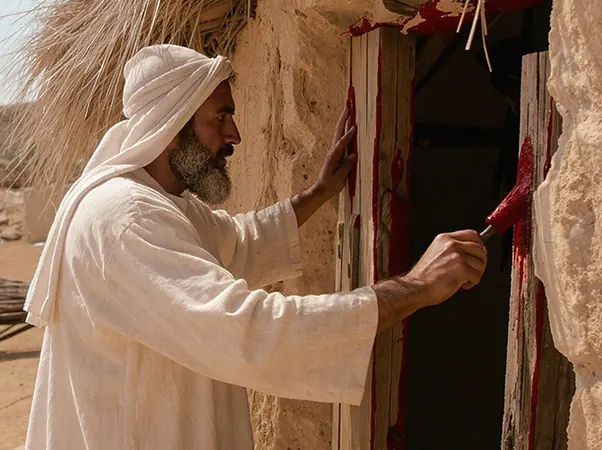
Article by David C. GrabbeThe redemption of Israel centers on God's purchase of His firstborn nation from bondage to Pharaoh during the Exodus Passover. At that time Egypt and all within it belonged to Pharaoh, placing the Israelites under his legal claim as resident aliens subject to his power. The blood of the lamb on the doorposts served as the sign of life that caused God to pass over the Israelite houses, sparing their firstborn from the plague that struck Egypt and thereby redeeming them from Pharaoh's dominion. Scripture consistently describes this act as redemption from Pharaoh rather than from sin, with no mention of atonement or forgiveness attached to the Passover observance itself. God acted because He remembered His covenant with Abraham, Isaac, and Jacob, remaining faithful to His earlier promises that Abraham's descendants would become a great nation, receive a specific land, and be delivered after four hundred years of affliction. This covenant motivated Him to judge Egypt while protecting and delivering Israel despite the people's idolatry and rebellion in Egypt. The Passover thus demonstrated God's gracious exemption and acceptance of the nation through which He would fulfill His word to Abraham, not any payment for sins. The meal instructions and the eating of the specially prepared lamb further emphasized this redemption of the households, later connected to the redemption of the firstborn and the substitution of the Levites.
The Four Cups of Wine
Sermonette by Clyde FinkleaJewish tradition calls for four cups of wine on Passover based on God's 'I will' statements in Exodus 6:6-7, which apply to the Israel of God today.
Psalms: Book Two (Part One)
Sermon by Richard T. RitenbaughThe Pentecost season generally corresponds to Book II of the Psalms, Exodus, and the story of Ruth. Major themes include exile, separation, and redemption.
Why Are We Here? (2004)
Feast of Tabernacles Sermon by John O. ReidKeeping the Feast of Tabernacles includes temporary dwellings, rejoicing before God, and learning to fear God and faithfully keep His law.
Hosea's Prophecy (Part Two)
Sermon by Martin G. CollinsHosea is an account of Israel's unfaithfulness to the covenant with God, and the redemptive work of God to rescue His unfaithful spouse from slavery.