


Filter by Categories
Humble Service
Sermonette by Ted E. BowlingJesus modeled the practice of foot-washing to demonstrate the need to be submissive to one another, to serve one another, including those who betray.

Christ, Our Passover
'Personal' from John W. RitenbaughPassover is a profound observance centered on Jesus Christ as the Lamb of God, slain for the sins of the world, embodying a human sacrifice of the most sublime quality. It prepares us spiritually to participate in the rest of God's plan as outlined by the holy days, demanding significant personal preparation. The cup during the Passover service symbolizes the blood Jesus spilled in sacrificing His life, sealing God's agreement of salvation with us, certifying His promise to justify us for salvation. Understanding Christ's sacrifice properly determines the quality of our observance of Passover. To prevent taking it in a careless and unappreciative manner, we are charged to examine ourselves, discerning the Lord's body. This self-examination involves seriously reviewing our spiritual and moral failures in contrast to the perfect glory of our Savior, Jesus Christ, who lived without committing even one sin. Despite this focus on self, the emphasis at Passover remains on the payment for our sins through Christ's sacrifice, not on ourselves, concentrating on the most elementary precepts of our salvation and the part Jesus Christ plays in it. Passover's purpose is not just to remember historical events but to grasp the point of Christ's death. If we fail to comprehend its meaning, we are more likely to treat His death unworthily. Our grateful participation in eating and drinking the symbols enables our sins to be paid, driving us to it out of awareness of sin rather than keeping us from it. The theme of Passover is the awesome cost of salvation, manifested in the sinless sacrifice of Jesus Christ, whose sinlessness was not mechanical but filled with sympathy, empathy, compassion, kindness, and concern for the helpless slaves of sin. This should evoke revulsion that our sins caused such an injustice as His death, while also inspiring appreciation, indebtedness, and thanksgiving by departing from sin.

Passover: An Extraordinary Peace Offering
Sermon by David C. GrabbeEach year, we observe the Passover at the beginning of the 14th of Abib, as Jesus, the disciples, and the early church did, marking an annual commemoration of His death. The Passover observance involves much more than linking it to the sin offering fulfilled by Christ on Passover afternoon; it requires understanding its deeper significance to approach it with the right frame of mind and receive what God intends. The instructions for the Passover in Egypt, as detailed in Exodus 12:3-13, lay a foundation for this feast, emphasizing a distinctive meal with specific preparations, ensuring no waste, and highlighting the eating of the lamb rather than atonement or forgiveness. The Passover lamb's blood on the doorposts represented the life given to redeem those within each participating house, not to symbolize forgiveness, as God overlooked Israel's sins during the Exodus, demonstrating mercy rather than justice. This exemption, reflected in the Hebrew word pesach meaning pretermission or omission, underscores God's gracious acceptance rather than atonement. The Passover differs significantly from the sin offering, with its focus on a shared meal in homes, specific preparation by roasting, and inclusion of all parts of the lamb, contrasting with the sin offering's restrictions and focus on atonement. Resembling the peace offering more closely, the Passover pictures a shared meal with God, celebrating harmony and acceptance, as seen in God's exemption of Israel despite their idolatry. Prerequisites like circumcision and ceremonial cleanliness before partaking further distinguish Passover from a sin offering, aligning with the peace offering's requirements and reflecting spiritual preparation in the New Covenant. During the Passover service with His disciples, as recorded in John 13-17 and Luke 22:14-18, Jesus emphasized fellowship, love, peace, and unity with the Father and each other, without mentioning sin, highlighting the meal's focus on communion rather than atonement. The bread and wine, central to the New Testament Passover, symbolize Christ's body as a source of life and the blood of the New Covenant, representing a pledge of God's faithfulness and the promise of spiritual completion, as noted in Matthew 26:26-28 and I Corinthians 10:16-20. This sacrificial meal unites participants with God and each other, focusing on ongoing fellowship with the Father and the Son, and celebrating the peace and well-being found in Christ. The Passover remains unfulfilled until the Kingdom of God, pointing to a future redemption from corrupt nature to incorruptible life, reinforcing its theme of redemption as a process.
A Pre-Passover Look
Sermon by John W. RitenbaughWe must thoroughly examine ourselves, exercising and strengthening our faith, actively giving love back to God, to avoid taking Passover in a careless manner.
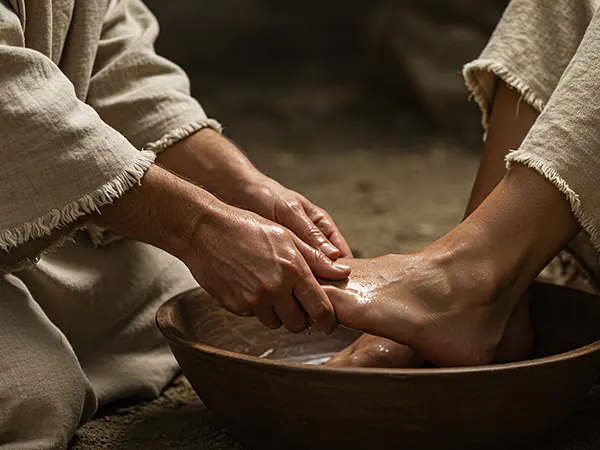
Footwashing
Bible Study by Richard T. RitenbaughFootwashing is the initial part of the Passover ceremony. Why did Christ institute it? What is its purpose?

Another Look at Footwashing
Article by Bill KeeseeMany consider footwashing at Passover to be a mere ritual to remind us to serve one another. But it teaches another godly attribute: forgiveness.
How Do We Keep God's Festivals?
'Ready Answer' by Richard T. RitenbaughHere are the foundational principles to keep in mind in observing the Feasts of God throughout the year.
The Lord's Supper
Sermonette by Mike FordEquivocating with the expression 'as oft as you drink it in remembrance of me,' many believe they can observe the Lord's Supper monthly, weekly, or daily.

An Unpayable Debt and Obligation
'Personal' from John W. RitenbaughWhen God calls us and redeems us through the sacrifice of Jesus Christ, we suddenly come under obligation—a debt we cannot pay but overshadows all we do.
Themes of I Corinthians (Part 5)
Sermon by Richard T. RitenbaughI Corinthians gives ready instruction in the order and decorum that is fitting for church organization, as well as the Passover and weekly service.
John (Part Twenty)
Sermon/Bible Study by John W. RitenbaughJust as a seed must die to itself in order to bear fruit, we also must sacrifice our lives, submitting unconditionally to God's to bear abundant fruit.