


Filter by Categories
The Last Great Day
Feast of Tabernacles Sermon by John O. ReidThe Last Great Day holds a special significance as it encourages us during our departure from the Feast of Tabernacles. This day, planned by God the Father and the One who became Jesus Christ since the time of Adam and Eve, or perhaps even before, pictures an extraordinary event beyond human imagination. It represents a miraculous time of rejoicing for God the Father, Jesus Christ, the 24 elders, the host of heaven, and all of us changed into spirit sons, as we celebrate our collective success. This day symbolizes the resurrection of our loved ones whom we dearly miss, offering hope and encouragement as we return home. It envisions a future where those who suffered in war, lost limbs, were blinded, lame, or died in sickness will be resurrected to new, healthy bodies in a perfected world free from crime, prejudice, war, hatred, lust, poverty, and senseless slaughter. It portrays a time when people will own their land, free from the fear of losing their homes, and live in privacy without overcrowding, enjoying health, clean air, and abundant organic food. The Last Great Day also pictures a world with only the One True God, eliminating false worship and superstitions, bringing freedom from unfounded fears. With satan bound, his hateful influence over God's creation will be removed, allowing all mankind who ever lived to be called by God, given the chance to repent of their mistakes and join the God Family. This day underscores our active role in the Kingdom of God, far from passive, as we are prepared now to serve, govern, care for, and teach billions during this time. Our calling and current life experiences are the training ground for the daunting tasks ahead, helping us relate to and assist those resurrected. We will follow the pattern of Jesus Christ, understanding human struggles through our own, forming a bond of compassion and mercy with those we guide, declaring the Father's and Son's names, and helping them overcome the fear of death with the promise of an awesome future. As part of God's plan, we will be transformed into spirit beings, becoming kings and priests to reign on earth under Jesus Christ, rebuilding from scratch after destruction, starting small and growing in responsibility. During the Millennium, we will restore and build, preparing for the greater task of the Last Great Day, when billions are resurrected. With satan's influence removed, we will teach and guide these unconverted masses, addressing false religions, prejudices, and deep-seated hatreds, helping them overcome through forgiveness and understanding. Our work during this time will be fulfilling and rewarding, transforming those we guide into people with the character of God. God's plan includes a period after the Millennium for these billions to live, learn, and overcome, ensuring they are prepared for eternity. The events of the Last Great Day culminate in the completion of God's millennial plan, with Jesus Christ delivering the kingdom to God the Father, subduing all enemies, including death, and ushering in a new age with a fabulous city descending from heaven, marking the final chapter of this profound time.
The Last Great Day of Reconciliation
Sermonette by Bill OnisickGod did not create rebellion, but He did create free will, giving us a choice, which our carnal nature sabotages because it is enmity against God and His law.

Holy Days: The Eighth Day
Bible Study by Richard T. RitenbaughThe Last Great Day, the final festival in God's annual holy days, holds a profound significance as it looks forward to a time after the Millennium when a remarkable period of salvation will unfold. During this time, the majority of mankind—rich and poor, young and old, men and women—will be resurrected and given the opportunity to inherit eternal life. Billions will qualify to enter the God Family, while those who refuse to repent and submit to God and His way will be cast into the Lake of Fire, facing the second eternal death. This festival, also called the eighth day, immediately follows the Feast of Tabernacles, symbolizing abundance and regeneration, as the Hebrew word for eight implies fatness and fertility. Though closely connected to the Feast of Tabernacles, it carries a distinct meaning, being part of it yet separate. God's people observe this day with praise and thankfulness, offering spiritual sacrifices for His abundant spiritual gifts. The Last Great Day foreshadows the Great White Throne Judgment period, during which the conditions of the Millennium—God's government, peace, and prosperity—will continue. After the Millennium, God will raise to physical life all those who never had an opportunity for salvation. Christ will judge everyone who lived throughout human history yet was not called, offering the same opportunity to both Israel and the Gentiles. If they meet God's judgment, He will grant them eternal life and spiritual bodies. Additionally, a third resurrection will occur for those who persist in rebellion, leading to their casting into the Lake of Fire for a merciful, permanent death. God judges all by the same standard, evaluating true Christians today by their adherence to His Word and applying the same measure to those in the second resurrection, giving them time to live a life of overcoming and obedience. The greatness of this day lies in Christ, the perfect Judge of all, who will mercifully and lovingly judge vast numbers of people, granting them eternal life. On this day, Christ also revealed that a time would come when all humanity would have free access to the living water of God's Holy Spirit, which He dispenses to His disciples. Following this judgment period, God will create a new heaven and a new earth, a pure world fit for God the Father Himself. In this eternal state, there will be no more death, sorrow, crying, or pain, as the former things will have passed away. All who have accepted God's way will be glorified as members of the God Family, living forever and spreading God's rule over the entire universe.
The Eighth Day
Sermonette by James BeaubelleThe seventh Millennium will be a time of rest, when the suffering we experience today will be gone, enabling preparation for the Great White Throne Judgment.
The Eighth Day (2019)
Sermonette by David C. GrabbeThe Eighth Day, though scarcely described in Scripture, reveals its meaning through patterns God has woven throughout His Word. Leviticus 23 and Numbers 29 provide the direct instructions: a holy convocation with no customary work, yet distinct from the preceding seven days of the Feast of Tabernacles. The command to rejoice and dwell in booths applies specifically to the seven days, not eight, signaling a shift in focus. Sacrifices are also scaled back—only one bull, one ram, and seven lambs, compared to the larger numbers offered throughout the Feast—showing that this day, though still requiring worship, is different in character. The Hebrew word for eight carries meanings of abundance, overabundance, and satisfaction. Since eight equals seven plus one, and seven represents perfection, eight signifies something beyond perfection—superabundance, new beginnings, and regeneration. This pattern of seven days followed by a distinct eighth day recurs throughout Scripture: the circumcision of a male child on the eighth day, marking entrance into covenant with Abraham's God; the dedication of firstborn animals to God on the eighth day after seven with their mother; the cleansing of a leper, culminating in restoration on the eighth day; and the Nazirite vow, renewed on the eighth day after defilement. Each instance follows seven days of preparation, cleansing, or separation, followed by an eighth day of dedication and abundance. The consecration of the priesthood in Leviticus 8-9 provides the clearest picture. For seven days, the priests remained in the Tabernacle, eating before the Lord. On the eighth day, God's glory appeared, fire consumed the offering, and the people shouted for joy and worshiped. Yet that same day also brought judgment, as Nadab and Abihu were struck down for offering profane fire—demonstrating that abundance must coexist with holiness. These patterns converge in the Feast of Tabernacles. The seven days, marked by daily sin offerings, mirror the priests' consecration; the Eighth Day mirrors God's appearance and acceptance. Fewer sacrifices are required because God ultimately desires people, not animals—His people are His portion. On this day, worshipers are released from their temporary dwellings, symbolizing renewed dedication to God after a period of separation, much like firstborn animals given fully to His service. This same sevens-then-eight pattern extends to seven millennia followed by an eighth—a new beginning marked by resurrection, judgment of Gog and Magog, and God tabernacling fully with renewed humanity, paralleling Nadab and Abihu's judgment as a lesson in holiness. A further connection appears in Luke 2: if Christ was born on the first day of the Feast, then His circumcision on the eighth day coincided with the Eighth Day of the Feast, marking His entrance into Abraham's covenant in the flesh—a new beginning of abundant life for that covenant. Finally, the priestly blessing from Numbers 6, given after Aaron blessed the people on their eighth day, is bestowed upon God's people still—words of blessing, grace, and peace, marking the Eighth Day as a time when God places His name upon His people, consecrating and claiming them as His own.
Lessons From the Eighth Day
Sermonette by David C. GrabbeThe Eighth Day, often called the Last Great Day, presents a challenge for understanding because Scripture directly states little about it, yet God commands it be kept holy with a sacred assembly. Leviticus 23 establishes it as tied to yet distinct from the seven days of Tabernacles: rejoicing and dwelling in booths are commanded specifically for seven days, not eight, and the required offerings in Numbers 29 are scaled back to less than half of those during the feast. These contrasts suggest that rejoicing, temporary dwellings, and abundant sacrifice are not the day's primary focus, prompting the question of what that focus actually is. The answer lies partly in the designation of this day as a sacred assembly, from the Hebrew Atzeret, a root carrying ideas of stopping, restraining, closing, and retaining. This marks the day as an especially solemn convocation, closing out the feast, restraining common activity even further than usual, and emphasizing that God's people retain the lessons of the preceding days so they are not lost upon returning to ordinary life. Further insight comes from the meaning of the number eight itself, rooted in ideas of abundance, satisfaction, and new beginning, since eight represents perfection (seven) plus something more. This seven-plus-one pattern recurs throughout the Law: circumcision on the eighth day marks a new covenant life; the eighth-day dedication of firstborn animals gives God His portion; the cleansed leper's eighth day brings restored life; the Nazirite's eighth day renews his vow. Each instance shows seven days of setting apart followed by an eighth day of new beginning, dedication to God, or abundance. The clearest pattern appears in the consecration of the priesthood in Leviticus 8-9. For seven days the priests remained in the tabernacle, echoing Israel's dwelling in booths during Tabernacles. On the eighth day, the congregation assembled, offerings were made, and the glory of the Lord appeared, consuming the sacrifice and prompting joyful worship. This suggests that Tabernacles' seven days followed by the Eighth Day echo this priestly consecration pattern, with God's true portion being not merely offerings but the priests themselves—those consecrated to serve Him, just as Israel was called a kingdom of priests, and believers today are a royal priesthood. Applying the day-for-a-year principle to human history, seven thousand years of preparation and mortality, including the millennial Sabbath rest under Christ's reign, correspond to the seven days of consecration, while the eighth millennium corresponds to the Eighth Day itself—the true goal, when death is destroyed, all things are made new, and God tabernacles fully with mankind as described in Revelation 21. God will be all in all, His purpose in creating mankind complete and perfect. This pattern calls for reflection on what the preceding days of tabernacling with Christ have produced—growth, change, and lessons learned—as one's portion brought to God, and for embracing the Eighth Day as a time of renewed dedication, retained understanding, and consecrated service with strength granted from Him.
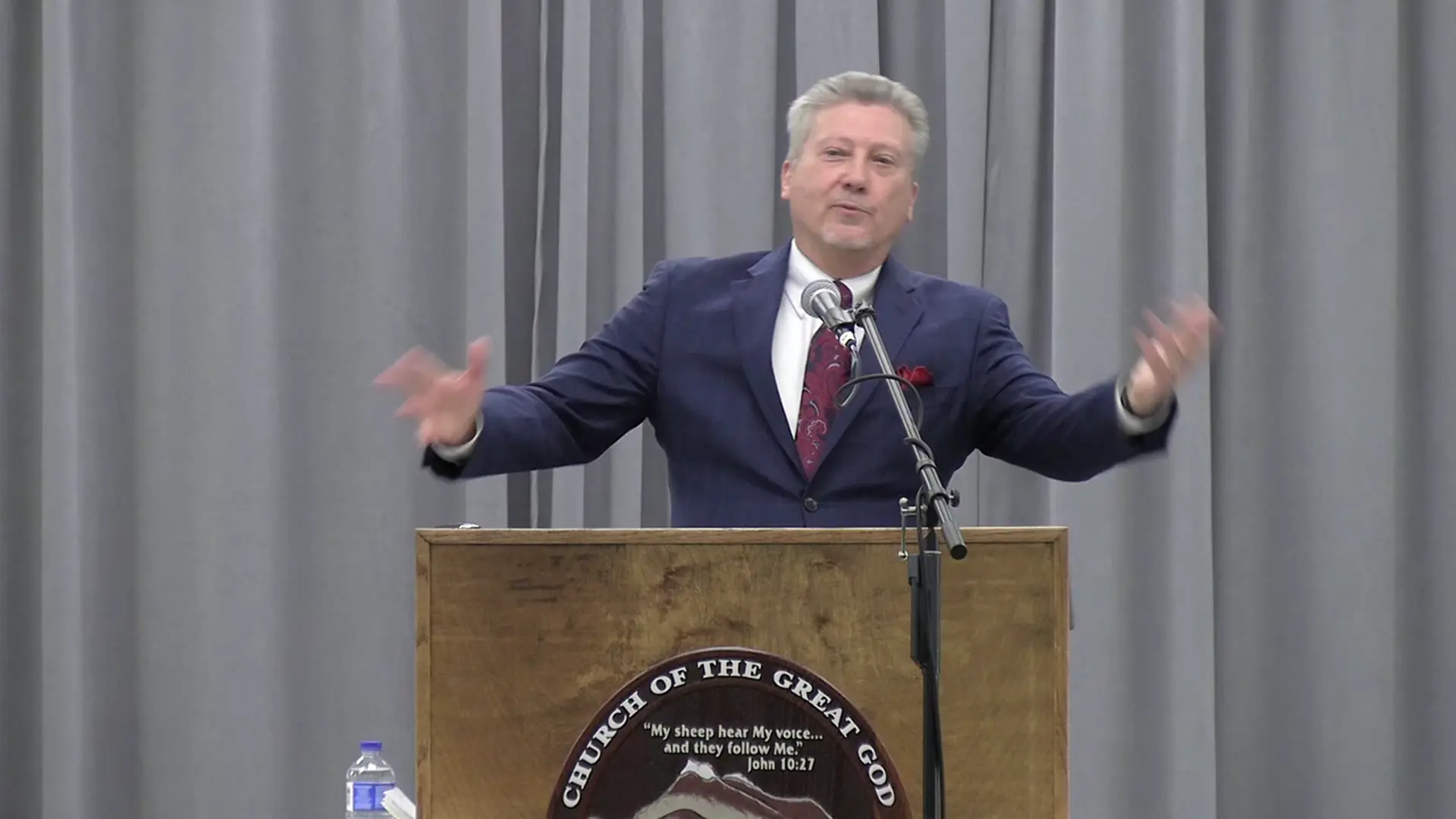
Jesus in the Feasts (Part Six): The Eighth Day
Feast of Tabernacles Sermon by Richard T. RitenbaughIn the context of the holy days, the Eighth Day, also known as the Last Great Day, holds a unique significance in pointing us to Christ. In this day, He is our all in all, encapsulating everything we need. As part of the festival cycle, the Eighth Day follows the seven days of the Feast of Tabernacles and is marked by a holy convocation and Sabbath rest, as outlined in Leviticus 23. It is also designated as a sacred assembly, a term that sets it apart from a regular holy convocation. This distinction, rooted in the Hebrew word "atzeret," implies a special purpose, involving ideas of closing, stopping, restraining, and retaining the lessons and teachings of the feasts. The sacred assembly of the Eighth Day, alongside the Last Day of Unleavened Bread, signifies the conclusion of week-long festivals, emphasizing a time to cease normal activities and meditate on the spiritual insights gained. This day urges us to retain what the feasts teach, to internalize and act upon these lessons in our lives. In relation to Christ, the Eighth Day underscores that He embodies all the lessons, examples, reasons, hope, and good things revealed through God's festivals. He is the source of the Word, the way, the truth, and the life, providing all the tools, power, wisdom, and holiness necessary to attain God's Kingdom. In Revelation 1, Christ uses merisms to affirm that He is our everything, declaring Himself as the Alpha and the Omega, the Beginning and the End, and the First and the Last. These expressions emphasize that He encompasses all things from start to finish, ever-present and working to ensure the fulfillment of God's plan. On the Eighth Day, analogous to the final holy day, He reassures us not to be afraid, affirming that we lack nothing in Him. He is our example, teacher, and the teachings themselves, ensuring that we have what it takes to endure and overcome, supported by His sovereignty and divine fullness within us through His Spirit.

The Fall Holy Days
Article by John ReissThe Eighth Day, as outlined in Leviticus 23:36, marks the final fall holy day and represents the concluding step in God's plan. After the Millennium, the thousand years of Christ's rule, all who have ever lived will be resurrected to physical life and given God's Spirit and understanding of His Plan. For a hundred years, they will practice living as God intends. This period is a second resurrection, the resurrection of the rest of the dead. Once these steps are complete, God's harvest of souls will end, and the effects of 6,000 years of disobedience will be wiped away. All mankind will either be members of His Family or have been annihilated in the Lake of Fire, ushering in the time of the New Heaven and New Earth where death and pain will be no more, and God will dwell with humanity.
Are God's Holy Days To Be Kept Today?
Sermon/Bible Study by Martin G. CollinsThe Last Great Day, also known as the Eighth Day, is one of the seven annual holy days outlined in Leviticus 23, which are vital for understanding God's plan of salvation. These feasts, including the Last Great Day, were not only intended for ancient Israel but are firmly rooted in the New Testament as God's holy days, to be observed by true Christians today. They picture different periods in the plan of spiritual creation and mark the stewardship of God's truth. Observing these days, such as the Last Great Day, keeps God's church in the true memory and worship of Him, impressing the truths these high Sabbaths represent on the minds of His children through all time. Failing to observe these annual Sabbaths leads to a loss of knowledge of God's true plan, as they are commanded to be kept year after year forever, bringing great joy and hope when their true significance is understood.
The Great White Throne
Feast of Tabernacles Sermon by Richard T. RitenbaughThe Last Great Day holds profound significance as it represents events yet to unfold, requiring us to envision a future beyond our current experience. This day, often challenging to fully grasp, centers on the Great White Throne Judgment, a time when countless individuals will have their opportunity for salvation. Unlike the misconceptions held by some, this period is not solely about condemnation but is a time of fairness and hope, where God offers a genuine chance for eternal life to billions. Scriptural references such as Ezekiel 37, with its vision of the Valley of Dry Bones, and Revelation 20, detailing the events following the Millennium, provide insight into this era. These passages highlight a second resurrection, where the rest of the dead will live again physically, experiencing a full life during which they will be judged according to their works. This resurrection occurs after the thousand-year reign of Christ, following the binding and final defeat of satan, marking the beginning of the Great White Throne period. The Great White Throne itself, described in Revelation as great, white, and a seat of sovereign authority, symbolizes the immense power and perfect righteousness of the One who sits upon it. The term "great" reflects the unparalleled dominion and excellence of God, while "white" signifies His holiness, purity, and the joy of being accepted by Him. As a throne, it represents the ultimate authority from which just and equitable judgments are made, ensuring that every decision is perfect and untainted by bias. This throne is not a place of dread but of awe, where God's justice, mercy, and kindness prevail. It is a source of both severity and goodness, from which flows the river of life as well as the judgment of the unrepentant. During this time, those resurrected will have access to the teachings of Scripture, learning and living under the same judgment we experience now, with the opportunity to embrace eternal life as God desires for all to repent and join Him. Ultimately, the Great White Throne Judgment embodies the character of a God who is fair, loving, and forgiving, eager to extend grace and salvation. It stands as a testament to His desire for none to perish but for all to share in the joy of eternal life with Him.
Being There
Sermonette by Mike FordThe Eighth Day, also known as the Last Great Day, holds profound significance as it pictures the second resurrection, a time when those not called by God in this life will have their opportunity. On this day, billions of people, most with no prior knowledge of God, will be resurrected and granted 100 years to learn and grow to become like God. They will face no interference from satan, as he will be out of the picture, and they will be guided by millions of teachers born into God's Family during the previous 1,000 years. This day represents a future of hope and transformation, where God desires all to be saved and come to the knowledge of the truth, as He is not willing that any should perish. The vision of this time, depicted in Hosea 14, shows mankind repenting and God forgiving and blessing, symbolized through metaphors of growth and beauty like the lily, the cedar, and the olive tree. It is a reminder of the ultimate purpose to be there, to witness and participate in this great resurrection, ensuring that we, as firstfruits, are present to guide and teach during this extraordinary period in God's Kingdom.

Be There!
Article by Mike FordThe Last Great Day represents the second resurrection, a time pictured by the Great White Throne Judgment, when billions of people who were not called by God during their earthly lives will rise to life. This includes individuals like my grandfather, who lived a full life without knowing God's purpose, yet will be given the chance to follow God's way and reap its benefits. During this period, as described in Revelation 20:11-13, they will have an opportunity, possibly a hundred years, to learn and grow in a world without the influence of satan, ruled by Christ, and surrounded by spirit-composed teachers from the previous Millennium who will guide them. Hosea 14:1-8 further illustrates this time, depicting a resurrected mankind, symbolized by Israel, repenting and being forgiven and blessed by God. God reveals Himself as a source of growth and protection, urging all to renounce idols of the heart and follow His righteous ways. The wise and prudent will understand and choose to walk in the ways of the Lord, ensuring their place in His everlasting kingdom, as we are encouraged to seek first the kingdom of God to be present during this Last Great Day.
John 7:37 Examined (Part One)
Feast of Tabernacles Sermon by John W. Ritenbaugh (1932-2023)The Eighth Day, commonly referred to as the Last Great Day, holds a unique place among God's feasts and holy days, yet it remains unnamed in the Bible. Unlike other festivals clearly identified in Leviticus 23, such as Passover, the Days of Unleavened Bread, and the Feast of Tabernacles, the Eighth Day is mentioned without a specific title, appearing only as a sacred assembly or holy convocation in Scriptures like Leviticus 23:36, Leviticus 23:39, Numbers 29:35, II Chronicles 7:9, and Nehemiah 8:18. This day, observed immediately after the seven days of the Feast of Tabernacles, is distinct and separate, carrying its own significance despite lacking a biblical name. The term "Last Great Day" originated within the Radio Church of God, later known as the Worldwide Church of God, and though not Scriptural, it is considered fitting for this holy day. Historically, there has been a misunderstanding regarding the timing of key events associated with this festival. Many have linked John 7:37, where Jesus Christ speaks on the last day of the feast, to the Eighth Day. However, this address was actually given on the seventh and final day of the Feast of Tabernacles, not on the day we call the Last Great Day. The Feast of Tabernacles is explicitly defined as lasting seven days in Scriptures such as Leviticus 23:34 and 23:42, and the Eighth Day stands apart as a separate festival, adjacent to but distinct from the preceding seven days. This distinction is further evidenced by historical practices, where on the afternoon of the seventh day of the Feast of Tabernacles, people in Jerusalem would begin to dismantle their booths and return to their homes, indicating the transition to a separate observance on the Eighth Day. The true meaning and purpose of the Eighth Day are not evident in the Old Testament, where it lacks detailed instruction or associated events, leaving even Jewish scholars puzzled, with some describing it as a holy day in search of a cause. The deeper understanding of this day emerges only through the New Testament perspective, revealing its significance in God's plan. On the Eighth Day following the Feast of Tabernacles, Jesus Christ delivered extensive teachings at the Temple, as recorded from John 8:1 through John 10:21. These teachings, given on what is identified as the Last Great Day, cover critical subjects that illuminate the purpose of this holy day, including confrontations with the Pharisees, the healing of a blind man, and revelations about His role as the Shepherd. This day is also connected to future events of profound importance. After the seventh one-thousand-year period, represented by the Feast of Tabernacles and commonly called the Millennium, the Eighth Day points to a time following the final removal of Satan's influence, when he is cast into the Lake of Fire. Revelation 20:5 and 20:11-13 describe the Great White Throne Judgment during this period, where the books are opened, and all are judged according to their works. This judgment, overseen by Jesus Christ as affirmed in John 5:22, pertains to the second resurrection, offering an opportunity for those resurrected to hear the Gospel of the Kingdom of God and demonstrate faith through their actions. Thus, the Eighth Day, or Last Great Day, encapsulates a pivotal moment in God's plan for humanity's ultimate reconciliation and judgment.

The Final Harvest
'Personal' from John W. RitenbaughThe Eighth Day, also known as the Last Great Day, holds profound significance for those who grasp its meaning. It addresses the perplexing questions surrounding the vast multitudes of humanity who live or have died without knowledge of God's way or a true understanding of Jesus Christ, the only name by which we must be saved. This day represents a time when the whole world will pass through the gates of righteousness, recognizing Christ as Savior, rejoicing in those God sends to teach them, and praising God for His mercy in granting salvation. The outpouring of His Holy Spirit on all of humanity will be the catalyst for this universal response. The Eighth Day offers hope for those who have lived without an opportunity for salvation, suggesting that God's merciful plan includes a future moment when they will be brought near by the blood of Christ, challenging the notion that they are forever lost due to circumstances beyond their control.
Eternal Responsibilities
Feast of Tabernacles Sermon by Martin G. CollinsThe Eighth Day, also known as the Last Great Day, is an integral part of the eight-day festival that includes the Feast of Tabernacles, dating back to the time of Moses and ancient Israel. This festival, filled with rejoicing, festivity, brotherhood, and thanksgiving, mirrors the way we observe it today, elevated to a spiritual plane by God's Holy Spirit. The Last Great Day holds profound significance in God's plan for the salvation of mankind, symbolizing a time of judgment and opportunity for those who have not yet had their chance to understand His truth. On this day, Jesus Christ stood up and spoke of living water, representing the Holy Spirit, which a salvation-thirsty humanity will receive during the Great White Throne Judgment. This period, described in Revelation 20, involves the resurrection of billions to mortal life for a time of judgment, likely spanning about one hundred years. During this time, they will have their first opportunity to comprehend God's way, accept His truth, and choose salvation. God will not force anyone to accept His path, but under His government, most will eventually turn to Him through His power. Those who reject His way will face final judgment in the lake of fire, where God mercifully ends their existence to prevent eternal suffering. The Last Great Day, as part of this eight-day festival, provides a vision and uplift that keeps us focused on our purpose as a church to grow, overcome, and proclaim the good news of Christ's coming and God's sovereignty. It underscores our eternal responsibility to seek Him diligently. The Great White Throne Judgment, occurring after the Millennium, will see the second resurrection, where the dead from all time are raised to physical life with God's truth opened to their understanding. They will live a full lifespan with the opportunity to know God and the path to salvation, judged according to their works, just as we are now. As firstfruits, we anticipate being spirit beings for over a thousand years by the time of this judgment, helping to righteously judge and guide those resurrected during this period under the supervision of God the Father and Jesus Christ. This role reflects our eternal responsibility, which began at our baptism and continues without ceasing. The Last Great Day reminds us of the immense privilege and duty we have to assist in fulfilling God's plan, ensuring that we live with excellence and purity to be found at peace with Him when we stand before Him.
The Process of Righteous Judgment
Feast of Tabernacles Sermon by Martin G. CollinsThe Last Great Day, also known as the Eighth Day, pictures a profound period of judgment known as the Great White Throne Judgment, which occurs after the Millennium. During this time, free access to God will be open to all mankind for the first time in history. Revelation 20 outlines the sequence of events, including a massive second resurrection to physical life, where billions, including the whole house of Israel and Gentiles who lived and died over mankind's first six millennia, will be raised. This resurrection offers them their one and only opportunity to be judged and saved, with numbers potentially reaching as many as 50 billion people. Isaiah 65 suggests a 100-year lifespan during this post-millennial judgment period, a time of peace and prosperity under Christ's rule, distinct from the Millennium. This 100-year span is indicated as the duration for the Great White Throne Judgment, following the seven-day Feast of Tabernacles, as the eighth day festival represents a separate and distinct period for judging billions of human beings. This judgment is a process of evaluation, not sentencing, where the rest of mankind will live temporarily in physical form, free from satan's deception, unlike the current challenges faced by God's church. During this period, most of humanity will have the chance to live God's way of life without satan's influence for 100 years. The firstfruits of God's Family, having gained 1,000 years of experience during the Millennium, will be qualified to assist God the Father and Jesus Christ in the momentous decisions of this last judgment. This time reflects God's mercy and patience, ensuring a deliberate evaluation based on love for the benefit of all participants at the appointed time.
The Blind See
Feast of Tabernacles Sermon by Richard T. RitenbaughThe Eighth Day, also known as the Last Great Day, holds a significant place in the cycle of holy days, commemorating a time when the blind will see and be converted. This day, mentioned in Leviticus 23 as a Sabbath with a holy convocation, is often referred to simply as The Eighth Day throughout the Old Testament. It is linked to the Feast of Tabernacles, continuing the theme of the fall harvest, known as the Feast of Ingathering, which pictures a large spiritual harvest of the greater part of mankind, unlike the smaller, more intimate spring harvest of Pentecost representing God's Firstfruits. In Numbers 29:35-38, the day is described as a sacred assembly where no customary work is to be done, accompanied by an offering, though no deeper meaning is elaborated in the Old Testament beyond its connection to the Feast of Tabernacles. Even in Nehemiah 8, during a joyous celebration of rediscovering God's way, it is only noted that a holy convocation occurred on this day. Revelation 20 provides insight into the significance of this day, portraying it as a time of judgment where a throne and a Judge await, and books are opened to record and set criteria for judgment. It depicts a resurrection of all the rest of the dead, encompassing everyone from the smallest to the greatest, regardless of where they died, ensuring that all unredeemed individuals from the past 6,000 years are gathered for this judgment. This period offers an opportunity for those who never had the chance to know God to live under judgment and potentially attain eternal life. In the narrative of Jesus Christ's life, as recorded in John 7 through 10, the Eighth Day is distinguished from the seventh day of the Feast, often referred to as the last great day of the Feast. The teachings and actions of Jesus on this day, particularly in John 8 and 9, provide profound clarification about its meaning. In John 8, Jesus declares Himself the light of the world, emphasizing that following Him leads to the light of life, yet He does not condemn or call individuals to conversion immediately, reflecting the current state of the world where many remain blind to the truth. He highlights that people cannot understand without God's Spirit, remaining cut off from the true God, and will die in their sins unless they come to the truth through Him. In John 9, the healing of a man born blind illustrates the spiritual blindness of humanity and the path to understanding and conversion through Jesus. This act, performed on the Sabbath, underscores Jesus as the light of the world, revealing God's works and pointing to a future time of new creation and resurrection, where blind humanity will see and be converted through a new body and spirit. The man's journey to the Pool of Siloam, with its allusion to Eden and the gushing waters of the Holy Spirit, signifies healing and conversion in an atmosphere reminiscent of creation before sin, culminating in a transformation so profound that even neighbors fail to recognize him, mirroring the change anticipated for billions during the Great White Throne Judgment. Finally, in John 10, Jesus speaks of bringing all humanity into one fold under Him as the One Shepherd, indicating a future time when the worldwide flock will be united, following His work with earlier flocks. This vision encapsulates the ultimate fulfillment of the Eighth Day, a time of universal salvation and unity under His guidance.
Death: The End of the Beginning
Feast of Tabernacles Sermon by Richard T. RitenbaughThe Last Great Day, also known as the Eighth Day, is a profound holy day that embodies God's grace and fairness toward all humanity. It anticipates a time of perfect justice when each person will have an opportunity for salvation under favorable conditions, free from the influence of the arch deceiver. God ensures the best possible circumstances for mankind, affirming with certainty that He desires all to come to salvation and repentance, as long as they yield to Him. This day also holds the promise of God eradicating all evil and evildoers from the earth for eternity, often referred to as the second death or the Lake of Fire, allowing God Himself to dwell with men in a world without sin. The fulfillment of the Last Great Day necessitates much death, with billions having already died and billions more to perish before they reach the second resurrection and their chance at salvation. This general resurrection will include people from every race, tribe, language, and nation across all eras of history, united by the common experience of death. They will rise—Israelites and Gentiles, young and old, rich and poor—to stand before God's throne, a vast multitude of 50 to 70 billion, to be judged for salvation rather than condemnation. This resurrection, vividly depicted as the vision of dry bones in Ezekiel, will reveal to these individuals the truth about the afterlife, dispelling their previous misconceptions. Raised to physical life with flesh, sinew, and breath, they will recognize the true God. Initially, they may fear judgment and destruction, feeling their hope is lost, but they will soon learn of God's mercy and grace. With God's Spirit available to them, they will have the opportunity to grow and join His Family under the best conditions, free from satan's influence. During this period, potentially lasting one hundred years as suggested in Isaiah, they will live full and abundant lives, enjoying the conditions of the Millennium with God and His firstfruits present to guide them. God will respond to their needs even before they call, ensuring their path to salvation is supported. This reflects God's plan to save all who have not heard of Christ, demonstrating that He is not willing that any should perish but desires all to come to repentance. To God, death is no barrier; it is a rest in the grave, a sleep from which all will awaken refreshed to a new life, whether in the air with Christ or as renewed physical beings in the second resurrection, free of disease and full of vigor, on their journey to salvation. Ultimately, God will destroy death itself, standing in victory over it with His people.
Do You Recognize This Man? (Part Seven)
Sermon by Richard T. RitenbaughThe Eighth Day, also known as the Last Great Day, is a sacred assembly following the seven days of the Feast of Tabernacles, treated as a holy day with no customary work to be done. It is not explicitly distinguished in the Old Testament beyond being called the eighth day, appearing as a conclusion to the Harvest Festival. In Leviticus 23:39, it is noted that while the Feast of Tabernacles lasts seven days with dwelling in booths, the eighth day is a Sabbath without the command to dwell in booths, signaling a difference in meaning. In Numbers 29:35-38, the offerings for this day are similar to those of other holy days, providing no distinct clue about its unique significance. Additional references in I Kings 8:66, II Chronicles 7:9, and Nehemiah 8:18 merely confirm its observance without further insight. In John 7, during the time of Jesus, the context shows that after the seventh day of the Feast of Tabernacles, marked by heightened celebrations including the water ceremony, the people left their booths and returned to their own houses. This shift from temporary dwellings to permanent homes, as seen in John 8:2 through John 10:21, underscores the teachings of Jesus on the Last Great Day, focusing on themes of judgment and permanence. The act of leaving booths behind represents a transition from temporary existence to a state of enduring eternity. The Last Great Day symbolizes a time of changelessness, permanence, and endurance, contrasting with the temporary nature of booths during the Feast of Tabernacles, which recall Israel's transient journey from Egypt to the Promised Land. It points to a future where humanity's destiny is fixed forever, aligning with the concept of eternity. This day emphasizes last things, enduring things, and eternal things, marking the end of mankind's transitory state, both mentally and physically, as all are changed to a permanent condition.
The Second Resurrection and Union With Christ
Feast of Tabernacles Sermon by Richard T. RitenbaughThe Eighth Day, also referred to as the Last Great Day, holds a significant place in the biblical framework as a holy day of profound meaning. In Leviticus 23, it is described as a Sabbath rest, a day for giving an offering and refraining from customary work, marking it as a sacred time of convocation. Though the Old Testament provides limited insight into its purpose, mentioning it briefly in Numbers 29:35-37, II Chronicles 7:9, and Nehemiah 8:18 without additional detail, it remains an enigma to many. In the New Testament, Revelation 20 unveils the deeper significance of this day, portraying it as the Great White Throne Judgment, a period following the Millennium when all who have not been called to salvation will be resurrected. This time offers them the chance to live with the knowledge of God's truth and be judged by their works. Those who reject Christ and refuse to change will face the Lake of Fire, as described in Revelation 20:14-15. Isaiah 65 suggests that this judgment period may span a hundred years, likened to the life of a tree, providing an opportunity for salvation to both the young and old who rise in this resurrection. Those who remain in sin, however, will be accursed and face destruction. The conditions during this time mirror the Millennium, characterized by peace, prosperity, and contentment in an agrarian society. Ezekiel 37 further illustrates this period through the vision of the valley of dry bones, symbolizing the resurrection of the house of Israel. These bones, representing countless individuals across millennia, are reconstructed into physical bodies, given breath, and offered access to God's Spirit. This physical resurrection underscores a new opportunity for life, distinct from their past hopelessness, as God fulfills His promise of salvation. The Eighth Day thus foreshadows a monumental task for the children of God, working under Jesus Christ to teach His way to billions whose minds are alien to divine truth. These resurrected individuals, spanning diverse times, places, and cultures, will present unique challenges due to their varied ways of thinking. The responsibility will be to craft approaches that transform their minds and characters into the image of Christ, using the template provided by His life and teachings. In John 7:37 through John 10:21, particularly within chapters 8 and 9, Christ offers detailed instruction for this holy day. Though not explicitly stated, His teachings on this day address the needs of the second resurrection, emphasizing the dichotomy between carnal and godly minds, the authority of His witness, and the necessity of accepting Him as God and Creator. His interactions reveal a compassionate approach, focusing on life, repentance, and truth as the path to liberty, while highlighting the need to reject satanic influence and center life on Him as the way, the truth, and the life. Thus, the Eighth Day encapsulates a future time of judgment and opportunity, where the children of God will model and teach Christ's life and teachings, guiding alien minds toward salvation with the ultimate goal of pleasing the Father and the Son.

Ecclesiastes Resumed (Part Thirty-Four): Ecclesiastes 9:2-12
Feast of Tabernacles Sermon by Richard T. RitenbaughThe Eighth Day, often seen as an extension of the Feast of Tabernacles, remains an enigma with little explanation in the Old Testament about its significance in God's grand plan of salvation. It is not until Revelation 20:11-13 that we find clear indication of its meaning, pointing to the Great White Throne Judgment period. This time, still over 1,000 years into the future after the Millennium and the rebellion led by satan the devil, marks when the uncalled dead will rise as physical human beings for their opportunity for salvation. As depicted in Ezekiel, these individuals will be resurrected from bones, rebuilt with sinews, muscles, and skin, and given breath once more. They will then have access to the Holy Spirit, which they lacked in their prior lives, and undergo a judgment period, possibly lasting 100 years, to unlearn past ways and learn God's truth, with the help of those already faithful. This period of the Great White Throne Judgment begins with death, as all these individuals are dead—buried in the earth, in oceans, or cremated. Yet, through God's action, life returns to them. Death, mankind's implacable enemy, looms over this time, instilling fear and uncertainty until the very end of this judgment period when it will finally be overcome. God promises, through Paul in I Corinthians 15:53-57, that death will be destroyed, devoured in Christ's victory over sin, never to rise again to trouble the children of God. This victory will render death a mere memory, or perhaps not even remembered, as it becomes meaningless in the face of eternal life. In II Peter 3:13, after the heavens pass away and the elements melt with fervent heat, a New Heaven and New Earth emerge where only righteousness dwells. In this state, death, the penalty for breaking God's law, becomes powerless and disappears, as there is no sin or lawlessness to taint the purity and glory of this new creation. Thus, the Eighth Day pictures a transformative era when God's living water spreads over the earth, offering salvation to all who rise in this judgment, culminating in the ultimate defeat of death and the establishment of a sinless, righteous existence.

Jesus and the Feast (Part Three): Light of the World
Feast of Tabernacles Sermon by Richard T. RitenbaughThe Eighth Day, also known as the Last Great Day, holds significant meaning within the context of God's appointed times and His plan for humanity. This day, distinct from the seven days of the Feast of Tabernacles, is recognized as a separate holy day marked by a sacred assembly and offerings, though the Old Testament provides scant detail about its purpose. In the New Testament, particularly through hints and prophecies such as those in Revelation 20, the Eighth Day emerges as a foreshadowing of the final period of judgment, often referred to as the White Throne Judgment period. This time represents the resurrection of billions of uncalled and unrepentant individuals to physical life, a period during which they will be judged according to their works under a world free from satan's influence, as he and his demons will have been cast into the Lake of Fire. This judgment period, symbolized by the Eighth Day, is characterized by resurrection, conversion, and evaluation based on actions, not merely beliefs. It is a time when God will open the graves, bringing back to life countless individuals across generations to learn and live His way over a span generally understood to be 100 years. During this time, as depicted in Ezekiel 37 with the Valley of Dry Bones, the resurrected—starting with Israel as an example and extending to all nations—will receive physical life and the opportunity for spiritual conversion through the Holy Spirit, which many lacked in their prior existence. Isaiah 65 further illustrates this era as one of relative peace and normalcy, where individuals will build, plant, and enjoy the fruits of their labor in a near-utopian setting under God's complete control, free from external troubles like wars or natural disasters. The Eighth Day's significance is also reflected in the narrative of John 7:53 through John 8:12, where the timing of events aligns with the transition from the seventh day of the Feast to the morning of the Eighth Day. This setting underscores themes of judgment and mercy, mirroring the future period when God, through the glorified Jesus Christ and His firstfruits, will actively guide the resurrected to attain salvation. By the end of this judgment period, all of humanity will have been evaluated; those deemed worthy will be saved as sons of God, while others will face the second death in the Lake of Fire. Following this, the stage will be set for the New Heavens and the New Earth, a time of ultimate righteousness where only the saved remain. Thus, the Eighth Day encapsulates a profound hope and opportunity for redemption, reflecting God's desire to offer life and a future to those who previously had none.
God of Our Salvation
Feast of Tabernacles Sermon by Richard T. RitenbaughThe Eighth Day, also known as the Last Great Day, holds profound significance for humanity as a time of ultimate salvation. This holy day, briefly mentioned in Leviticus 23 as a holy convocation following the Feast of Tabernacles, gains deeper meaning in the New Testament, particularly in relation to the Great White Throne Judgment period described in Revelation 20. This period, distinct from the Millennium, focuses on a general judgment of all the risen dead—small and great—through the second resurrection, where billions are given physical life again and the opportunity to understand God's way. The goal of this era is to offer salvation to all who have ever lived, fulfilling God's desire that none should perish but all come to repentance, as stated in II Peter 3:9. Though some will reject this offer and face the second death in the Lake of Fire, the majority will embrace the chance for eternal life. In John 7, Jesus Christ Himself expands on the meaning of this day, inspired by the Jewish Water Ceremony on the Last Great Day, where water was drawn from the Pool of Siloam and poured on the altar. With joy, He proclaimed that anyone who thirsts should come to Him for living waters, symbolizing the Holy Spirit and the path to salvation. This imagery of drawing water with joy from the wells of salvation, as found in Isaiah 12:3, reflects the exuberance and eagerness with which those in the Great White Throne Judgment will respond to God's offer. Having lived lives of hardship, poverty, and separation from God, they will awaken to a paradise of abundance and provision, free from satan's interference. They will willingly seek the Source of living water—dynamic, continuous, and inexhaustible—finding in it a salvation they never knew before. The Hebrew word for salvation, yeshu'ah, carries explosive significance, emphasizing deliverance from distress and danger. Closely tied to the name of Jesus Christ, Yeshuah, it reveals that salvation is not merely a concept but a Person—Him who saves His people from their sins. This connection underscores that the Last Great Day is about offering every human being their first true opportunity to know Him and receive eternal life in God's Kingdom, a time when Jesus Christ, the God of our Salvation, will be the center of all hope and joy for billions.
Benefits of the Third Resurrection
Feast of Tabernacles Sermon by Richard T. RitenbaughThe Eighth Day, also known as the Last Great Day, holds profound significance in God's plan as a time of immense spiritual outpouring and judgment. On this day, during the Feast, Christ stood and spoke of rivers of living waters, symbolizing the Holy Spirit that would be given without measure to those who believe in Him. This day represents the major meaning of the second resurrection, when billions who have lived and died without access to God's Spirit will be raised to physical life. They will receive the opportunity for salvation, just as we have now, with the gates holding back the Holy Spirit opened, flooding them with the chance to accept God's way. The Last Great Day also ties to the White Throne Judgment, where two outcomes are possible: eternal life in the God Family for those who accept God's way, or eternal death for those who reject it. This judgment, as described, focuses on works as the evidence of true belief, showing the Judge not just profession but action. God will not be deceived; He demands proof of faith through how one lives. This period is the last opportunity for humans to gain entrance into the God Family, a time of utmost seriousness where God desires all to come to repentance, offering a lifetime to grow in grace and knowledge of Christ. Yet, there is also severity in this day, as some will reject God's offer, searing their consciences and refusing to repent. For them, God's justice demands the penalty of the second death in the Lake of Fire, as He enforces His laws with perfect fairness. This act of judgment ensures that justice is met, serving as a deterrent and maintaining equality among all. The Lake of Fire, while a sobering reality, also brings future benefits by ridding the Kingdom of God of every vestige of sin, evil, and death, leaving only purity and peace for eternity. Thus, the Last Great Day encapsulates both the goodness and severity of God, offering hope through resurrection and salvation, while upholding justice through final judgment.
Fall Feast Lessons
Sermon by John W. RitenbaughThe Eighth Day, also known as the Last Great Day, holds a significant place within the fall holy days, emphasizing the judgment of God as a central theme. This day, alongside the Millennium, represents a period of evaluation and growth, purposefully designed to bring all of creation into at-one-ment with God. It is a time when His judgments continue to unfold, focusing on reconciliation and the ultimate restoration of harmony between God and mankind. As part of the broader context of the fall feasts, the Last Great Day underscores the ongoing process of God's judgment, contributing to the fulfillment of His purpose to reconcile all things to Himself.
An Abundant Spiritual Offering
Sermonette by David C. GrabbeThe number eight signifies a new start with abundance abundance following a period of time (a week, seven years, or a millennium) of preparatory activity.
John 7:37 Examined (Part Two)
Feast of Tabernacles Sermon by John W. Ritenbaugh (1932-2023)The Eighth Day, which we refer to as the Last Great Day, holds significant meaning in God's purpose. It is distinct from the seventh day of the Feast of Tabernacles, as clarified by the events described in John 7:37, which pertain to the last day of the Feast, not the Last Great Day. The Last Great Day follows as the eighth day, a separate occasion symbolizing a profound aspect of God's plan. The narrative from John 8:1 through John 10:21 unfolds on the Last Great Day, occurring in the Fall, six months prior to Christ's crucifixion. This day, identified as Tishri 22 in the Hebrew calendar, corresponding to October 7 in 30 AD on the Roman calendar, was both a weekly Sabbath and a Holy Day, marking it as a double Sabbath. The events of these chapters, including powerful teachings and healings by Jesus, took place on this significant day, with no change in time noted until a sharp break in John 10:22. The Last Great Day's timing is consistent with the Hebrew calendar, aligning with the Feast of Trumpets and the first day of the Feast of Tabernacles on the same day of the week each year. In 30 AD, the Last Great Day fell on a weekly Sabbath, reinforcing its importance. The teachings and events of this day, as recorded in John 8 through 10, carry symbolic weight, pointing to future fulfillment when Christ will reveal Himself fully to the world as the sole Shepherd, uniting all into one flock with no competition. Furthermore, the temporary nature of the booths, dismantled after seven days, underscores the transition to the Last Great Day. As the eighth day begins, it signals a shift from the temporary to the permanent, where those resurrected face eternity—either eternal life or eternal death—based on their works and Christ's judgment. This day marks a critical juncture in God's plan, emphasizing the finality and permanence of the outcomes that follow.
The End
Feast of Tabernacles Sermon by Richard T. RitenbaughThe Last Great Day, also referred to as the Eighth Day, represents a profound culmination in God's plan, a time often considered as the ultimate end and yet a new beginning. This day, highlighted on this specific occasion, points to a period following the Great White Throne Judgment, about which the Bible provides limited but tantalizing clues through prophetic language filled with symbols and imagery. The visions described by prophets like Isaiah, Ezekiel, and the apostle John offer a glimpse into this era, though their descriptions are constrained by their own understanding and vocabulary. This end signifies a complete transformation, where the heavens and the earth, described as growing old like a garment, will be changed by God. The concept is not of refurbishing the old, but of replacing it with something entirely new. Scriptures indicate a cataclysmic event, a fiery scouring of the earth, where everything is purified by intense heat, dissolving the fundamental elements and consuming all wicked works. Following this purification, a new heaven and a new earth emerge, a place of pure righteousness and joy under God's direct rulership. At this time, Christ, having completed His work of redemption, will have put down all rule, authority, and power, including the last enemy, death. After bringing billions to salvation through the Millennium and the Great White Throne Judgment, He will hand over the Kingdom to God the Father. Then, God will be all in all, reigning eternally supreme over everything and everyone. Satan, the originator of sin, will be permanently removed, eliminating the curse of death and the memory of sin and sorrow. The vision of this period includes the descent of New Jerusalem from heaven, described as a bride in all her beauty, serving as God's eternal abode on earth. God the Father Himself will dwell with those who were once human but are now glorified members of His Family, erasing all tears, sorrow, pain, and death. This new creation marks a complete break from the past, introducing a perfect, joyous way of life with no connection to the old, which will fade like a bad dream. This era promises direct access to God, with no barriers, as the Father and the Son become the temple, their light perpetually illuminating all. It will be a time of unending life, health, safety, and intimate contact with God, filled with inexhaustible knowledge and creativity for glorious purposes. The glory of the Father and the Son will overshadow all else, ensuring nothing taints this blessed state. Ultimately, the Last Great Day foresees God reigning in majestic strength on a new earth that cannot be moved, with no power able to overcome Him. His testimonies and promises are certain, destined to be fulfilled, establishing a time of transcendent purity and holiness that will beautify His house forever. This day stands as a superlative event, beyond human imagination, yet guaranteed by God's faithful word to come to pass.
Kings and Priests
Sermonette by James BeaubelleThe Eighth Day, also known as the Last Great Day, holds profound significance within God's plan of salvation. Viewed as a major pivot point, this holy day aligns with the concept of new beginnings and pivotal changes, as symbolized by the number 8 in biblical numerology. Within the framework of God's 7000-year plan, the Eighth Day becomes crucial, marking the redemption of millions or even billions awaiting their call from the graves and the establishment of God's government over the entire earth. This day represents our position as kings and priests serving under our Lord and High Priest, Jesus Christ, as we carry out priestly duties. Those first fruits, having spent 1000 years ruling and learning with Christ, will be present with Him at the start of the Eighth Day as satan is released from his 1000-year bondage to deceive the nations once more. After a short while, satan's efforts end, and he is cast into the Lake of Fire, joining the beast and the false prophet, as described in Revelation 20:7-10. The saints, whom satan sought to destroy, witness this final defeat alongside Christ, marking a complete victory and a time of new beginnings. Following this, the White Throne Judgment occurs, where both small and great are judged according to their works, as noted in Revelation 20:12. Our role in this judgment, though not detailed, is expected to be significant as we participate with our Lord in civil and religious duties as kings and priests, prepared through this life and the preceding 1000 years. Those who by faith have overcome and follow Christ now will also follow Him on the Eighth Day, entering into His rest from the seventh millennium into the eighth, receiving offices and assignments to serve in His government over all the earth. The Eighth Day will be a time of immense joy for us as we serve our great God in His creative process, spreading the knowledge and salvation of God across the earth. It is a period for those first fruits who hear His voice, work to avoid worldly entanglements, offer praises to God, and hold fast to the hope set before them despite chastisements and sufferings. These are the ones who, as vessels of honor, are sanctified and useful for the Master, prepared for every good work, as advised in II Timothy 2:20-21. Furthermore, the Eighth Day signifies a time when the wisdom of this world will be replaced by the wisdom of our God, washing away all lies and wickedness promoted by satan. The knowledge and holiness of God will be placed in men's minds and hearts, transforming them to produce love towards God and others. This day represents a turning point where resurrected individuals will seek and find the truth previously hidden, choosing to serve God and fall in love with His law and with God Himself, much like the prodigal son who repented and sought reconciliation. The earth must be cleansed of all sin to become a suitable dwelling place for God with men, a process that will involve time and strong judgment but will ultimately usher in many good beginnings on the Eighth Day.

Judgment Is a Merciful Blessing
Feast of Tabernacles Sermon by Martin G. CollinsThe Eighth Day, also known as the Last Great Day, holds a significant place in God's master plan, as it pictures the period of the Great White Throne Judgment. This distinct period, commanded in Leviticus 23:36-39, follows the seven-day Feast of Tabernacles and represents a separate time for judging billions of human beings. During this time, Jesus Christ will serve as the great Judge seated upon the Great White Throne, evaluating the resurrected individuals who lived during the first 6,000 years of human history. This judgment period, speculated to possibly span 100 years based on Isaiah 65:20, will be a continuation of the millennial conditions, reflecting peace and prosperity under Christ's rule. It is a time when the majority of mankind, rich and poor, young and old, will be resurrected and given the opportunity to inherit eternal life with the help of God's Holy Spirit. God's judgment during this period is not a simplistic pronouncement but a deliberate evaluation based on truth and love, ensuring a merciful and necessary blessing for all involved.
Psalms: Book Four (Part Three)
Feast of Tabernacles Sermon by Richard T. RitenbaughThe Eighth Day, also known as the Last Great Day, holds a profound significance as it looks forward to a time when God will transform billions of failures into glorious successes. This day anticipates the moment when salvation through Jesus Christ and eternal life in the eternal Kingdom of God will be offered to all humanity. From the time of Adam and Eve's sin, God blocked mankind's access to the Tree of Life, and for the majority, this access remains barred. Yet, the Eighth Day points to a future where this barrier will be lifted, and whoever calls upon the name of the Lord shall have the opportunity to be saved. In the vision of Ezekiel 37, God reveals a physical resurrection during the second resurrection, where the whole house of Israel, and indeed all of humanity, will rise from their graves, be clothed with flesh, and breathe life once more. God will put His Spirit in them, teaching them to know Him with the ultimate goal of eternal life. This period, known as the White Throne Judgment, aims to convert humanity from all times and places since the Garden of Eden, offering them a chance to turn their past failures into success with God's help. Isaiah 65 further illustrates this time of judgment, indicating a period where individuals will live full lives, potentially up to a hundred years, to prove their faithfulness to God. During this era, they will build houses, plant vineyards, and enjoy the fruits of their labor in peace and prosperity, free from the influence of satan and a corrupt world. Though they must still overcome their own selfish tendencies, God will be with them, readily answering their calls and providing what they need. The psalms, particularly Psalm 105 and Psalm 106, serve as teaching tools for this future time, highlighting God's faithfulness and mercy despite Israel's historical disobedience. Psalm 105 recounts God's provision and leadership through Israel's journey, showing that He can be trusted to fulfill His promises. Psalm 106 emphasizes God's enduring mercy, even amidst Israel's constant rebellion, revealing that His goal has always been salvation. These psalms will help those in the second resurrection to see God with new eyes, recognizing His kindness and graciousness, and understanding that He was far more loving than they had perceived. Ultimately, the Eighth Day envisions a time when all of humanity will come to realize the sovereignty, power, goodness, graciousness, holiness, and eternity of God. They will turn to Him with joy and gladness at His salvation, finally acknowledging His majesty and strength as described in Psalm 93, where the Lord reigns, clothed with majesty, mightier than the noise of many waters, with holiness adorning His house forever.
An Abundance of Living Water
Feast of Tabernacles Sermon by Richard T. RitenbaughThe Last Great Day, also known as the Eighth Day, holds a significant place among God's holy days, marking the culmination of the Feast of Tabernacles. As described in Leviticus 23:33-39, this day is distinct yet connected to the seven days of the Feast, observed with a holy convocation and a Sabbath-rest, where no customary work is done and offerings are made by fire to the Lord. It stands as the final great celebration of God's feasts for the year, a sacred assembly that concludes the festive period. In Numbers 29:35-38, the Eighth Day is further set apart with its own sacred assembly, requiring specific offerings including a bull, a ram, seven lambs, and a goat as a sin offering, alongside grain and drink offerings, emphasizing its importance as a distinct holy day. Nehemiah 8:18 also records the observance of this day during a reinstitution of the holy days, noting a sacred assembly on the eighth day after seven days of feasting, in accordance with prescribed manner. The significance of the Last Great Day extends beyond the Old Testament, finding fulfillment in the New Testament as depicted in Revelation 20:11-15 with the Great White Throne Judgment. This period, following the Millennium, is a time of judgment where the dead, small and great, stand before God to be judged according to their works. It represents a distinct era, akin to how the Eighth Day is attached to the Feast of Tabernacles, offering a chance for life, learning, growth, and repentance, with the potential for becoming part of God's family, though it also carries the consequence of destruction for those who reject it. Water emerges as a central theme of the Last Great Day, symbolizing the abundant outpouring of God's Spirit. In John 7:37-39, on the last day of the feast, Jesus stands and proclaims that anyone who thirsts should come to Him and drink, promising rivers of living water from the hearts of believers, which John identifies as the Holy Spirit. This abundant giving of the Spirit, initially limited until Jesus was glorified, points to a future time during the Great White Throne Judgment when God's Spirit will be poured out freely to billions, allowing them to drink of the water of life. This theme of living water continues in John 4:5-14, where Jesus speaks to the Samaritan woman at Jacob's well, offering her living water that will become a fountain springing up into everlasting life, far surpassing the temporary satisfaction of physical water. Revelation 21:6-7 reinforces this promise, as God declares He will give the fountain of the water of life freely to those who thirst, ensuring that those who overcome will inherit all things and become His sons. Ezekiel 47:1-12 provides a vivid image of this living water flowing from the temple in Jerusalem, increasing in depth as it flows eastward, healing the Dead Sea and bringing life wherever it goes, with trees bearing fruit and leaves for medicine along its banks. This river of living water symbolizes the transformative power of God's Spirit, turning death into life and fostering abundance and growth. Habakkuk 2:14 extends this vision, foretelling that the earth will be filled with the knowledge of the glory of the Lord as waters cover the sea, indicating a gradual but complete saturation of God's presence and Spirit during the time following the Millennium. Finally, Isaiah 55:1-3 and Psalm 36:5-9 encapsulate the invitation and satisfaction offered during the Great White Throne Judgment period. God calls everyone who thirsts to come to the waters freely, promising abundant satisfaction and an everlasting covenant. The psalmist extols God's mercy, faithfulness, and lovingkindness, affirming that the children of men will trust in Him and be abundantly satisfied with drink from the river of His pleasures, finding the fountain of life in His presence. Thus, the Last Great Day embodies a time of unparalleled opportunity for humanity to receive the living water of God's Spirit, leading to eternal life and co
The Light of the World
Sermonette by David C. GrabbeChrist's teachings on the Eighth Day revolved around light and darkness, and twice on that Holy Day He proclaimed that He is the Light of the World.
The Sabbath: Rest
Feast of Tabernacles Sermon by Richard T. RitenbaughThe Eighth Day, often referred to as the Last Great Day, holds profound significance in the plan of God as it foreshadows the great final judgment of mankind and the ultimate rest that awaits His people. Linked to the Feast of Tabernacles, this day extends the promise of rest that begins in the Millennium and continues through the Great White Throne Judgment into eternity. It signifies a time when all of humanity will either be converted or face the second death in the Lake of Fire, after which those who remain will enjoy God's eternal rest. Revelation 21:1-7 provides a clear vision of what the Eighth Day represents, depicting a new heaven and a new earth where God Himself will dwell with His people. He will wipe away every tear, and there shall be no more death, sorrow, crying, or pain, for the former things will have passed away. This passage illustrates the fulfillment of God's rest, where His Kingdom becomes the Promised Land for His faithful, a place of unending peace and renewal. The Eighth Day also points to the destruction of the last enemy, death, and the establishment of a reality where unrighteousness ceases entirely. Once human works of the flesh and carnality are eliminated, true rest can be experienced, marked by universal righteousness and the absence of sin. This future rest, anticipated in the observance of the Eighth Day, remains a goal for God's people, a time when everyone will live in the light of God, free from the burdens of sin and its consequences.
Judgment According to Works
Feast of Tabernacles Sermon by Richard T. RitenbaughOn the Last Great Day, also known as the Eighth Day, we focus on a significant future event pictured by this holy day. This day represents a time when all those who were never called to salvation will be raised from the dead. They will be given the opportunity to live a lifetime, or a reasonably long period, in near-perfect conditions. During this time, they will be judged according to their works, just as we are judged now. This judgment is not unique to this period or group; it is the consistent standard God applies at all times. In Revelation 20:11-13, we see the Great White Throne Judgment, where the dead, small and great, stand before God. Books are opened, including the Book of Life, and the dead are judged according to their works, by the things written in the books. Each one is evaluated based on their deeds, reflecting the principle that God's judgment is always based on individual actions and behaviors. This period of judgment, often referred to as the Great White Throne Judgment, is believed to be a lengthy one, potentially around one hundred years as implied in Isaiah 65:20. This duration allows ample time for individuals to demonstrate their general trajectory and manner of life, producing fruit through their works over a process of growth. God understands that those emerging from a world influenced by darkness will need time to adjust to His ways, and He patiently watches for trends in their choices and behaviors to see if they conform to His image. During this time, as described in Isaiah 65:24, God will be incredibly close to these people, answering before they even call and hearing while they are still speaking. Additionally, Habakkuk 2:14 assures that the earth will be filled with the knowledge of the glory of the Lord, leaving little room for ignorance as an excuse. God will judge each person according to their deeds, weighing their fruits—both good and bad—in proper proportion, always rendering a fair evaluation based on their actions. This consistent principle of judgment according to works applies across all times, from the beginning to the end of humankind, including during the Great White Throne Judgment. Whether now or in the future, God, through Jesus Christ, evaluates everyone based on their actions, decisions, and manner of living, ensuring that His judgment remains unchanging and just.
God's Will in the End Time
Feast of Tabernacles Sermon by Richard T. RitenbaughGod's will in the end time extends beyond judgment and destruction to encompass restoration and salvation for all humanity. After the severe punishment and carnage described in the prophecies, where nations are gathered for judgment in the Valley of Jehoshaphat and face devastating consequences for their rebellion, God immediately begins the process of rebuilding. As soon as the destruction ends, He turns to restore His people, showing love and hastening to return them to a right relationship under His covenant. He desires to bring all Israel to salvation, using His sovereign power to provoke them to jealousy through the calling of the Gentiles, and ultimately to convert them by writing His law on their hearts and minds. This restoration is not limited to Israel. During the Millennium, God will work tirelessly, alongside His faithful, to convert the whole world. Even after this period, when many rebel under the influence of the adversary and are devoured by fire from heaven, God's plan continues. At the time of the Great White Throne Judgment, all who have died from every nation and era will be raised to physical life, given the opportunity for conversion and eternal life. God's ultimate desire is for all humanity to come to repentance, to recognize their brokenness, and to turn to Him for wholeness. He longs for billions of sons and daughters to live forever with Him, sharing in everlasting joy, asking only that they humble themselves and conform their wills to His.
The Second Resurrection
Feast of Tabernacles Sermon by John W. RitenbaughOn the last day, the Great Day of the Feast, Jesus stood and cried out, inviting all who thirst to come to Him and drink, emphasizing the significance of the Holy Spirit. This day, known as the Eighth Day or Last Great Day, holds special meaning as it addresses the perplexing questions about the vast masses of humanity who have lived or died without knowledge of God's way. During the Feast of Tabernacles, a Jewish ceremony involved a priest drawing water from the pool of Siloam, processing through the water gate to the Temple, and pouring it on the brazen altar, symbolizing God's presence filling the Temple. On the Last Great Day, the procedure intensified as they circled the altar seven times before pouring the water, representing a profound offering to God. Though it is uncertain if the people understood the water as a type of God's Holy Spirit or the vapor as a symbol of God inhabiting His Temple, Jesus seized upon this imagery to convey His message, indicating His acceptance of the ritual's symbolism. This day prophetically points to a future time when the whole world, symbolized by the people of Israel, will go through the gates of righteousness, recognize Christ as their Savior, rejoice in those God sends to teach them, and praise God for His enduring mercy in granting salvation. God will pour out His Holy Spirit on all mankind, offering salvation to everyone, even those who never had the opportunity to hear the truth in their lifetime. Scriptures reveal that God desires all men to be saved and come to the knowledge of the truth, showing His longsuffering nature and unwillingness that any should perish. This purpose unfolds over vast periods of time, ensuring that each person, in due time, receives the opportunity for repentance and salvation through a resurrection process, as outlined in various biblical passages. The Last Great Day also signifies a time of judgment, not merely as a final decision, but as a process of investigation and separation, a turning point in a person's life. This process, already begun with the church, will extend to those resurrected in the future, allowing them to experience the same growth and conversion process through trials, repentance, and the receiving of God's Spirit. Prophecies depict the resurrection of both Israelite and Gentile peoples to physical life, where God will put His Spirit in them, enabling a quality of life that mirrors His own. This resurrection will require organization and understanding hearts to help those who emerge from the grave, wounded in spirit and hardened by years apart from God, to adjust and fight the battles necessary for conversion. Ultimately, the Last Great Day encapsulates God's magnificent plan to harvest human beings into His family, offering the same salvation to all that is currently offered to the called. It is a time of great anticipation, where billions will be added to God's wonderful family, and His mercy will ensure that no one is denied the chance to develop and enter His Kingdom.
A Vision of Eternity
Sermonette by Austin Del CastilloThough we currently dwell in a temporary fleshly tent, we will be ultimately clothed in a permanent spiritual body, able to see God the Father and Christ.
Why Trumpets?
Sermonette by James BeaubelleThe Feast of Trumpets depicts a time when angelic beings sound an alarm, warning God's saints to prepare to put themselves under His sovereign rule.
God and Self-Government
Feast of Tabernacles Sermon by Richard T. RitenbaughThe Eighth Day, also known as the Last Great Day, holds profound significance in the context of God's plan for humanity, particularly during the Great White Throne judgment period. This time, potentially lasting 100 years beyond the Millennium, is when all uncalled individuals from human history are resurrected for their period of judgment. Estimates suggest that around 75 billion people have lived on earth since creation, and during this judgment, a vast number could be involved in governance if human standards were applied, potentially ranging from 2.25 to 3 billion bureaucrats. However, God's approach differs fundamentally from human bureaucracy. His solution lies in self-government, where individuals acknowledge Him as Sovereign and voluntarily submit to His laws through the righteous character developed in imitation of Jesus Christ. During this Great White Throne judgment, as depicted in Revelation 20:11-15, the resurrected stand before God, seeing Him and entering a period of judgment based on their works, with their names potentially inscribed in the Book of Life. They are given an opportunity, likely spanning 100 years, to live rightly under God's guidance, judged just as current believers are, according to their response to the opportunities provided. Some will reject this path, refusing to submit, and will be cast into the Lake of Fire, while others who accept God's way will attain eternal life. Further insight from II Peter 3:10-13 reveals that by the end of this judgment period, all sin and unrighteousness will be purged, with the elements dissolved in fervent heat, preparing for the New Heavens and New Earth where righteousness dwells. This transition signifies the complete eradication of sin, ensuring that only those who have developed godly character will proceed as children of God, while those who persist in rebellion face destruction in the Lake of Fire. I Corinthians 15:22-28 confirms that Christ must reign until all enemies, including death, are subdued, a process completed by the end of the Great White Throne judgment. At this point, Christ delivers the kingdom to God the Father, having abolished all opposing rule, authority, and power, ensuring that God is all in all. Thus, the ultimate purpose of this judgment period is to exterminate sin and unrighteousness, paving the way for a divine, spiritual Family of self-controlled beings who submit to God and live in perfect harmony with Him in the New Heavens and New Earth.