


Filter by Categories
Samson and the Christian (Part 6)
Sermon by Richard T. RitenbaughThe story of Samson offers profound lessons for second-generation Christians, those born into the faith and set apart from birth, much like Samson was as a Nazarite. These individuals are in a unique category, sanctified by God, as highlighted in I Corinthians 7:14, where children of church members are deemed holy and placed under divine protection. Like Samson, who was consecrated from the womb to deliver Israel, second-generation Christians are given a special status and opportunity to serve God's purpose. However, Samson's life serves as a cautionary tale. Despite his calling, he squandered his opportunities by flirting with what was taboo and failing to take his purpose seriously. His life, marked by deception, destruction, and death, illustrates the consequences of not valuing the divine investment made in him. For second-generation Christians, the lesson is clear: do not waste the spiritual opportunity provided by God. Samson's repeated violation of his Nazarite vow, engaging in forbidden acts, mirrors the tendency of some within the church to push boundaries, indulging in self-destructive behaviors while justifying them as permissible under certain conditions. The second lesson for second-generation Christians is to avoid self-indulgence in any form, as it is sinful and limits what God can accomplish through them. Keeping oneself pure allows God to work great things, whereas defilement, as seen in Samson's life, hinders divine purpose. Finally, the most critical lesson is to recognize the unique, holy status bestowed upon them. As emphasized in I Corinthians 1:26-30 and 3:16-17, they are the temple of God, chosen and sanctified. This status is not to be taken for granted, as it is a rare and awesome distinction. Giving up this sanctified position through entanglement with the world, as warned in II Peter 2:20-22, results in becoming weak and common, exposed to spiritual dangers. Second-generation Christians must realize that their difference is their strength, enabling them to endure and overcome, as Samson ultimately did through faith, as noted in Hebrews 11:32-12:1.
Samson and the Christian (Part 2)
Sermon by Richard T. RitenbaughIn the context of Samson's story, the challenges faced by second-, third-, or even fourth-generation Christians are highlighted as a parallel to his life. Often, those who grow up in the church, living God's way from an early age, may not value this path as deeply as they should. Unlike those who have come out of the world into the light, multi-generational Christians can take their blessings and opportunities for granted, sometimes viewing the Christian life as restrictive and feeling they are missing out on worldly experiences. This can lead to a lack of serious commitment, as they may flirt with the world, believing it holds no danger and that they can escape any consequence. Samson's example serves as a cautionary tale, illustrating the folly of such thinking and the importance of valuing the spiritual heritage and gifts bestowed upon them from conception.
Samson and the Christian (Part 1)
Sermon by Richard T. RitenbaughThe story of Samson highlights a significant challenge faced by Israel during his time as a judge, reflecting a multi-generational struggle to maintain their distinctiveness as God's chosen people. Samson was born into a faithful family within the tribe of Dan, with parents Manoah and his wife who remained in their allotted territory despite many Danites abandoning their inheritance for other lands. This faithfulness positioned Samson as a second-generation figure in a lineage committed to God's commands, yet he struggled with the cultural assimilation threatening Israel's identity. The Philistine oppression, unlike previous oppressions, aimed not to annihilate but to dilute Israel's separateness through a policy of peaceful assimilation, making it alluring for Israelites, including Samson, to adopt Philistine ways, as seen in his desire for a Philistine wife. This cultural blending posed a grave danger of Israel losing their covenant relationship with God, a concern that spanned generations as the distinctiveness of God's people was at risk of being eroded over time. Samson's personal failures to uphold his Nazarite status and resist Philistine influence mirror the broader multi-generational challenge of maintaining fidelity to God amidst worldly pressures.

Leaving Christianity Behind
'WorldWatch' by Richard T. RitenbaughThe Millennial Generation, born in the 1980s and 1990s, is significantly altering the religious landscape of America. Just under half of Millennials (49%) identify as Christians, a sharp decline compared to older generations, with a 16% drop in Christian identity over the last decade. Unlike previous generations, Millennials show little sign of returning to organized religion as they age, with evidence suggesting they are becoming less Christian over time. Many Millennials lack strong ties to Christianity from childhood, reducing the likelihood of returning to church as adults. Additionally, they are increasingly likely to marry nonreligious spouses, reinforcing secularism. Changing views on morality and religion have led many to see religion as irrelevant or unnecessary for imparting moral beliefs to their children. This trend is partly attributed to Boomer and Gen-X parents who often failed to raise their children within organized religion, with only a third of Millennials attending weekly church services compared to half of young Boomers. However, children raised in households with shared religious beliefs tend to maintain that identity into adulthood, while those raised by nonreligious parents often remain nonreligious. The growing number of religious nones among Millennials, coupled with negative perceptions of religious individuals as less tolerant, further widens the gap between secular and religious groups, signaling a continuing downward trend in Christian affiliation across generations.
Our Covenantal Obligation
Sermonette by Richard T. RitenbaughGod saved us from our life of sin, and we accepted the rescue; it is time to show gratitude and give an offering along with following the other statutes.
Surviving the Next Hit
CGG Weekly by David C. GrabbeHow can there be such a high attrition rate among the younger generation? How could 84 percent so easily give up the doctrines that they ostensibly believed?
Recognizing Our Obligation
Sermonette by Richard T. RitenbaughHow different would our lives be if God had not called us? God's intervention in our lives improved their quality exponentially, and we must respond in kind.
Handpicked By God
Feast of Tabernacles Sermon by Kim MyersGod handpicked us for a specific purpose, just as He did Abraham, Isaac, Jacob, and Noah. God also handpicked second-generation Church members.
Many Are Called, But Few Are Chosen (Part Ten)
Sermon by Martin G. CollinsThe three parables in Matthew 25 (The Ten Virgins, The Talents and The Sheep and Goats) all focus on the importance of spiritual preparedness.
Our Divine Fellowship
Sermonette byUnless our primary relationship is with God, positive relationships with our brethren will be impossible and we will feel alone in our spiritual battles.
Prepare to Meet Your God! (Part Five): Religion and Holiness
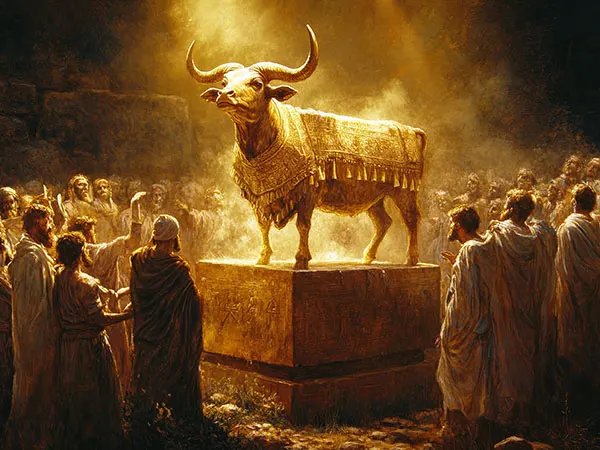
Article by John W. Ritenbaugh and Richard T. RitenbaughThe prophet Amos exposes the ancient Israelites' religion as syncretic, a blend of God's way and paganism, corresponding to this world's Christianity.
Letters to Seven Churches (Part Six): Sardis
Sermon by Richard T. RitenbaughThe letter to the church in Sardis reads like an obituary, warning us who are alive but lacking zeal to repent and become serious about our calling.
Are We Ever Good Enough?
Sermon by Martin G. CollinsIt is necessary to begin with a conviction of sin in order to experience a need for Jesus Christ and to receive the joy in the forgiveness of sin.
Sanctification, Teens, and Self-Control
Feast of Tabernacles Sermon by John W. RitenbaughYoung people are responsible for the spiritual knowledge that they have learned from their parents, as well as the custodianship of spiritual blessings.
Faith (Part Four)
Sermon by John W. RitenbaughThe example of Lot's wife teaches us that God does not want us to maintain close associations with the world because it almost inevitably leads to compromise.
Joshua's Four Miracles (Part One)
Feast of Tabernacles Sermon by Richard T. RitenbaughIsrael's conquest of Canaan under Joshua can be a metaphor for the journey from baptism to entering God's kingdom, especially for the second generation.

Displaying Virtuous Character
Sermon by Martin G. CollinsSelf-control has both an inward and outward dimension, the latter concerned with human relationships, manners, and reflecting God's orderly mindset.
Why Do You Believe?
Sermonette by Hunter D. SwansonCombatting the ubiquitous falsehoods is an obligation entrusted to every saint. But the sword of truth cannot be properly used without conviction.
Ambassadors for Christ
Sermon by Martin G. CollinsWe are sojourners, pilgrims, aliens, and ambassadors, living among, yet separate from, the peoples of this present world. We must be loyal to our spiritual family.