


Filter by Categories
The Times They Are a-Changin'
Sermonette by Clyde FinkleaBob Dylan's lyrics in 'The Times They Are A-changin' seem prescient; within a few years of Herbert Armstrong's death, heresies were imported into the church.
Facing Times of Stress: Lovers of Self
Sermon by Martin G. CollinsHelel, the adversary, lurks behind the opposition to God's truth, fostering perilous times in the last days. These times, marked by great stress and difficulty, are characterized by a society dominated by self-love, leading to greed, arrogance, and a lack of true affection. Such conditions, described as hard to bear and menacing, reflect a culture of death where sin prevails, creating a demonic junkyard under heylel's influence. These perilous times are not unique but recur throughout the church's history, challenging believers with periods of danger and stress caused by evil individuals whose self-centered and immoral behavior spreads heresy and dead religion within the church. Despite these challenges, God's strength sustains His church, ensuring that the gates of hell do not prevail. The root of these stressful times lies in people being utterly self-centered, loving themselves, money, and pleasure rather than God, resulting in a breakdown of relationships and societal norms. Only through a transformation that reorients the heart toward God can believers overcome this narcissistic tendency and stand firm against the prevailing societal decline during these perilous times.
Michael Crichton and End-Time Disasters
Commentary by John W. Ritenbaugh (1932-2023)God reveals through the apostle Paul in II Timothy 3 that at the time of the end, perilous times will come amidst the advancements of technology that are supposed to improve life. The explanation for these perilous times is tied to human nature, as men will be lovers of themselves and lovers of money, precipitating dangerous circumstances. This warning from God highlights that the very advancements meant to benefit humanity are intertwined with the selfish and greedy motives that lead to widespread peril and confusion.
The Handwriting Is on the Wall (1995)
Feast of Tabernacles Sermon by John W. RitenbaughBecause restraints that once held human nature in check have been removed, the US has grown increasingly more corrupt, approaching conditions before the Flood.
Is the Christian Required To Do Works? (Part Two)
'Personal' from John W. RitenbaughPerilous times are marked by difficult, threatening, and dangerous conditions, reflecting the ebb and flow of human nature's sinful expressions. These times are characterized by traits stemming from self-love, which is the root of numerous other sins, destroying divine and human relationships and making obedience to God and charity to men impossible. The peril to church members lies not in physical harm but in being drawn into expressing these same sinful attitudes and conduct prevalent in the world. The potential to commit these sins exists within the church, as all have come from a world that nurtures such traits, and none have fully overcome them. Even after conversion, the capacity to express these sins remains, necessitating constant vigilance. The deceitful heart can blind individuals to their true state, leading them to believe all is well due to superficial indicators, while ignoring the vital need for repentance and the vileness of sin. Sin approaches subtly, not as an overt enemy, but with attractiveness and appeal to human nature, drawing hearts toward it like a magnet, yet in God's loving eyes, it remains vile and deadly. The Father, in forming a Family Kingdom, upholds the sinless purity of His standards without compromise, having sacrificed His Son to address the cost of sin.
Just Under the Skin
Commentary by Richard T. RitenbaughThe veneer of civility that covers civilization is thin, hardly able to conceal our carnal nature. That nature turns violent seemingly at the drop of a hat.
Handwriting Is On The Wall (2019)
Feast of Tabernacles Sermon by Richard T. RitenbaughThose espousing transhumanism aspire to correct the 'glitches' of human imperfection through gene splicing, replacing 'inferior' organs with synthetic ones.
Troubling the Household of God
Sermon by Mark SchindlerIf we allow the old, carnal man to dictate how we speak or make other decisions, we will trouble the household of God and inherit nothing but the wind.
Foundations
Feast of Tabernacles Sermon by John O. ReidThe pillars of the Parthenon were fitted together in sections. It is impossible for these pillars to stand without a solid foundation.
Caught in a Blizzard?
Sermonette by Bill OnisickWe are being exposed to a spiritual blizzard, bringing darkness and coldness into the entire world. We are admonished to stoke the fire of God's Holy Spirit.
Human Will
Feast of Tabernacles Sermon by Richard T. RitenbaughGod's children should never emulate the self-willed attitude Frank Sinatra's song "My Way" glorifies. Human nature and godly character are polar opposites.
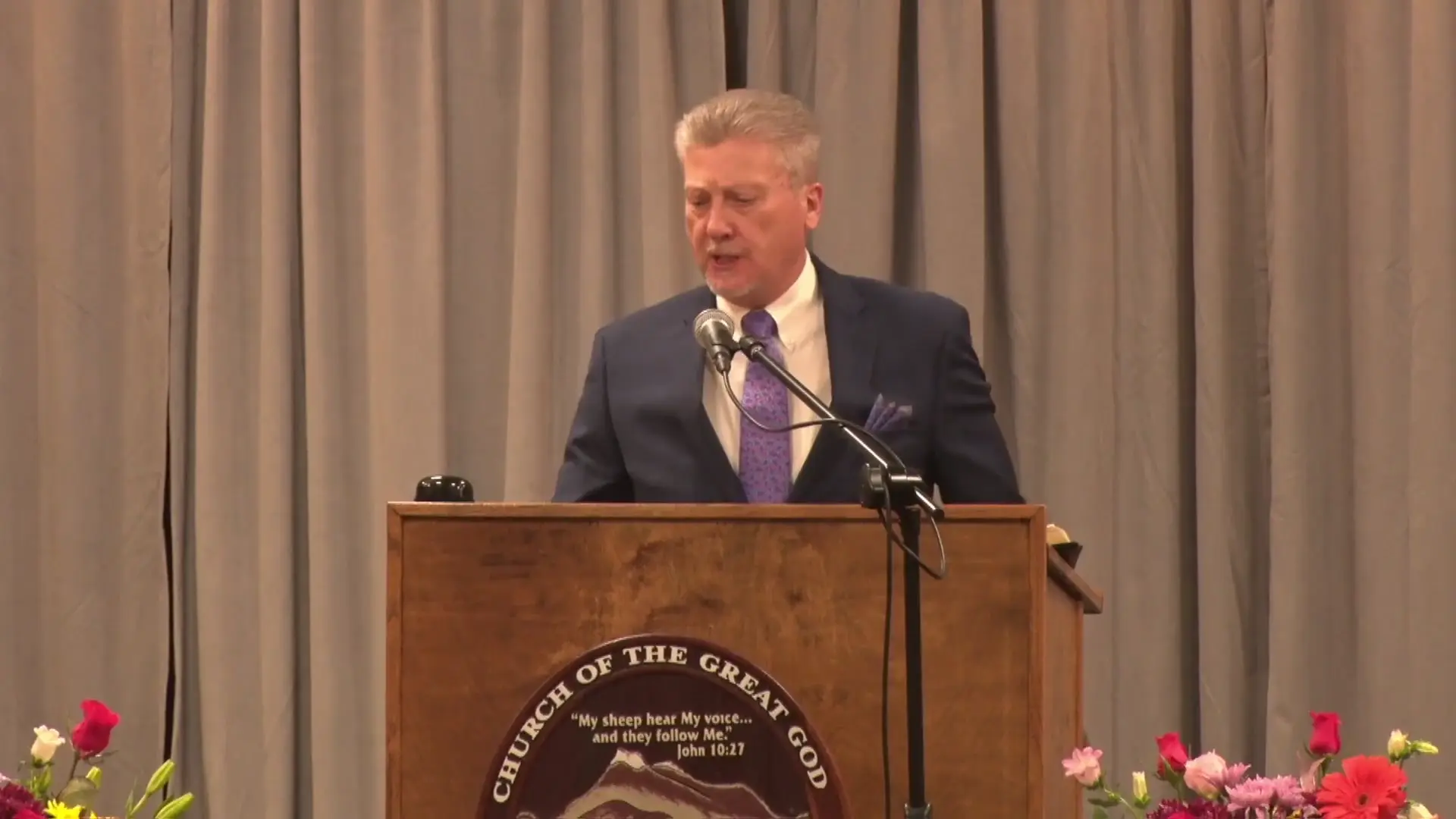
Handwriting on the Wall (2026): Lawlessness
Feast of Tabernacles Sermon by Richard T. RitenbaughMicrolooting, a term coined by New York Times editor Nadia Spiegelman, emerged in April as a phenomenon where politically progressive individuals steal small items from large corporations as a form of protest. Participants justify their actions through various rationalizations: corporations factor losses into budgets, profits are excessive, CEOs earn too much, corporations steal from employees, or owners hold wrong political beliefs. Some steal produce from Whole Foods simply because Jeff Bezos is wealthy. In Britain, a group called Take Back Power steals food from supermarkets and donates it to food banks, framing theft as "non-violent resistance." This mindset escalated dramatically when Luigi Mangione murdered United Healthcare CEO Brian Thompson in December 2024, motivated by grievances against the healthcare system. His manifesto labeled healthcare companies "parasites," and he intended the killing to spark national debate. Disturbingly, leftists celebrated him as a hero, calling it "social murder," and 41% of Gen Z respondents polled considered the act justified. These trends reflect a growing spirit of lawlessness, which undergirds every characteristic Paul lists in II Timothy 3:1-5 as marks of perilous last days. In I John 3:4, sin is defined as lawlessness, the Greek word anomia meaning contempt for and rebellion against law. II Thessalonians 2 identifies a future "man of lawlessness" as Satan's ultimate proxy, exhibiting three defining traits shared by lawless people today: they are destroyers heading toward destruction, they exalt themselves as their own moral authority, and they pursue their ends by any means necessary. Believers are called to stand in direct contrast to this spirit. II Corinthians 6:14 through 7:1 urges separation from lawlessness and a pursuit of holiness. Christ warns in Matthew 7:23 that those wh
Character Matters
Sermon by Richard T. RitenbaughUnlike America's presidents, in God's kingdom only those who have God's approval, those who have developed iron-clad character, will be qualified to rule.

Handwriting on the Wall: Cultural Christianity
Feast of Tabernacles Sermon by Richard T. Ritenbaugh'Cultural Christianity' is a Christ-free, worldly adaptation of faith used for cultural identity, often embraced for its social influence, lacking true devotion.
The Heart's Self-Absorption
Sermon by John W. RitenbaughII Timothy 3:1-5 contains 19 characteristics of carnality. The common denominator is self-absorption and pride, placing the self above others.