


Filter by Categories

The Model Prayer (Part Six): Our Daily Bread
Bible Study by Richard T. RitenbaughGod supplied manna, the bread of heaven and angels' food (Psalm 78:23-25), to the Israelites every day for 38 years except the Sabbath, in quantities sufficient to feed millions. It spoiled if kept over, so it tested their trust in God to feed them adequately each day. Jesus alludes to this miracle in asking for "our daily bread," which stands for God's whole providence of what sustains human life. The manna also carried a spiritual lesson: as Deuteronomy 8:3 teaches, man lives by every word that proceeds from the mouth of God, so real living requires obedience to His instructions. Jesus quoted this when Satan tempted Him to turn stones into bread, refusing to put physical life before spiritual life. Requesting daily bread therefore includes asking for instruction from God's Word, and growing in grace and knowledge by searching the Scriptures daily, as the Bereans did. The ultimate fulfillment of the manna is Jesus Christ Himself, the Bread of Life who comes down from heaven and gives life to the world (John 6:33). He gave His life in sacrifice and offers His flesh and blood to believers for eternal life. Eating and drinking are ongoing actions, picturing continual learning of Him, obedience to Him, imitation of His example, and spiritual growth, by which one abides in Him. Asking for daily bread is thus asking for complete nourishment of body, mind, and spirit from God Himself.
The Unleavened Bread of Perfection
CGG Weekly by Clyde FinkleaThe unleavened bread eaten during the Feast of Unleavened Bread is symbolic of the perfect Unleavened Bread of Life from heaven, Jesus Christ. Because Scripture repeatedly commands eating unleavened bread for seven days (Exodus 13:6-7; 23:15; 34:18; Leviticus 23:6; Numbers 28:17; Deuteronomy 16:8; Ezekiel 45:21), the primary focus of the feast belongs on eating the unleavened bread rather than merely keeping leaven out. Every day of the feast, God's people eat of it, and the seven days picture perfection, since seven symbolizes perfection in Scripture. Eating this bread reminds believers that they are to become unleavened, purified, and perfected, as God works to fashion them into the likeness of His Son. Jesus Himself was made perfect through sufferings, and those who follow Him must endure to the end. The perfection in view is love, for God is love, and He is changing human nature, full of lusts and sin, into His divine nature. Keeping His commandments perfects the love of God in the believer. At the resurrection, when Christ returns and believers receive incorruptible bodies, they will be like Him and will no longer sin. Cleaning out leaven profits nothing unless it accompanies this work of replacing the carnal nature with God's nature, in obedience to Christ's command to be perfect as the Father is perfect.
Filling the Void (2012)
Sermonette by David C. GrabbeTry to satisfy a spiritual hunger through any other means than the Bread of Life, such as entertainment, technology, money, travel, etc. will leave us disillusioned.
James and Unleavened Bread (Part One)
Sermon by Richard T. RitenbaughJesus Christ is the true bread from heaven that God the Father gives. He who comes down from heaven gives life to the world. Jesus Christ declared Himself the bread of life. He who comes to Him shall never hunger, and he who believes in Him shall never thirst. Christ is the embodiment of the Word of God. One must eat His flesh and drink His blood to have eternal life. As part of that process one must ingest Him. One must put on Christ. Everything that He is one must strive to become. One does that mostly through the Word of God. One must drink it in and eat it up. One also does it in the Passover service where one eats unleavened bread that symbolizes His flesh and then drinks a bit of wine that symbolizes His blood and thereby becomes clean. One takes into oneself His nature. That is the aim in life through those symbols. One rededicates oneself to that purpose. One must study the Bible the written Word of God digest it and live it. The words that Jesus Christ speaks are spirit and they are life. Those things that one eats from this Word of God are going to lead to eternal life. It is not just eating it is doing. It is absolutely vital to salvation. One must eat this unleavened bread from God that is pure faithful spiritual full of grace and full of eternal life.
Manna and the Preparation Day (Part One)
CGG Weekly by David C. GrabbeThe bread from heaven, the manna of Exodus 16, represents Jesus Christ Himself, not only the Bible, as Jesus explains in John 6. True Christians should desire Him to dwell within them and not merely possess His words. He is the daily bread we are told to ask for in the model prayer (Matthew 6:11; Luke 11:3). Eating manna therefore symbolizes ingesting, inviting in, and assimilating Christ every day, which strengthens our relationship with God so that we can receive His attributes. This happens through Bible study, continual prayer, seeking His involvement throughout the day, and experiencing life with Him. Israel ate manna daily as its only staple, and God intended that daily eating. The unique instruction in Exodus 16 was to gather twice as much on the sixth day, the Preparation Day. The Israelites did not eat twice as much then, but they spent twice the effort so that they would have enough for the Sabbath. Spiritually, the same principle applies. Though we take in Christ every day, on the sixth day we must gather twice as much, expending twice the effort so that we have enough of the bread from heaven to feed on during the Sabbath. Israel, a carnal people, grasped only the physical side of this instruction, while we are called to see and apply its spiritual essence.
Have You Had Your Manna Today?
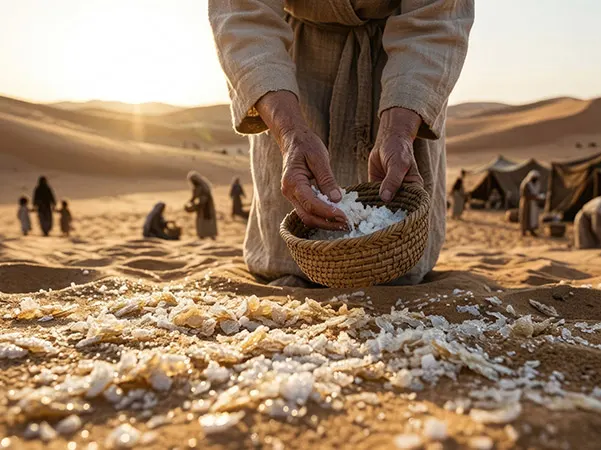
'Ready Answer' by StaffGod gave Israel manna to eat every day for forty years. Today, we have God's Word as our daily bread. Are we taking advantage of it, or are we allowing it to spoil?
John's Feeding of the 5,000
Sermon/Bible Study by Richard T. RitenbaughThe feeding of the 5,000, the only miracle recorded in all four gospels, is a sign that leads into Jesus' teaching on the bread from heaven in John 6. The crowd saw the sign and recognized Him as the Prophet like Moses, because He provided bread in the wilderness as Moses had provided manna. But they were still thinking physically and followed Him only to have their bellies filled again. Jesus corrected them: Moses did not give the bread from heaven, but the Father gives the true bread from heaven. Moses was only an instrument, just as Jesus was an instrument in feeding the crowd, and the same great God stood behind both gifts. The manna was physical bread, but the true bread of God is a Person who comes down from heaven and gives life to the world. Jesus declares, "I am the bread of life. He who comes to Me shall never hunger, and he who believes in Me shall never thirst." The work of God is to believe in the One He sent. The unconverted crowd could not grasp this because God had not yet opened their minds, and they asked for yet another sign. For those who are called, the sign shows that Christ is the abundant source of all saving knowledge and every grace leading to eternal life. The true thing to seek is to live with Christ always, with Him dwelling in us by God's Spirit, and to draw on Him for spiritual growth, overcoming, and fruit. This makes a firm and growing relationship with Him vital.
The Way, The Truth, and the Life
Sermonette by Clyde FinkleaThe Feast of Unleavened Bread is a remembrance of the release from bondage. We eat unleavened bread as a sign that the Lord's law may be in our mouths.
Fully Accepting God's Sovereignty (Part Six, Conclusion)
Sermon by John W. Ritenbaugh (1932-2023)Our responsibility is to yield to God's sovereignty. Nevertheless, God has enabled us to freely sin, but holds us responsible for governing ourselves.
Remaining Unleavened
Sermon by Richard T. RitenbaughOur carnal natures must be displaced by God's Holy Spirit, motivating us to refrain from causing offense, but freely forgiving others as God has forgiven us.
Go Forward
Sermon by Mark SchindlerAre we ready to sacrifice as was Moses, realizing that our precious calling is far more than the imaginary quest of Don Quixote?
Eden, The Garden, and The Two Trees (Part Three)
Feast of Tabernacles Sermon by John W. RitenbaughJesus' crucifixion took place outside the camp of Israel, just outside the border of the Garden of Eden, the general area where the Miphkad Altar stood.
Jesus Is God
Sermon by John W. RitenbaughJesus' sermon in John 6 on the bread from heaven is a statement about His point of origin. Moses did not give Israel the bread from heaven; he only directed them on how to gather the manna, and God was the real Giver. Even if Moses is counted as the giver, the manna did not give eternal life, since those who ate it died. The true bread is the One who came down from heaven and gives life to the world, and whoever eats of this bread will live forever. Jesus repeats that He came down from heaven, not to do His own will but the will of the One who sent Him. His hearers stumbled at this, knowing Him as the son of Joseph, but it is this claim of heavenly origin that gives His words a weight no other religious teacher can match. He says His words are spirit and life, so His word carries the same authority as the Old Testament. Without saying it outright, He is declaring that He is God. Even the great Moses, who in Paul's words was only a servant in Christ's house, falls short beside Him. John 3:13 and 1 Corinthians 15:47 confirm the same origin: Adam was of the earth, but Christ is the Lord from heaven.
John (Part One)
Sermon/Bible Study by John W. RitenbaughJohn presents Jesus, not as a phantom emanation, but as the reality, transcending the shadows represented by the temporal physical life.

Why Are We Here and What Is Our Focus?
Feast of Tabernacles Sermon by Mark SchindlerGod has a plan to bring all to Christ, but each in his own order. We cannot have a proper understanding of the plan if we do not keep Christ as the focus.