


Filter by Categories

Why Was Jesus Not Crucified as Passover Began? (Part One)
'Ready Answer' by David C. GrabbeThe church of God has historically observed the Passover just after sunset as the 14th day of Abib begins, as commanded in Exodus 12:1-14. Jesus Christ observed the Passover with His disciples at the beginning of the 14th day. He ate the Passover with them that evening after the 14th had begun, prior to His arrest later that night. Jesus emphasized the bread and the wine during the Passover meal with His disciples. He instructed them to partake of the bread and wine in remembrance of Him during the night of the 14th.
Is Passover on the First Day of Unleavened Bread? (Part Two)
CGG Weekly by David C. GrabbeBy the lifetime of Jesus Christ, the Jews had two competing ways to determine when to observe the Passover. One was observed by the people in their homes in the evening as Abib 14 began, and the other, led by the priests at the Temple, was kept in the late afternoon of Abib 14. In the Gospels, Jesus and His disciples are shown observing the Passover in a private home at the beginning of Abib 14, a meal that tradition calls the Last Supper. The Passover sacrifice was made within the time or season of unleavened bread, not the specific feast but the food itself. Abib 13 was the beginning of the time of unleavened bread, and the Passover was sacrificed during this time, even though the Feast of Unleavened Bread did not begin until Abib 15. As Abib 13 was ending, the disciples asked Jesus about their own preparations for the Passover, which would begin just after sunset, at the beginning of Abib 14.
Passover and Friends United in Truth (Part One)
CGG Weekly by Mark SchindlerPassover is a time when Christians should focus on Jesus Christ and their relationship with Him. It is an annual opportunity for those baptized and raised to newness of life. Participation in this solemn memorialization of Christ's death requires careful preparation, as emphasized by the apostle Paul. Each individual must examine themselves and recognize the cost of Christ's sacrifice, as instructed in I Corinthians 11. This examination should be an approval process, evaluating one's relationship with Christ, rather than self-condemnation. Without proper preparation for the Passover, one risks bringing judgment upon themselves. To aid in this preparation, one can reflect on Jesus' words from the last 24 hours of His life, particularly those recorded in John 13-17. These chapters provide guidance for self-examination leading to the Passover. A key aspect of this preparation involves reflecting on our relationships with one another, as Jesus commanded His disciples to love one another as He loved them, as stated in John 15:11-19. This commandment to love one another is crucial for producing fruit within the Body of Christ, and it is a critical part of the judgment mentioned in I Corinthians 11:31. As we prepare for the Passover, we must evaluate whether we are living up to the responsibilities of being friends of God within our relationships with one another.
Is Passover on the First Day of Unleavened Bread? (Part One)
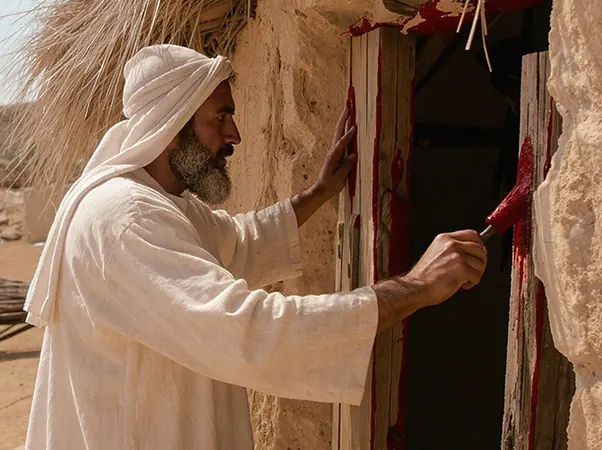
CGG Weekly by David C. GrabbeThe original instructions for Passover clearly stipulate that it is a single day, Abib 14, followed by the seven-day Feast of Unleavened Bread beginning on Abib 15. These instructions directed the Israelites to observe Passover in individual homes, catching the blood of the lamb in a basin and smearing it on the doorposts and lintel of the house. Over time, however, the observance shifted under the reforms of kings like Hezekiah and Josiah, who commanded the Passover to be kept at the Temple rather than in homes, introducing a second way of observing the festival. During the Babylonian exile, the Jews combined Passover and the Feast of Unleavened Bread into a single observance, resulting in a third variation where Passover was observed late on Abib 14, just before the Feast of Unleavened Bread began. By the time of Jesus Christ, two distinct Passover observances existed: one at the Temple, led by priests late in the afternoon of Abib 14, and another in homes at the beginning of Abib 14. Despite being separate festivals, Passover and the Feast of Unleavened Bread were commonly grouped together and simply called Passover, which could refer to the sacrifice itself, the day of the sacrifice, or the entire eight-day period from Abib 14 to 21. Jesus and His disciples ate the Passover in a home, observing it as Abib 14 began, while the priests at the Temple kept it as Abib 14 ended. The gospel accounts, such as Matthew 26:17, reflect this complexity, mentioning preparations for Passover on what appears to be the first day of the Feast of Unleavened Bread, though this timing raises questions given the clear distinction in God's instructions.
Deuteronomy 16, Passover, and the Night to be Much Observed
Sermonette by John W. RitenbaughPassover is a separate festival from others like the Days of Unleavened Bread, to be observed at home as per other scriptures, creating a contrast with the instructions in Deuteronomy 16 which specify a different location for the sacrifice. Additionally, the term Passover in Deuteronomy 16:1 may be misleading or an error, as the context and instructions do not align with the specific requirements for Passover observance, such as the type of animal to be sacrificed and the method of preparation. The focus of Deuteronomy 16 appears to pertain more directly to the Days of Unleavened Bread, particularly the Night to be Much Observed, rather than the Passover itself.
Should Passover Be Observed for Seven Days?
CGG Weekly by David C. GrabbeIn Ezekiel's Millennial vision, God's instructions for worship after Jesus Christ returns include the annual festivals, with specific guidance on the Passover. Ezekiel 45:21 has often been punctuated by translators in a way that suggests Passover lasts for seven days and is part of the Feast of Unleavened Bread. However, the Hebrew text, supported by its system of accents, indicates a logical pause in the verse, separating the observance of Passover on the fourteenth day of the first month from the seven-day feast during which unleavened bread must be eaten. Several translations reflect this separation, clearly stating that Passover is observed on the fourteenth day, followed by seven days of eating unleavened bread. Furthermore, Ezekiel 45:22 mentions a bull as a sin offering on a specific day, which aligns with the first day of the Feast of Unleavened Bread rather than Passover, as the Passover sacrifice is specified to be a lamb or a kid of the goats. While by the time of the Babylonian captivity it had become common to refer to the entire eight-day festival season as Passover, the instruction in Ezekiel maintains the distinction between Passover and the Feast of Unleavened Bread as separate observances.

Passover: An Extraordinary Peace Offering
Sermon by David C. GrabbeEach year, we observe the Passover at the beginning of the 14th of Abib, commemorating the death of Jesus Christ. This annual observance is not merely about the sin offering, though Christ fulfilled that aspect on Passover afternoon. Instead, Passover carries a deeper significance, rooted in the instructions given for the first Passover in Egypt. God provided detailed commands on when to eat the lamb, how to prepare it, what to eat with it, what to do with the remains, and even how the Israelites should be dressed. The emphasis in both Old and New Testaments is on eating the Passover, distinguishing it from a sin offering, which was not generally consumed. The Passover lamb in Egypt did more than provide blood; it was a distinctive meal representing redemption, not atonement for sin. Israel was purchased from Pharaoh, not redeemed from sin, through this act. The blood on the doorposts symbolized the life of the lamb given to redeem those within each participating house, demonstrating God's mercy in overlooking Israel's sins rather than addressing them. The Hebrew word for Passover, pesach, means a pretermission or exemption, indicating that God passed over Israel's sins without mention or notice, showing gracious acceptance rather than justice. Passover differs significantly from the sin offering in several ways. The primary focus of Passover is on eating, shared by a circumcised household, while the sin offering's purpose is atonement, with only priests eating portions in specific cases and in a holy place. The Passover lamb must be roasted, not boiled, and all parts are included in the meal, unlike the sin offering where certain parts are burned outside the camp. Passover is eaten in homes, not in a designated holy place, further setting it apart. Passover bears a closer resemblance to the peace offering, which pictures fellowship with God through a shared meal, reflecting harmony and satisfaction. Like the peace offering, Passover celebrates God's acceptance and the relationship with Him, marked by gratitude for His favor. Both sacrifices are eaten the same day, with none remaining until morning, and are not limited to priests or a specific location. However, Passover is unique, observed only once a year with unleavened bread, elevating its importance. The requirement of circumcision and ceremonial cleanliness before partaking in Passover reinforces that it is not about cleansing from sin, as such prerequisites would be unnecessary if Passover itself provided atonement. Instead, these conditions align with the peace offering, emphasizing fellowship over purification. During Christ's Passover with His disciples, the themes of fellowship and peace are evident. Jesus spoke of unity with the Father, love among the disciples, and the joy of divine indwelling, without mentioning their sins. His fervent anticipation of this occasion highlighted the importance of fellowship, not atonement. The bread and wine, central to the New Testament Passover, symbolize this fellowship, echoing the meal between Melchizedek and Abraham on the eve of a covenant. Jesus noted that Passover will not be fulfilled until the Kingdom of God, pointing to its ongoing theme of redemption as a process, distinct from the already fulfilled sin offering. The Passover unites us with God through a sacrificial meal, joining us to the living Savior as we partake of the bread, a symbol of Christ's sinless life. The wine represents the blood of the covenant, a pledge of God's faithfulness to complete His purpose in us, encompassing forgiveness within a broader relationship of eternal life. This covenantal fellowship, initiated by God's mercy, is the heart of Passover, focusing on communion with the Father and the Son, and the spiritual abundance and hope it brings. It is a solemn yet joyful celebration of the peace and well-being we have in Christ, where God accepts those who partake and is pleased to have them in His presence.

Is the Passover Just a Sin Offering? (Part One)
Article by David C. GrabbeEach year, dedicated followers of Jesus Christ observe the Passover at the beginning of the fourteenth day of Abib, commemorating His death. This annual observance serves as a memorial of His sacrifice, prompting reflection on which facet of His death should be kept in view while partaking of the bread and wine. The Passover, observed the evening before His crucifixion, is not about sin or its payment, but rather symbolizes the fellowship and peaceful abundance now available with God because of His covenant. Although Christ's sacrifice late on Passover day sealed the covenant, the timing of His death, late in the afternoon of the fourteenth of Abib rather than at the beginning of the day, underscores a distinct purpose beyond atonement. This timing aligns with the sealing of a covenant, demonstrating God's faithfulness and initiating an extraordinary bond with His people. Thus, the Passover observance highlights a unique aspect of Christ's death, focusing on the covenantal relationship rather than on the payment for sin.
Why Wasn't Jesus Christ Crucified at the Start of Passover?
Sermonette byJesus was crucified late on Abib 14, yet the Passover lambs were to be killed at the beginning of the 14th. The time of Christ's death is highly significant.

Why Was Jesus Not Crucified as Passover Began? (Part Two)
'Ready Answer' by David C. GrabbeJesus Christ kept His final Passover with His disciples the night before He suffered, setting the example for us of when and how to keep it in remembrance of Him. As our Passover, He did not die until much later, near the end of the 14th day of the first month. The timing of His crucifixion on the afternoon of Abib 14 points to significant events centuries before the Passover in Egypt, aligning with the promises and preparations of the covenant God made with Abraham. The account of Israel's exodus from Egypt ties to this timing, as the Israelites killed the lambs after sunset as the 14th began, and the Death Angel passed over at midnight, slaying the firstborn of those not under the blood. The Exodus began at night on the 15th, the very same day as the initial covenant with Abraham, 430 years prior to the exact day. Jesus' crucifixion on the afternoon of Abib 14 fulfilled the requirement of the Passover lamb, with not one bone broken, confirming the New Covenant on the anniversary of God's covenantal promise to Abraham at the same day and hour. This specific timing draws attention to the eternal inheritance promised to Abraham and his spiritual seed. Christ set the example of observing the Passover at the beginning of the 14th, and on that afternoon, He shed His blood to establish a New Covenant, an outgrowth of the covenant with Abraham, making his great nation a reality.
Passover (Part Nine)
Sermon by John W. RitenbaughPassover holds a significant place in our spiritual lives, demanding detailed examination. The biblical accounts of unusual Passover observances under righteous kings Hezekiah and Josiah reveal a backdrop of deep idolatry among the people, who practiced abominations detested by God. These kings enforced obedience, driving dramatic reforms that diverged from God's original commands in Exodus 12, Numbers 9, and Leviticus 23. Their personal supervision ensured the people did not revert to paganism, as it seemed the only way to adhere even partially to God's intent during times of extreme religious perversion. These Temple-centered Passovers, accompanied by additional sacrifices like burnt, peace, and thank offerings during the Days of Unleavened Bread, were accepted by God due to the hardness of heart among the people. However, this acceptance did not alter God's original intent for a domestic-killed Passover celebrated at home, as evidenced by historical records from Josephus and Philo indicating that many still sacrificed the Passover lamb at home during the time of Christ, while a smaller group of religious leaders followed a Temple-centered practice. Our responsibility is to strive to observe Passover as originally commanded by God and exemplified by Jesus Christ, who kept it at the beginning of the 14th, a full day before the majority of Jews, using the new symbols He instituted. We must not follow later traditions, even those with apparent good intent under Hezekiah and Josiah. Deuteronomy 16, often cited as evidence for a Temple-killed Passover, appears on the surface to require such a practice, but it raises contradictions with clearer instructions in Exodus 12, Numbers 9, and Leviticus 23. The phrase "the month of Abib" in Deuteronomy 16 is consistently linked with Unleavened Bread, not Passover, in other scriptures, and the chapter connects Passover with the Exodus, which is historically tied to the 15th, not the 14th. Further examination reveals Deuteronomy 16 focuses on the Feast of Unleavened Bread, Pentecost, and the Feast of Tabernacles, not Passover, suggesting the term "Passover" may have been inserted later when the entire spring festival was commonly called by that name. Multiple discrepancies in Deuteronomy 16, such as references to sacrifices from both flock and herd, the timing of sacrifices at "ba erev" instead of "ben ha arbayim," and instructions to boil rather than roast, indicate it does not pertain to the Passover lamb but to other offerings during Unleavened Bread, particularly the Night to Be Much Observed. The scriptural evidence suggests Deuteronomy 16 was originally about Unleavened Bread, and the insertion of "Passover" occurred at a later time, possibly after the Babylonian captivity, to support a Temple-centered observance. God's original command for a 14th Passover remains unchanged, and any notion of a 15th Passover is a later tradition, not a divine mandate.

The Bread and Wine of Passover
Sermon by David C. GrabbePassover stands as a significant ritual in the New Covenant, clearly supported by Scripture, with even mainline churches retaining a form of it, though often under different names and observed at different times. It centers on a meal, with a primary focus on eating, particularly the bread and wine, which are undeniable symbols in the biblical record. These elements are not merely food but carry deep symbolic meaning, uniting participants with God and with each other through shared fellowship in Christ. God instituted Passover as a practice that must be observed with intention, not on autopilot, to avoid rendering it empty of the meaning and effect He desires. The manner of observance is critical, as improper participation can lead to severe consequences, as seen in the Corinthian congregation where many suffered affliction or death due to their unworthy approach, marked by gluttony and drunkenness. Observing Passover requires a fitting appreciation of the bread and wine, meditating on their significance to ensure personal transformation. The bread and wine of Passover symbolize a sacrificial meal, joining participants with Christ and fostering thankful and peaceful fellowship. The bread represents Christ's body, overwhelmingly a symbol of life, even eternal life, reflecting His sinless existence offered to sustain and strengthen believers spiritually. It signifies an ongoing relationship with the living Savior, not merely a past event of atonement. The wine, symbolic of Christ's blood, represents the New Covenant, sealed not just for remission of sins but as a pledge of God's faithfulness to perfect those within the covenant, promising a quality of life that transcends physical circumstances. Passover also carries forward-looking aspects, pointing to a future fulfillment in the Kingdom, where Christ will resume partaking of the meal with His followers. It is a commemoration of abundant, eternal life made available through God's grace, focusing on fellowship with Him and the hope of ultimate redemption. Unlike a sin offering, Passover emphasizes God's acceptance and mercy, initiating communion based on His covenant rather than justification, highlighting ongoing spiritual abundance and peace through Christ.
Passover and the Blood of Jesus Christ
Sermonette byThe observance of Passover holds profound significance as it encapsulates various aspects of the blood of Jesus Christ. When we drink of the cup at Passover, we do so with understanding and appreciation of what the Father and the Son have done and continue to do. The Hebrew word for Passover, meaning an exemption or to pass by without notice, reflects God's action in Ezekiel 20, where He passed over the unrepentant idolatrous Israelites in Egypt due to His faithfulness to His covenant with Abraham, bringing them out to establish a covenant within which sins could be addressed. In Matthew 26:27-28, Jesus, during Passover, took the cup, gave thanks, and said, "Drink from it, all of you. For this is My blood of the New Covenant, which is shed for many for the remission of sins." This blood of the New Covenant, as noted in Matthew, Mark, Luke, and I Corinthians, seals the covenant and provides for the remission of sins, encompassing a broader relationship where God promises to put His law in our minds, write it on our hearts, and ensure that we will know Him. On His final Passover, as recorded in John 17, Jesus emphasized this promise of knowing the Father and Him, defining this relationship as eternal life, a life of spiritual abundance that extends beyond the grave. For us, the Passover observance serves as an annual memorial of Christ's death that sealed the covenant, as well as a grateful recognition of the spiritual abundance and hope we have due to God's faithfulness. When we drink of the cup, we remember and acknowledge Their unstoppable commitment to this covenant, reaffirming our devotion to Them in return. The blood of the New Covenant, being the lifeblood of God in the flesh, is ingested, transforming us internally due to its divine quality, unlike the external application of animal blood in the old covenant. In John 6:53-56, Jesus declared that drinking His blood grants eternal life, stating, "Unless you eat the flesh of the Son of Man and drink His blood, you have no life in you. Whoever eats My flesh and drinks My blood has eternal life, and I will raise him up at the last day." This blood, representing His sinless life and oneness with the Father, changes us internally when partaken, manifesting in how we live. In partaking of the Passover, we commemorate abiding in God, and He in us, celebrating the spiritual abundance that comes from His faithfulness. The Passover wine thus becomes a vivid token of God's unswerving commitment to make us complete, embodying the multiple facets of Jesus Christ's blood.
Passover (Part Ten)
Sermon by John W. RitenbaughThe instructions in Deuteronomy 16, as originally given by God, were for Unleavened Bread and not Passover. The word Passover was edited into Deuteronomy 16 at a later time, likely after the Jews returned from captivity in Babylon, when both feasts were commonly called Passover. This editing created the appearance of a 15th Passover, though God never commanded such a date. The lack of specific numbered dates in Deuteronomy 16 made it easier to insert the name Passover in place of Unleavened Bread, unlike other Scriptures like Exodus 12, Numbers 9, and Leviticus 23, where altering dates would have been obvious tampering. Historically, figures like Hezekiah, Josiah, and Ezra centralized control over Passover observance, shifting it from home-sacrificed lambs to Temple practices, though they lacked authority to make everlasting changes to God's commands. Jesus Christ kept Passover according to the original instructions in Exodus 12, Leviticus 23, and Numbers 9, at the beginning of the 14th, between the two evenings after the going down of the sun, and not according to the later Jewish tradition of a 15th Passover. Historical records, such as those from Josephus, indicate that millions observed Passover in Jerusalem, yet the name Passover was commonly applied to both feasts by the people, though not by God. In the New Testament, inspired writers clarify the distinction between Passover and the Days of Unleavened Bread, showing that Jesus observed the feasts as commanded by God, not according to the traditions of men.
Passover (Part Five)
Sermon by John W. RitenbaughThe Passover, as detailed in God's Word, is a critical doctrine that reveals the truth through careful examination of Scripture. It exemplifies the importance of adhering to biblical evidence over external influences. There are eight specific elements connected to the original Passover, each grounded in Scripture, demonstrating the timing and practices as God intended. The first element establishes that the lambs were killed at the beginning of the fourteenth day, during ben ha arbayim, the period of twilight after ba erev, which is sunset. This timing, occurring after the end of the previous day, is supported by comparisons in Leviticus and Exodus, showing it as a diminishing light period lasting about an hour in spring, clearly at the start of the fourteenth. The second element confirms the lambs were killed at the houses of the Israelites in Goshen, not in tents or at Rameses. The blood was splashed on the doorposts and lintels of their homes, indicating they were still at their residences during this act at ben ha arbayim. The third element specifies that these homes were located in Goshen, not assembled in Rameses, as repeatedly shown in Exodus, affirming their location during the Passover. The fourth element describes Passover as encompassing all activities from about 6:00 p.m. to 2-3:00 a.m., including killing, skinning, roasting, eating, and burning the leftovers. This comprehensive process, occurring on the night of the fourteenth, involved significant time, with the Death Angel passing through during the meal, after which the remains were burned. The fifth element notes that the Israelites stayed in their houses in Goshen on the night of the fourteenth, not leaving shortly after midnight, adhering to God's command to remain indoors until morning. The sixth element clarifies the distinction between night (lailah) and morning (boqer), showing they are not the same. Lailah continues after midnight, as seen with the Death Angel's passing and Pharaoh's subsequent actions, while boqer begins at the first light of dawn, before sunrise, but not at midnight, countering claims of a late fourteenth or fifteenth Passover timing. The seventh element addresses the spoiling of the Egyptians, which began after the ninth plague and was interrupted by Passover, resuming after the killing of the firstborn on the fourteenth. This process spanned roughly thirteen days, starting early in the first month, with an urgency to give items to the Israelites post-Passover, as they were urged to leave. The eighth element examines the timing of the Exodus, distinguishing it from Passover. The Passover occurs on the fourteenth as a memorial of God passing over, while the Exodus begins on the fifteenth. The Israelites remained in their houses until boqer on the fourteenth, assembling in Rameses during the day portion of the fourteenth, with no delay, as they continued preparations and spoiled the Egyptians en route. The actual departure from Rameses happened on the fifteenth, supported by Scriptures indicating a clear separation between the two events.
Jesus' Sufferings on Passover
CGG Weekly by Ronny H. GrahamThe sequence of events that took place on Passover, from Jesus' arrest through His death on the cross, was orchestrated for our learning so that we could discern the Lord's body and appreciate deeply what God did for us. After finishing the Passover meal, Jesus and the disciples walked to the Garden of Gethsemane, where He faced the mental torment of waiting for the events that were about to unfold. Despite pleading with His friends to pray with Him, He endured the dread of what was coming alone, urging them to pray so they would not fall into temptation.
Passover Preparedness
Sermonette by John O. ReidWe are to seriously consider this season, examining ourselves carefully and soberly, measuring ourselves against the sinless life of Jesus Christ.
The Second Passover
Sermonette by Richard T. RitenbaughGod's Sabbath and holy days are sacred times that cannot be rescheduled, yet for the vital annual event of Passover, He provides a provision to observe it at a later time if it is unavoidably missed. This allowance, known as the Second Passover, underscores the importance of keeping this appointment with Him. In the time of Hezekiah, as recorded in II Chronicles 30, the Passover could not be kept at the regular time in the first month due to insufficient sanctified priests and the people not being gathered in Jerusalem. Consequently, it was agreed to observe the Passover in the second month, on the 14th day, along with the Feast of Unleavened Bread. Many assembled in Jerusalem, slaughtered the Passover lambs, and the priests and Levites sanctified themselves for the occasion. The permission for a Second Passover originates in Numbers 9, where the Lord spoke to Moses, establishing that the Passover should be kept on the 14th day of the first month at twilight, with all its rites and ceremonies. However, if someone is unclean due to contact with a dead body or is far away on a journey, they may still keep the Lord's Passover on the 14th day of the second month at twilight, observing all the ordinances, including eating it with unleavened bread and bitter herbs, leaving none until morning, and not breaking any bones. The reasons for taking the Second Passover are limited to unavoidable circumstances, such as significant sickness requiring quarantine or an unexpected emergency journey that prevents attendance at the regular time. God emphasizes keeping the Passover at its appointed time, and only under dire circumstances should the Second Passover be observed. If a person is clean and not on a journey but fails to keep the Passover, they shall be cut off from their people, bearing their sin for not bringing the offering of the Lord at its appointed time.

Passover, Obligation, and Love
'Personal' from John W. RitenbaughThe concept of obligation is integral to the seriousness of Passover and the Feast of Unleavened Bread. Passover serves as a reminder of Christ's death, the supreme example of unselfish, sacrificial service and love. When the fallen woman washed Christ's feet with her tears, wiped them with her hair, kissed them with her lips, and anointed them with fragrant oil, her act was an exquisite expression of a heart freed to give its all, reflecting the depth of love and gratitude tied to the Passover's meaning. Concerning the bread and wine, Christ instructs to do this in remembrance of Him, ensuring that His sacrifice does not slip far from our minds. God does not want our obligation to become a burden but to fill us with wonder and awe that He would pay so much for something so utterly defiled. We are admonished to remember not only Christ's personality and sinlessness but also His role as our Creator, His connection to the Old Testament Passover, His violent death for the remission of mankind's sins, and His sacrifice's connection to the New Covenant. Passover is a communion, an act of fellowship with Christ, within the framework of a ritual, where He is the focus and symbolically the feast itself. God intends Passover to teach us these things so that each year begins with getting turned about where we have deviated and jump-started in the right attitude and direction. As the Passover season approaches, we should strive for a better understanding of what we are and what Christ was, did, and is, to be filled with an awe-inspiring sense of our indebtedness.
Passover (Part Two)
Sermon by John W. RitenbaughPassover holds a central place in God's purpose, as it is intricately tied to the salvation and eternal life offered through Jesus Christ. In John 6:49-51 and 54-58, it is emphasized that eating the flesh and drinking the blood of Christ, symbolized in the Passover, is essential for eternal life, indicating a lifelong commitment beyond mere belief. The importance of eating the Passover is underscored in Exodus 12, where following all instructions, including the act of eating, was critical for the Israelites. The name "Passover" originates from the event of the Lord passing over the houses of the Israelites in Egypt, sparing them while striking the Egyptians, as detailed in Exodus 12:11-13 and 23-27. This passing over, not the sacrifice itself, defines the day, though the sacrifice is named for this event. Passover and the Days of Unleavened Bread are distinct memorials of separate events, to be observed on different days, with Passover on the fourteenth day of the first month at twilight, and the Feast of Unleavened Bread beginning on the fifteenth, as stated in Leviticus 23:5-6. Keeping the Passover involves more than just the slaughter of the lamb; it encompasses a series of detailed instructions. Exodus 12:3-9 and 44-46 outline steps such as selecting the lamb on the tenth day, killing it at twilight on the fourteenth, applying blood to the doorposts, eating the roasted flesh that night with unleavened bread and bitter herbs, and not leaving the house until morning. These actions are integral to observing Passover fully, showing that it is not merely about the sacrifice but about obedience to all of God's commands. Further, Numbers 9:1-3 and 9-12 reinforce that the Passover must be kept at its appointed time on the fourteenth day of the first month at twilight, according to all its rites and ceremonies, even for the second Passover allowed for those unclean or on a journey. No modifications to the original instructions are found, emphasizing the consistency of God's command to observe Passover comprehensively, including eating it on the specified night.

Holy Days: Passover
Bible Study by Richard T. RitenbaughThe observance of the Passover marks the initial step in God's plan of salvation for mankind. It serves as an annual reminder of the need for forgiveness and the beginning of a right relationship with Him. When God called the children of Israel out of Egypt, He showed them when the year began so they could observe His holy days, symbolizing His call to us out of this evil world. Passover is one of God's festivals, instituted by Him and commanded to be kept as a feast of the LORD. In the time of Israel, God instructed each family to choose an unblemished lamb on the 10th day of the month Abib, kill it at twilight on the 14th day, and place its blood on the doorposts and lintels of their homes. They were to roast and eat the lamb, and the blood served as a sign for the death angel to pass over their homes, saving Israel's firstborn while Egypt's perished. Jesus Christ observed the Passover during His life on earth, setting a perfect example for us to follow. He was crucified on the day of the Passover, fulfilling the symbolism of the lamb. New Testament Christians are commanded to keep the Passover as a memorial of Christ's death, who was sacrificed for us. During the Passover meal, Jesus washed His disciples' feet, demonstrating humility and service, and commanded Christians to follow this example. He also taught His disciples to partake of unleavened bread and wine during the New Testament Passover service as a memorial of His death, no longer requiring the slaughter of a lamb since His death fulfilled that symbolism. Converted Christians must observe the New Testament Passover every year, as it is vital for inheriting eternal life. The New Testament church of God continued to keep the Passover yearly, and the apostle Paul taught Gentile believers to observe it with the symbols of bread and wine, a practice to be maintained until Christ's return.
Passover (Part One)
Sermon by John W. RitenbaughThroughout the history of God's church, in both Old and New Covenant times, the Passover has been one of the most attacked observances. It faces recurring challenges, as it did in various decades, with attempts to abolish it dating back to the second and third centuries during the Quartodecimani Controversy. In that period, the western church replaced Passover with another observance, labeling the keeping of Passover as scandalous and even invoking state power against those who observed it. However, the eastern churches in Asia Minor continued to keep Passover on the fourteenth day. Long before Jesus Christ, alterations were made to the Passover, shifting it from the fourteenth to the fifteenth day and blending it with the Days of Unleavened Bread, reducing an eight-day festival into seven or even six days in some instances. The significance of Passover to God's purpose is profound, as it forms the foundation of the New Covenant relationship between God and His people. In the Old Covenant, God initiated His covenant with Israel on the Passover. In the New Covenant, Jesus Christ established this relationship on the last Passover night before His crucifixion by introducing new symbols to commemorate His sacrifice as the true Passover Lamb. Jesus Christ is identified as the Lamb of God who takes away the sin of the world, a sacrifice capable of covering all sins of mankind for all time. His sacrifice is seen as a cure for the infectious disease of sin, enabling a relationship with God by purging the infection through faith and repentance. Christ, our Passover, was sacrificed for us, fulfilling a purpose planned from the foundation of the world to pay for mankind's sins through a sinless substitution. On the last night of His life, during the Passover meal with His disciples, Jesus Christ instituted new symbols representing His body and blood, commanding His followers to partake of them as a solemn memorial of His death. Each observance serves as a renewal of the New Covenant believer's relationship with God through His sacrifice. The proper keeping of Passover is emphasized as a matter of life and death, just as it was for the Israelites in Egypt, where failure to follow God's commands would have resulted in death. Jesus Christ declared that unless one eats the flesh of the Son of Man and drinks His blood, there is no life in them, underscoring the necessity of the Passover symbols for spiritual life. This annual reaffirmation through Passover is central to an ongoing relationship with Him and God the Father, initiating and continuing the process toward salvation. Without this observance, Israel would not have escaped Egypt, nor would believers start on the road to their inheritance. The importance of Passover is further highlighted in the act of footwashing, partaking of bread, and drinking wine, all integral to the New Testament observance as commanded by Jesus Christ. He is the only way to salvation, with no other name under heaven by which one must be saved. The Passover, in both Old and New Covenants, remains a critical event of life and death, named for God's act of passing over the Israelites, distinct from the Feast of Unleavened Bread which commemorates the exodus from Egypt.

Is the Passover Just a Sin Offering? (Part Three)
Article by David C. GrabbeThe Passover, as instituted in Egypt, centers on a shared household meal, and its instructions notably omit any mention of forgiveness, atonement, or propitiation. The Hebrew meaning of Passover reveals that God granted an exemption rather than forgiveness—He mercifully passed over Israel's sin without requiring or providing payment for it. Israel's deliverance came from Pharaoh's hand because of God's earlier promises to Abraham, not because of atonement for sin. A comparison between the Passover instructions (Exodus 12) and the sin offering (Leviticus 4) demonstrates that these are entirely different sacrifices. The Passover emphasizes eating as a communal meal, while the sin offering centers entirely on blood as a symbol of atonement. The Israelites kept the Passover in Egypt while still clinging to idols, showing it was not tied to confessed guilt as the sin offering was. Further distinctions include location (homes versus a holy place), preparation (roasted versus boiled), participants (whole households versus only priestly males in specific cases), and the treatment of the head, legs, and entrails—consumed in the Passover but burned outside the camp in the sin offering, since these parts represent thoughts, conduct, and emotions tied to sin. Instead, the Passover closely resembles the peace offering, which pictures fellowship and thanksgiving rather than propitiation. The peace offering, rooted in the term shelem (related to shalom), is sometimes called the saving, thanksgiving, or communion offering, and both it and the Passover involve a satisfying meal shared with God, eaten the same day, with leftovers burned. This offering illustrates mutual satisfaction—God pleased by fellowship, man secure in God's favor—paralleling the Passover's picture of mercy rather than payment for sin. Certain preconditions—circumcision and ceremonial cleanliness—were required before keeping the Passover, further showing it was not a cleansing ritual like the sin offering, since one had to already be clean to partake. The first recorded Passover-like meal appears in Genesis 14, where Melchizedek brings bread and wine to Abraham, blessing him without mention of sin, emphasizing grace and fellowship initiated by God. Christ's final Passover with His disciples continues this pattern. His words in Luke 22:15-16 reveal that His focus was fellowship, not sin or forgiveness, and He declared that the Passover would not be fulfilled until the Kingdom of God. Since the sin offering has already been perfectly fulfilled through Christ's sacrifice, per Hebrews, the still-awaited fulfillment must relate instead to redemption—a theme the Exodus Passover unambiguously teaches and which will be explored further.
Passover (Part Three)
Sermon by John W. RitenbaughPassover holds a central importance as a symbol of life and commitment. Jesus Christ declares Himself as the bread of life, stating that whoever eats His flesh and drinks His blood has eternal life and will be raised up at the last day. He emphasizes that His flesh is true food and His blood true drink, ensuring that those who partake abide in Him and He in them, promising eternal life unlike the manna eaten by the fathers in the wilderness. The name Passover originates from God passing over the houses of the Israelitish people while they remained in their homes during the plague in Egypt. God instructed that the blood on the houses would be a sign, and He would pass over them, sparing them from destruction. This event is to be remembered and observed as a service when they enter the promised land, explaining to their children that it commemorates the Lord's protection over their households when He struck the Egyptians. Passover is distinct from the Feast of Unleavened Bread, observed on the fourteenth day of the first month at twilight, while the Feast of Unleavened Bread begins on the fifteenth day, marking separate yet chronologically close festivals commemorating different events. The observance of Passover includes multiple rites and ceremonies to be kept on the fourteenth day at twilight, as commanded. These include selecting the lamb on the tenth day, killing it between the evenings on the fourteenth, striking the doorposts with blood, roasting and eating the lamb that night with bitter herbs, not boiling or eating it raw, burning any remains by morning, ensuring no uncircumcised outsider eats it, and not leaving the house until morning. These instructions were reaffirmed a year later in the wilderness, emphasizing that all rites must be followed without omission, even for a second Passover for those who missed the first due to uncleanness or travel. God's final instructions for the first Passover highlight the eating of the lamb over the killing, underscoring that keeping Passover involves consuming it within one house without carrying any flesh outside or breaking its bones. Jesus Christ and His disciples also understood keeping Passover as eating it, expressing a fervent desire to eat the Passover with them before His suffering. The emphasis on eating the Passover signifies the continuance of a relationship with Christ and God, more than the act of killing the lamb. Eating represents abiding in Him, developing a bond that leads to becoming one with Him, a process more challenging and thus more emphasized than the recognition of sin through the lamb's death. Historically, after returning from captivity, the descendants of Israel kept Passover on the fourteenth day of the first month, with the priests and Levites slaughtering the lambs and the people eating together, reinforcing that Passover is not fully kept until it is eaten. The timing of Passover events, specifically the killing of the lamb, is set at the beginning of the fourteenth day during twilight, defined as the period following sunset, between the two evenings. This period, known as ben ha arbayim, starts immediately after sunset and lasts until dark, providing ample time during the spring season of Passover for the necessary preparations and initial consumption.
Why Passover and Not Easter?
CGG Weekly by Richard T. RitenbaughPassover holds a significant place for all Christians as a sacred observance, not merely a Jewish festival. Jesus Christ Himself, through the apostle Paul, commanded the church to celebrate Passover on the night He was betrayed, which corresponds to the evening of Nisan 14 on the Hebrew calendar. This practice was maintained by the New Testament church during the lifetime of the original apostles. Even after the death of the apostle John, the Ephesian church under the leadership of John's disciple Polycarp and his successor Polycrates remained faithful to observing Passover on Nisan 14. However, those who continued this tradition, known as Quartodecimans, became a minority and faced opposition as the celebration of Easter supplanted Passover across most of Christendom. The Roman Church did not officially ban the observance of Passover on Nisan 14 until the Council of Nicea in AD 325, and later, the Council of Laodicea in 363-364 anathematized those who persisted in such practices. The Christian Passover is a solemn observance, not a celebration, commemorating the agonizing blood-sacrifice of Jesus Christ to pay for our sins, redeem us from spiritual bondage, and open the way to fellowship with the Father. Each year, baptized Christians participate in the Passover ceremony by washing one another's feet, following Christ's example of selfless service, and partaking of the bread and wine to recommit to the everlasting covenant with God. As Paul instructs, this act proclaims the Lord's death until He returns.
Passover (Part Eight)
Sermon by John W. RitenbaughOur discussion focuses on the significance of Passover and its historical observance among the Israelites, highlighting deviations influenced by pagan practices and royal authority. At the same time that God established a festival for Israel, a pagan seven-day celebration to Baal coincided with the Feast of Unleavened Bread, occurring from the fifteenth to the twenty-second day of the first month. This parallel celebration involved depraved acts, revealing a pattern where satan counterfeits the true celebrations given by God. Passover holds a critical place as a major command of God, closely tied to the framework of keeping His festivals. Neglecting the proper observance of Passover risks losing vital teachings related to God's purpose and way. Originally, as detailed in Exodus 12, the Passover lamb was to be slain at the beginning of the fourteenth day, with preparations made during the day for departure, culminating in leaving Egypt by night at the start of the fifteenth day. However, historical shifts occurred under the reigns of certain kings of Judah. During Hezekiah's time, a revival necessitated a unique observance due to spiritual rebellion and the Temple's disrepair. Passover was delayed to the second month, as permitted under Numbers 9 for those unclean, and both Passover and the Feast of Unleavened Bread were kept at the command of the king, not directly by God's command. The lambs were slaughtered at the Temple by Levites, with blood passed to priests for the altar, diverging from the command to dash it on doorposts at home. Many ate the Passover without proper sanctification, and Hezekiah prayed for atonement, a role not typically his. This centralization aimed to control rampant paganism among the people, ensuring the observance was not tainted by Baal worship. Similarly, under Josiah, another national emergency prompted strict control over Passover observance. Josiah enforced the slaughter of Passover lambs on the fourteenth day of the first month at the Temple, personally supervising to prevent reversion to pagan practices. Additional offerings, including cattle, were made alongside the traditional lambs, and the entire eight-day period began to be referred to as Passover, a significant shift from earlier distinctions. This blending of Passover and Unleavened Bread, first intimated under Hezekiah, became explicit here, though it did not align with God's original commands. These instances under Hezekiah and Josiah, driven by the kings' authority during crises, did not alter God's initial instructions for Passover. The centralization and modifications were emergency measures to curb pagan influences, yet they set a precedent for later traditions, such as the late fourteenth to fifteenth day observance among the Jews. Despite these historical deviations, God's original command remains unchanged, emphasizing the need to adhere to His specified way of observance.
Passover (Part Four)
Sermon by John W. RitenbaughIn the context of returning to God's ordinances as highlighted in Malachi 3:6-7, it is evident that the people had strayed from keeping His statutes, including those related to Passover. This sacred observance had been neglected and replaced by human traditions, deviating from the divine instructions. Regarding the timing of Passover, it is clearly established that the day begins and ends at sunset, known as ba erev. Following sunset is a period of twilight, termed ben ha arbayim, which is crucial for understanding the timing of Passover events. The lambs for Passover were to be killed at ben ha arbayim, at the beginning of the fourteenth day of the first month, as specified in Exodus 12:6. This timing is reinforced by the Hebrew term "ad," indicating up to a specific point, suggesting the start of the day rather than its end. The location of the Passover observance was in the houses of the Israelites in the land of Goshen, not in Rameses or in tents. Exodus 12:7 and subsequent verses repeatedly emphasize that the blood of the lamb was to be applied to the doorposts and lintels of their houses, and the meal was to be eaten within these homes. The Israelites were explicitly commanded to remain in their houses until morning, ensuring the entirety of the Passover occurred on the fourteenth day, distinct from the Feast of Unleavened Bread on the fifteenth, as noted in Leviticus 23:5. The process of killing, roasting, eating, and burning the leftovers of the Passover lamb spanned from sunset around 6:00 p.m. until approximately 2:00 to 3:00 a.m. on the fourteenth day. Exodus 12:8-10 details that the lamb was to be roasted and eaten that night with unleavened bread and bitter herbs, with any remains burned before morning. This timeline, taking about 8 to 9 hours, aligns with the command to complete all activities within the night of the fourteenth. Finally, the Israelites adhered to the instruction not to leave their houses until morning, as commanded in Exodus 12:22. They remained in their homes in Goshen throughout the night of the fourteenth, even after the Death Angel passed at midnight, demonstrating obedience to God's directive and ensuring their safety under the protection of the blood on their doorposts.
A Pre-Passover Look
Sermon by John W. RitenbaughAs we approach Passover and the Days of Unleavened Bread, it is crucial to prepare ourselves fittingly for this significant time. Passover, though not a holy day, carries the most important preparation of all, setting the stage for our participation in the remainder of God's plan as it begins the annual rehearsal of His purpose. Such a sacrifice as the one given by Jesus Christ must be remembered with deep appreciation and understanding, for with the cup, God seals His agreement of salvation with His people through Christ's blood. By participating in Passover, we silently proclaim Christ's death and return, affirm our partnership in the New Covenant with Jesus as Mediator, and declare unity with those in the body of Christ. However, to partake without due appreciation or worthiness is to be guilty of the murder of the Savior. A thorough self-examination is necessary before eating the bread and drinking the cup, for careless or unworthy participation can bring weakness, sickness, or even death upon us. If we searchingly examine ourselves, detecting our shortcomings, we avoid divine judgment; but when we fall short, we are disciplined by the Lord to prevent final condemnation with the world. Passover is not merely a celebration of Christ's memory but a call to grasp the profound point of His death. To treat it unworthily is to approach it with irreverence, carelessness, or ritualistic indifference, thereby disrespecting the blood of Jesus Christ. Even if one feels technically unworthy due to sin, failing to partake exacerbates the problem through disobedience to God's command to take Passover. Coming without repentance or self-examination renders one truly unworthy, treating the occasion as a mere ritual without understanding its significance. Moreover, treating Passover with disrespect, such as turning it into a frivolous feast or showing contempt for others in the body, is akin to desecrating a sacred symbol. It reveals a lack of appreciation for what the symbols of Christ's sacrifice represent. Serious consideration and a lifestyle aligned with God's standards are demanded, not perfection, to ensure we honor this memorial of the death of Jesus Christ with the reverence it deserves. Faith is paramount to Passover, serving as the foundation for everything, anchoring our relationship with God and the depth of our connection with Him as we prepare for this solemn occasion.
Passover (Part Six)
Sermon by John W. RitenbaughPassover, as originally instituted, holds a specific and detailed pattern that God commanded to be followed. It occurred at the beginning of the fourteenth day of the first month, a time marked by intense preparation and activity. On this day, the lamb was slain, cleaned, and roasted, with the people remaining in their houses through the night as the Death Angel passed over. The remains were burned, and they stayed inside until morning. The daylight portion of the fourteenth was used to gather along the route for their exodus from Egypt through Rameses. This day was filled with work, which is why Passover is not considered a holy day but a festival, as God demands labor in preparing for the feast that follows. The memorial of coming out of sin begins at sunset of the fourteenth, transitioning into the fifteenth. The original Passover was a domestic observance, with each family killing the lamb at home and sprinkling its blood on the doorposts. This is evident in the expectation that children would witness the sacrifice at home and inquire about its meaning. God's command in Exodus 12:24-25 establishes this as an ordinance to be kept forever, even after entering the promised land. Numbers 9:1-3 reinforces this, as God instructed the children of Israel to keep Passover at its appointed time, on the fourteenth day at twilight, according to all its rites and ceremonies, without any change, even after the establishment of the tabernacle and priesthood. Despite detailed instructions for sacrifices at the tabernacle for every day, Sabbath, new moon, and feast day, as seen in Numbers 28 and 29, there is no specific command for a Passover sacrifice to be made at the tabernacle or temple. The Passover lamb remained a domestically killed and observed sacrifice, distinct from other offerings. Historical accounts from Philo, a contemporary scholar, confirm that during the time of Jesus Christ, many Jews still observed the domestic Passover at the beginning of the fourteenth, while a smaller group, including religious leaders, performed temple-killed sacrifices in the late afternoon of the fourteenth, eating the lamb on the fifteenth. Significant differences exist between the original and later traditional observances of Passover. In the original, the lamb was killed at the beginning of the fourteenth at home, with blood sprinkled on doorposts, eaten on the night of the fourteenth, commemorating the passing over, and totaling eight days with the Feast of Unleavened Bread. In contrast, the traditional practice involved killing the lamb at the end of the fourteenth at the temple, sprinkling blood on the altar, eating it on the night of the fifteenth, commemorating the Exodus, and incorrectly calling the seven days of Unleavened Bread Passover. These alterations changed the fundamental meaning of the observance as God initially commanded.
Passover (Part Seven)
Sermon by John W. RitenbaughPassover holds a significant place in the observance of God's commands, as it commemorates a pivotal moment in Israel's history. The original instructions for Passover, as given in Exodus 12, emphasize a domestic celebration where the lamb was killed at the beginning of the fourteenth day of the first month, at home, by the head of the family. The blood was sprinkled on the doorposts, and the meal was eaten on the night of the fourteenth, marking the Passover event itself. This observance, combined with the Feast of Unleavened Bread, totaled eight days, distinctly separate in purpose and timing. However, significant changes occurred over time in the way Passover was observed. Later practices shifted the killing of the lamb to the end of the fourteenth day, performed at the temple by a priest, with the blood sprinkled on the altar and the fat burned there. The meal was eaten on the night of the fifteenth, commemorating the Exodus rather than the Passover, and the seven days of Unleavened Bread were incorrectly referred to as the Passover, merging the two feasts into one. Historical records and scholars acknowledge this merger, noting that what was once two separate observances became a single integrated feast in later traditions. Further examination of scriptural accounts reveals that the original Passover lacked any temple ceremony or priestly involvement, focusing instead on a simple, private home celebration. This domestic setting contrasts sharply with later practices that centralized the observance, altering its fundamental character. The shift in timing and location, as well as the reinterpretation of the feast's meaning, demonstrates a significant deviation from the initial commands given to Israel.
Is the Passover Just a Sin Offering? (Part Two)
Article by David C. GrabbeThe Passover observance begins with God's instructions in Exodus 12 that every household select a lamb on the tenth day of the month, apply its blood to the doorposts and lintel, and consume the roasted flesh that night with unleavened bread and bitter herbs while dressed for immediate departure. The text stresses that this lamb functions as a complete meal rather than solely a blood sacrifice, with repeated emphasis throughout Scripture on eating the Passover. The blood on the doorposts serves as a sign of life that prompts God to pass over the Israelite houses during the plague on the firstborn, sparing them from the destroyer. This sign represents redemption from Pharaoh's legal claim on Israel as resident aliens in Egypt, not the payment of a sin debt. No language of atonement or forgiveness appears in the Exodus account, and the first sin offering is not mentioned until later in the Pentateuch. Instead, the Passover centers on God's exemption of His people, conveyed by the Hebrew term pecach, which denotes a sparing or pretermission that overlooks sin without removing it. God acts because of His covenant with Abraham, delivering the nation He had promised to multiply and protect while judging Egypt. This deliverance redeems Israel as God's firstborn son and each family's firstborn, later symbolized by the redemption of unclean animals and sons with a lamb. The blood thus pledges God's faithfulness to His word rather than signifying ceremonial cleansing or legal justification for sin.
Why We Observe Passover and the Days of Unleavened Bread
Sermon by John W. RitenbaughThe observance of Passover and the Days of Unleavened Bread holds profound significance as a memorial of what the LORD accomplished. In Exodus 13:3, Moses instructs the people to remember the day they came out of Egypt, out of the house of bondage, for by the strength of His hand, the LORD brought them out. This theme of divine intervention is reiterated in Exodus 13:8-9, where the people are to explain to their children that these observances are done because of what the LORD did when He brought them forth from Egypt, serving as a sign and a memorial of His powerful deliverance. Further, in Exodus 13:14 and 16, it is emphasized that when future generations ask about these practices, they are to be told of the LORD's mighty hand that freed them from bondage in Egypt, marking it as a token of His strength. Exodus 12:17 reinforces this focus, commanding the observance of the Feast of Unleavened Bread because on that very day, the LORD brought their armies out of Egypt, establishing it as an ordinance forever. The primary reason to keep these days, as stated by God Himself, is to commemorate His actions in delivering Israel from slavery. This focus on what He did sets the stage for the entire observance, highlighting that without His intervention, the subsequent steps of coming out of the world, growing, and overcoming would not be possible. The events leading to Israel's escape, such as killing the lamb and marking their doorposts with blood, underscore the vast difference between what the LORD does and the minimal actions required of His people. In Exodus 11:4-7, the LORD declares His intent to strike the firstborn of Egypt while sparing Israel, making a clear distinction between the two peoples to show His power. This difference is further illustrated in Exodus 8:20-23 and Exodus 9:20-23, where He separates the land of Goshen from the plagues that afflict Egypt, ensuring His people are protected. Exodus 12:51 attributes Israel's release entirely to the LORD, who brought them out of Egypt by their armies, emphasizing His role as the initiator of their freedom. His guidance continues in Exodus 13:21-22, as He leads them with a pillar of cloud by day and a pillar of fire by night, never leaving their side. Even when challenges arise, as in Exodus 14:13-18 and 24-25, the LORD fights for Israel, dividing the sea for their passage and troubling the pursuing Egyptians, demonstrating His active protection. Exodus 14:31 records Israel's recognition of the great work the LORD performed, leading them to fear and believe in Him. This pattern of divine action is celebrated in Exodus 15:1-14, where Moses and the Israelites sing of the LORD's triumph over their enemies, attributing all success to His power and mercy in redeeming and guiding His people. Deuteronomy 6:21-24, written years later, recalls this deliverance, instructing future generations to recount how the LORD brought them out of Egypt with a mighty hand, showing signs and wonders, with the purpose of bringing them into the promised land and preserving them alive. This consistent emphasis on the LORD's actions during Passover and the Days of Unleavened Bread underscores that He is the source of all progress, initiating every step toward salvation and sanctification, and it is to Him that the focus must return each year as these festivals are observed.

Passover of the Most High God
'Ready Answer' by David C. GrabbeMelchizedek, in the context of Passover, brings bread and wine, the symbols of the New Testament Passover, rather than a lamb and bitter herbs as used by the Israelites in Egypt. This significant moment also marks the first mention of God's title, Most High, appearing four times on the eve of this Passover. Contemplating this title in connection with Passover reveals the immense blessing it represents, as the Most High, the possessor of heaven and earth, shows deep care and concern for His possessions. His governance in human affairs springs from His good will and purpose, blessing His people with personal involvement, protection, and deliverance from enemies. This title's association with Passover underscores the event as a profound blessing, enhancing our appreciation of the Most High's active role in providing victory and support to those He has called.
Passover and Hope
Sermon by Richard T. RitenbaughPassover emerges as a profound beacon of hope amidst the pervasive gloom of personal, societal, and spiritual challenges. Despite the weight of despair that can accompany self-examination and the recognition of ongoing struggles, Passover stands as a reminder of hope that must not be overshadowed by darker matters. It is a season where hope and the observance of Passover are inseparably linked, offering a counterpoint to the surrounding despondency. In the narrative of Abraham and Isaac, hope is vividly illustrated as Abraham, with unwavering trust in God's character after many years of relationship, faces the command to sacrifice his son. His confident expectation that God would provide a substitute sacrifice reflects a deep hope rooted in past experiences of God's faithfulness. This hope is affirmed as God indeed provides a ram, and Abraham names the place to commemorate this provision, encapsulating the essence of hope that God will always provide. The first Passover night in Egypt further exemplifies this theme of hope. The children of Israel, following specific instructions from God, place lamb's blood on their doorposts, trusting in the promise of protection from the final plague. Their hope is grounded in the repeated demonstrations of God's power through prior plagues and His assurance of deliverance. This hope materializes as they are spared from the death of the firstborn, gaining not only freedom but also wealth, with the promise of a future in the Promised Land fueling their joy amid Egypt's mourning. On the night of His betrayal, Jesus Christ Himself embodies hope, speaking words of peace and reassurance to His disciples despite the imminent suffering. His confident expectation of returning to the Father and overcoming the world reflects an unshakeable hope, even in the face of death. This hope is further echoed in His solemn acknowledgment before Pilate that all events are under divine control, affirming His trust in God's purpose. Finally, the encouragement to believers is to emulate Jesus Christ's endurance through trials, holding fast to the hope that sustained Him. His journey through suffering to glory serves as a promise that believers too can follow in His path, finding strength to move forward through difficulties with the confident expectation of ultimate deliverance and joy. Passover, therefore, is not merely a commemoration but a vibrant call to hope, urging believers to stand firm and pursue righteousness, assured by the greater reality of God's promises.
Was Jesus Christ's Body Broken? (Part Two)
CGG Weekly by David C. GrabbeThe instructions for the Passover sacrifice reveal a significant detail about the integrity of the offering. In Exodus 12:46 and Numbers 9:12, God stipulates that the bones of the Passover lamb must remain intact, a requirement unique to this sacrifice. Jesus is our Passover, as stated in I Corinthians 5:7, and God ensured that this condition was fulfilled in His crucifixion by keeping His bones unbroken. Additionally, the timing of Jesus' death on the fourteenth of Abib aligns not with the killing of the Passover lambs at twilight, as commanded in Exodus 12:6, Leviticus 23:5, and Numbers 9:3, but with the day and time of God's covenant with Abraham in Genesis 15. This precise orchestration by God underscores the connection between the Passover instructions and the events of Jesus' sacrifice, ensuring that His body remained whole to fulfill both the sacrificial requirements and the covenantal promises.

I Am Barabbas
Article by StaffAt Passover time each year, we are reminded that God leaves nothing to chance. The story of Barabbas, who received Pilate's Passover pardon in AD 31, serves as a powerful symbol of our own redemption. Barabbas, a convicted murderer, was set free while the innocent Jesus Christ of Nazareth took his place on the cross. His name, derived from Aramaic as Bar meaning son of, and abba meaning father, translates to the son of the father or the son of his dear father, contrasting with Jesus, the true Son of the Father. That Passover day, Barabbas walked out of prison a free man because Jesus gave Himself in his stead, illustrating how we, too, are released from the penalty of our sins. When we partake of the Passover bread, representing His tortured body, and drink the wine, symbolizing His blood shed for the remission of our sins, we remember who we are—sons of our dear Father, freed from condemnation because Jesus passed over our sins and paid the ultimate penalty for us.
Was Jesus Christ's Body Broken? (Part One)
CGG Weekly by David C. GrabbeThe phrase "Christ's broken body" is often used, but its accuracy and faithfulness to Scripture are questioned, especially in relation to the observance of the Passover. In I Corinthians 11:23-24, Paul provides the source for this concept, though the exact phrase is not found in the Bible. Jesus Himself, in John 6:51, speaks of the bread as His flesh given for the life of the world, without mentioning His body being broken. On a practical level, during the Passover meal, Jesus had to break the physical bread to share it among the Twelve, symbolizing the sharing of His life. However, His body was not broken, marking an important distinction from the literal breaking of the bread.

How Often Should We Partake of the Lord's Supper?
Herbert W. Armstrong BookletThe original Passover marked the exodus of the children of Israel out of Egypt, as recorded in the 12th chapter of Exodus. On the 10th day of the first month, they were to take a young lamb without spot or blemish, keeping it until the 14th day of the first month, Abib, when they were to kill it in the evening, during the twilight period described as between the two evenings. The blood was to be sprinkled over the doorposts of their houses, and the lamb was to be roasted and eaten in haste. At midnight, the angel of the Lord passed through the land, striking dead all the firstborn, but sparing those houses marked with blood, as the Lord said, "When I see the blood, I will pass over you." For seven days, they ate only unleavened bread, with the 14th of Abib being the Passover and the 15th a feast day or annual holy day. The lamb was killed as the sun was going down, yet it was eaten on the 14th day. Year after year, Israel continued to observe the Passover, which was instituted as an ordinance forever, as stated in Exodus 12:17, 24. At the last Passover supper, Jesus changed the manner of observance of this ordinance. No longer do we kill a lamb and eat it, since the Lamb of God has been sacrificed once and for all. Instead, we take the bread, symbolizing His broken body, and the wine, symbolizing His shed blood, as a memorial, looking back to His death. This ordinance is to be kept once a year, at night, after the sun has set, in the beginning of the 14th of Abib, as exemplified by Jesus. He instituted the New Testament Lord's supper on the eve of His death, the same exact day of the year that the Passover lambs had always been slain, connecting the Old Testament Passover, which commemorated Israel's deliverance from Egypt, to the New Testament ordinance commemorating Jesus' death and our deliverance from sin. The first century Church of God, under the original apostles, continued to observe this solemn ordinance once a year at the set time, during the Days of Unleavened Bread. The Lord's supper or New Testament Passover should be observed after sunset on the evening of the 14th of Abib, or Nisan, according to the sacred Hebrew calendar, which begins near the spring equinox when the new moon is first visible at Jerusalem.

His Bones Were Not Broken
Sermon by Ted E. BowlingTomorrow night, we will be taking the Passover, approaching this solemn occasion with the right attitude and heart. The focus of Passover is not on us, but on the sacrifice of Jesus Christ for the payment of our sins, that we might be forgiven. Jesus Christ is the perfect antitype of the lamb slain at the first Passover in Exodus 12, fulfilling the scriptures as our Messiah. Jesus is the fulfillment of the Passover lamb, as proclaimed by John the Baptist in John 1:29 and 1:36, declaring Him as the Lamb of God who takes away the sin of the world. In Exodus 12:46 and Numbers 9:12, the instructions for the Passover lamb are clear: its bones must remain intact. Similarly, Jesus Christ's bones remained unbroken during His crucifixion, as seen in John 19:28-34, aligning with the prophecy in Psalm 34:20 that not one of His bones shall be broken. On Passover evening, Jesus took bread, broke it, and shared it with His disciples, speaking of sharing His life, as recorded in Matthew 26:26, Mark 14:22, and Luke 22:19. The term "broken" refers only to the bread, not to His body, as clarified in I Corinthians 11:23-24 and supported by accounts in the gospels. Jesus died by bleeding out, like the Passover lamb, with His blood spilled onto the earth, as a pure and innocent sacrifice, fulfilling the imagery of the lamb's blood on the doorposts in Exodus 12:7, redeeming Israel from the tenth plague. Just as the Passover lamb's bones were not broken, the church of God, as members of His body, flesh, and bones, is intended to remain unbroken and united, as expressed in Ephesians 5:25-30 and John 17:21. Taking the Passover renews our relationship with our Savior, honoring Him as we partake of the bread and wine, representing His body and blood, and striving for oneness with Him and our heavenly Father.
Was Jesus Christ's Body Broken?
Sermonette by David C. GrabbeWas Jesus Christ's body actually broken? If so, it would have symbolized disqualification and a broken covenant. Only the bread of Passover was broken.
Eat in Haste?
Sermonette byThe Israelites were to eat the Passover, not in haste, but with serious reflection. The only thing standing between them and death was the blood on the doorpost.
Remember Me
Sermonette by Ronny H. GrahamGod asks that we use the Passover to bring to remembrance His redemptive act, especially how our sins caused Christ to die in our stead.
Truly Unleavened
Sermon by Richard T. RitenbaughDuring this significant time of year, we observe Passover and the Days of Unleavened Bread, recognizing our identity as sons and daughters of the Great God, preparing to unite with our Savior, Jesus Christ. Passover, as outlined in Leviticus 23:4-8, occurs on the fourteenth day of the first month at twilight, known as the LORD's Passover. This was observed on Sunday evening. The Feast of Unleavened Bread follows on the fifteenth day of the same month, lasting seven days, during which we must eat unleavened bread. The first and seventh days are holy convocations, days of gathering before God to worship Him, with no customary work to be done. In Exodus 12:5-14, specific instructions for the first Passover in Egypt are given. A lamb without blemish, a male of the first year, is to be kept until the fourteenth day, then killed at twilight by the assembly of Israel. Its blood is to be placed on the doorposts and lintel of the houses where it is eaten, roasted with fire, accompanied by unleavened bread and bitter herbs. This meal is to be eaten in haste, with belt, sandals, and staff ready, as it is the LORD's Passover. On that night, God passes through Egypt, striking the firstborn but passing over houses marked with blood, sparing them from the plague. This day is to be a memorial, kept as a feast to the LORD throughout generations by an everlasting ordinance. Further instructions in Exodus 12:15-20 and 13:7 emphasize that for seven days, from the end of the fourteenth day to the end of the twenty-first day, no leaven is to be eaten or found in our houses. Unleavened bread must be consumed during this period, and any who eat leavened bread are to be cut off from Israel. Leaven is not even to be seen in all our quarters, underscoring the strict command to remove it before the Feast of Unleavened Bread begins at the evening of the fifteenth day. The timeline is clear: Passover occurs on the evening of the fourteenth day at twilight, referred to as ben-ha-arbayim. The fourteenth day itself is not a day of Unleavened Bread, though unleavened bread is eaten during the Passover service. Leaven may be in our homes and eaten on the fourteenth day but must be removed before the fifteenth day begins. From the start of the fifteenth day until the end of the twenty-first day, nothing leavened can be consumed or present in our dwellings throughout the entire Feast of Unleavened Bread.
Christ's Death, Resurrection, and Ascension
Sermon by Richard T. RitenbaughAs we commemorated the Passover this past Friday, we reflect on its profound significance. Jesus of Nazareth, the Christ, our Savior, our Redeemer, the Messiah, died 1,964 years ago on the day of the Passover, Nisan 14. Without a doubt, He was crucified and died on Passover day, as confirmed in Scripture. In I Corinthians 5:7, it is written, "For indeed Christ, our Passover, was sacrificed for us," naming Him specifically as our Passover. Further, in Revelation 13:8 and John 1:29, He is called the Lamb slain from the foundation of the world and the Lamb of God who takes away the sin of the world, establishing a strong connection between Jesus and the lamb killed at Passover. Turning to Exodus 12:3-14, we find the instructions for the Passover lamb. On the tenth day, each household was to take a lamb without blemish, a male of the first year, and keep it until the fourteenth day of the month, when it was to be killed at twilight. The blood was to be put on the doorposts and lintel of the houses as a sign for the death angel to pass over, protecting the firstborn from the plague. This lamb, innocent and bleeding to death, redeemed the firstborn of Israel. Similarly, Jesus, as the perfect antitype of this lamb, bled to death, His blood covering our sins and redeeming us from the second death. His ghastly death and the terrible scourging He endured bought us back, just as the Passover lamb's blood saved the Israelites. For the type of the Passover lamb to be fulfilled perfectly in Jesus Christ, His crucifixion and death had to occur on Nisan 14. There is no other day in which this type would have been fulfilled, as it is the day designated for the Passover. Through His sinless life and sacrificial death, He became our Savior and Redeemer, protecting us, the firstfruits of spiritual Israel, from the death angel.

Purge Me With Hyssop
Article by StaffIn the context of spiritual cleansing, the significance of water is profoundly illustrated during the Passover, particularly in the actions of Jesus Christ. At His last Passover, just before His death and resurrection, He instituted the footwashing ceremony, a powerful act of humility and purification (John 13:1-17). Unlike the vain and hypocritical washing rituals of the Pharisees, which Jesus denounced, His act of washing the disciples' feet was a direct contradiction to their public displays. By kneeling before common men with a basin of water, He washed their feet, aiming to make them clean rather than to showcase His own purity. When Peter expressed dismay at this act, Jesus explained that without this washing, Peter could not remain with Him, leading Peter to request a complete washing, though Jesus clarified that washing the feet was sufficient for complete cleanliness. Jesus then commanded, "If I then, your Lord and Teacher, have washed your feet, you also ought to wash one another's feet" (John 13:14), establishing this as a permanent Christian service. This Passover footwashing forms the basis for spiritual cleansing, emphasizing that it is only through His washing that we are made spiritually clean and acceptable before God. Additionally, the Passover event in Exodus 12 highlights the use of blood for divine protection and separation. God used the blood of a sacrificial lamb to make a final, absolute distinction between the Israelites and the Egyptians, symbolizing a saving, life-giving power unique to Him. The bunch of hyssop was dipped into the blood, and per God's instructions, it was sprinkled or brushed on the doorposts and lintel of each Israelite home. The Israelites were commanded to stay within these homes, completely separated from Egyptian society and routines, as their very lives depended on strict adherence to this command. In the final moments of His physical life, Jesus Christ was given hyssop, connecting Him to the Passover lamb of centuries past in Egypt and associating Him with the sacrificial and cleansing ceremonies of that time.
Was Jesus Christ's Body Broken? (Part Three)
CGG Weekly by David C. GrabbeThe Passover unites us with Jesus Christ through a sacrificial meal, as described by Paul in I Corinthians 11:23-25. Partaking of the cup of wine and the bread during Passover are acts of communion, indicating sharing, participation, and fellowship. The bread is broken for the sake of sharing so that everyone can participate in the meal, yet it remains considered one bread, symbolizing that we are part of one unbroken body, Christ's body. Aspects of the Passover do picture death, such as the wine representing shed blood and the lamb that had to die to become the Passover meal. However, the bread is a symbol of life, representing the life He gave through living in sinless, devoted service so that the world can have life. Eating the bread at Passover symbolizes the living Savior abiding in us and our abiding in the living Savior, as we partake of His perfect, sinless life.
The Selfsame Day
Sermonette by John W. Ritenbaugh (1932-2023)God's precise control over time is evident in the observance of Passover, a significant event tied to specific dates and anniversaries as outlined in Scripture. In Exodus 12:41-42 and 51, it is recorded that the children of Israel departed from Egypt on the selfsame day after 430 years, marking the exact anniversary of a prior covenant made with Abram. This term selfsame, transliterated as geh-tzem, suggests an enduring memorial of a historical event, emphasizing the precise timing appointed by God. Further, Exodus 12:14 and 17 establish Passover and the Feast of Unleavened Bread as a perpetual memorial to be observed on the selfsame day throughout generations, highlighting God's orchestration of events on specific calendar dates. In Joshua 5:10-11, the children of Israel kept Passover on the fourteenth day of the first month at even, and on the morrow, the fifteenth, they ate unleavened cakes, again on the selfsame day, exactly 40 years after their exodus from Egypt. This recurring use of selfsame serves as a marker of significant anniversaries, demonstrating that God faithfully governs time, ensuring that His purposes unfold precisely as appointed, even across centuries.
Garden of Gethsemane: The Oil Press
Sermonette by Ted E. BowlingThe Garden of Gethsemane has particular significance because it was not only an olive grove, but also the location where olives were pressed into oil.
Death of a Lamb
Article by StaffDuring the Passover season, members of God's church reflect on the Old Testament symbolism of the slaughter of lambs, which remains deeply relevant to modern-day Christians. The ancient ritual of sacrificing the Passover lamb, though no longer practiced, embodies enduring spiritual principles. Each year, as the Passover season approaches, the memory of such sacrifices evokes vivid imagery of the cost and significance of this act. We are called to keep the Passover with the death of the Lamb of God in mind, looking forward to the ultimate fulfillment of its purpose, when sorrow and death will cease, and joy will reign with Our Savior and Father.
What Does 'Discerning the Lord's Body' Mean? (Part Three)
CGG Weekly by David C. GrabbeThe apostle Paul warns the Corinthians in I Corinthians 11:27-29 that, when taking the Passover, they risked eating and drinking judgment to themselves by not properly discerning the whole Body of Christ. By esteeming some members and despising others, they were signifying that Christ's blood was worth more for some parts of the Body than for others. This failure to recognize the God-given and inestimable worth of all in Christ diminished Christ Himself. Paul notes that the sickness and premature death among them, as mentioned in I Corinthians 11:30, resulted from making improper distinctions and being partial to the Body of believers. Just as God did not protect the Israelites in Egypt from the death angel if they were not under the blood of the Passover lamb, a lack of proper discernment could lead to the removal of protection. If we are in opposition to Christ by despising parts of His Body, His sacrifice during the Passover will not be a blessing but more like a curse, and His stripes will not heal but indict us. When observing the Passover Ascertain Assistant: It is impossible to appreciate and value the shed blood of the Savior at Passover while devaluing parts of His spiritual Body throughout the rest of the year. When observing the Passover, we must remember that just as we are in fellowship with Jesus Christ through symbolically eating and drinking of His sacrifice, we are also in fellowship with His spiritual Body. We need to keep in mind the value that He has placed on each of us through His redemption and the obligation we now have to value all the members of His Body.
Remember Me (Part Two)
CGG Weekly by Ronny H. GrahamThe Passover service, as taught by the apostle Paul in I Corinthians 11:27-29, requires Christians to appraise themselves carefully before partaking of the bread and wine. Unworthy receivers of this meal contract tremendous guilt and incur great danger, potentially pronouncing a sentence on themselves, with Paul mentioning sickness and death as consequences. Partaking unworthily may be akin to the grave sin of transforming what was ordained to bring life into death. God has given simple instructions in Exodus 12:5 for selecting the Passover sacrifice: the lamb shall be without blemish, a male of the first year, taken from the sheep or the goats. While the original Passover lamb did not cover the Israelites' sins, it helped free them from Egyptian slavery, with its blood smeared on doorframes and lintels providing protection from the Death Angel. Unlike the New Testament ritual, they were not instructed to drink of it or its symbol, wine. However, God's elect are invited to drink the symbol of His blood, signifying a far more spiritual and intimate relationship with our God and Savior, acknowledging oneness with the true Lamb of God. This sacred service is an incredible honor, reserved only for His called and baptized disciples, as seen in Matthew 26:19-20 and Luke 22:14. The invitation to participate should humble us, recognizing that nothing we do can make us worthy of this gift. Paul emphasizes in I Corinthians 11:29 the importance of discerning the Lord's body, meaning to perceive clearly with good judgment what Jesus has done in offering Himself, so we may worthily participate in the Passover ritual and avoid bringing judgment on ourselves.
The Signs of God (Part Three)
CGG Weekly by David C. GrabbeGod designates the blood of the Passover lamb as a sign of salvation in Exodus 12:13. For the children of Israel, it symbolized their salvation from God's wrath. We must also come under the blood of the Passover Lamb through accepting it as the means of spiritual salvation and living our lives under obligation, which is another aspect of obedience. If we trample that blood underfoot and despise that sign, we have nothing to pay for our sins, and our lives become forfeit eternally. This sign carries extensive ramifications. While the New Testament shows that Jesus Christ, the disciples, apostles, and early church kept the sign of the Passover, mainstream Christianity has belittled this appointed time, substituting pagan traditions in its place.
A Look at Christian Suffering (Part One)
CGG Weekly by David C. GrabbeWhen we partake of the Passover each spring, part of that observance is for us each to drink from a cup of wine. The wine is symbolic of the blood of Jesus Christ, shed on our behalf, accomplishing tremendous things we cannot do for ourselves. The cup is a foundational part of the meaning of Passover, indicating that a person shares in the consequences of whatever the cup contains. Drinking of the cup goes beyond merely partaking of the liquid; it implies accepting everything that happens as a result. At the Passover meal, Jesus Christ identified the cup as the new covenant in His blood. By drinking from that cup, He agreed to make the New Covenant, which required a perfect blood-sacrifice that only He could fulfill. When we drink from that cup at Passover, we are agreeing to share in whatever results from that covenant, assenting to pay whatever it costs to become fully unified with Jesus Christ. On one hand, there are priceless blessings and promises that come from that cup, but on the other hand, there is a price that must be paid in this life, often summed up with the word suffering. Our lives with Christ will involve suffering, just as His did, when we become united with Him through partaking of His blood. If we are merely seeking the crown of glory while hoping to avoid the less enjoyable parts of Christ's experience, we must ask ourselves whether we truly understand and accept the Passover cup.
Are You Drinking of the Master's Cup?
Article by StaffIn a short time, we will be drinking a small portion of red wine at Passover. At Jesus' last Paschal service, He refers to it as drinking from His cup, symbolizing sharing the consequences of what is in that cup, whether good or bad, joyful or sorrowful. At Jesus' final Passover service, He poured wine into His cup, blessed it, and passed it around to His disciples, each taking a sip from it. Though nowadays we pour wine into many separate vials, the principle remains the same, as the wine comes from one source, is blessed together, and pictures drinking from the cup of the Lamb. When we commemorate this in our Passover service, we are also drinking from the cup of Christ, blessed by our Savior. Christ commands us to drink of His cup, saying, "Drink from it, all of you," emphasizing the act of accepting what the cup represents. We know the red wine symbolizes the blood of Christ, shed for the remission of sins, and by drinking the wine, we accept His shed blood on our behalf, forgiving our sins and wiping our sinful slate clean. Drinking of His cup adds profound meaning to the Passover wine, representing not only forgiveness but also a deeper commitment. As we drink of His cup, we accept His invitation to be betrothed to Him and to be forgiven of our sins, preparing us to be sinless and spotless in His presence at the Marriage Supper.
Remember: Truth and the Real Torch of Freedom
Sermon by Mark SchindlerOn the evening that began the 14th day of the first month, we followed Christ's command to keep the Passover, just as God's people did worldwide. As recorded in I Corinthians 11:23-26, the Lord Jesus, on the night He was betrayed, took bread, gave thanks, broke it, and said, "Take, eat; this is My body which is broken for you; do this in remembrance of Me." Likewise, He took the cup after supper, declaring, "This cup is the new covenant in My blood. This do, as often as you drink it, in remembrance of Me." By partaking of this bread and wine, we proclaim the Lord's death until He returns. Last night, we participated in the Passover service with a fervent desire to fulfill all righteousness and in obedience to God, reaffirming our commitment to Him and the New Covenant through the symbols of bread and wine. We also embraced our responsibility of humble service, represented by the foot washing, acknowledging that Jesus Christ even washed the feet of Judas, who had betrayed Him. This commanded assembly served as a reaffirmation of our lifelong dedication to remembering Him and proclaiming His death until He comes.

The Awesome Cost of Love
'Personal' from John W. RitenbaughPassover and the Days of Unleavened Bread are largely about both political and religious freedom. To the Israelites in Egypt, the freedom God gave was largely political, as He broke their bondage to the Egyptians. Yet, in the larger purpose of God, the breaking of bondage is spiritual in nature. God intends the record of that event in His Word to be an object lesson to those being converted and prepared for the Kingdom of God. The Egyptians paid an awesome cost for the Israelites' freedom. Israel's experience in Egypt and in the wilderness serves as a powerful lesson that God desires us to reflect on frequently. These lessons are most forcefully brought to the fore during the spring as we begin rehearsing God's plan of salvation in the annual holy days. Once freed from their slavery to Egypt, it took the Israelites but seven days to cross the Red Sea, breaking completely clear of Egyptian control. In dramatic contrast, it took them forty years to walk the remaining few hundred miles, during which many failed to maintain their liberty by not making the right efforts to defend their God-given freedoms. God tells the Israelites in Exodus 12 that keeping Passover should be a family affair, not to be done at the Temple or Tabernacle. In His instructions, God specifies that nearly every family should kill its own lamb. He desires to make the point to every individual that he is responsible for the death of the Lamb of God, Jesus Christ. The overwhelming majority of those Israelite families were not rich, and most had only small flocks and herds. In most cases, they lived with their animals, and whenever they put a lamb to death on Passover, it was quite likely the family pet, a living thing to which they had emotional attachments. Millions of beloved pets died over centuries, illustrating the immense price paid for freedom. Passover portrays what makes salvation a reality for us because justification before God is its fruit. Our relationship with God, which is our salvation, is made possible through Christ's sinless life and subsequent death. Within the context of I Corinthians 11, a major point deals with people not properly discerning the sacred gravity of what the symbols of Passover represent. Some in Corinth were making a mockery of the Passover, not appreciating the precious value of what the symbols represented to their personal salvation. They were missing the eternal character of what they were observing, caring little about who had died and grasping almost nothing of the love that went into His act. If God wants us to understand anything by observing the Passover, it is the tremendous costs it took to free us and to maintain that freedom, and how far Jesus Christ, our Example, was willing to be pushed without giving in to sin in even the smallest of matters. Let us take Passover soberly, with the serious significance of what it represents at the forefront of our minds.

Never Forget
Sermon by Ryan McClurePassover serves as a vital memorial for Christians, reminding us annually of the profound sacrifice of Jesus Christ on behalf of all mankind. In Exodus 12:1-7, the Lord instructed Moses and Aaron in Egypt to establish the first month of the year and provided detailed guidelines for observing Passover. Each household was to select a lamb without blemish, a male of the first year, to be kept from the tenth to the fourteenth day of the month and then killed at twilight, with its blood placed on the doorposts and lintel of their homes. Further, in Exodus 12:11-14, the Lord specified how to eat the Passover meal in haste, dressed and ready to leave, declaring it as His Passover, a night when He would strike the firstborn in Egypt but pass over the houses marked with blood, establishing this day as a perpetual memorial and feast throughout generations. In the New Testament, John 13:5-7 and 12-17 recount Jesus washing the disciples' feet during Passover, teaching them through example to serve one another in humility, promising blessings for those who follow His actions. This act is a reminder of His service and love, integrated into the annual Passover observance. Additionally, in I Corinthians 11:23-26, Paul relays Jesus' instructions from the night He was betrayed, where He broke bread and shared the cup, symbolizing His body and blood, commanding His followers to do this in remembrance of Him, proclaiming the Lord's death until He returns. Deuteronomy 16:1-3 reinforces the command to observe Passover in the month of Abib, remembering the night God brought the Israelites out of Egypt, eating unleavened bread as a symbol of affliction and haste, to never forget their deliverance. This annual service, involving footwashing, partaking of unleavened bread and wine, and self-examination, ensures that we recall our spiritual journey from slavery in a figurative Egypt, our testing in a spiritual wilderness, and the ultimate price paid by our Savior for our inclusion in God's spiritual Family.
Remember Me (Part One)
CGG Weekly by Ronny H. GrahamThe apostle Paul, in I Corinthians 11:23-30, recounts the events of the night our Savior was betrayed and provides instruction on the proper observance of Passover. Paul emphasizes that Passover is not about personal spiritual condition but about Jesus Christ and His sacrificial work. His shed blood redeems us, and through His righteousness, the Father forgives us by His grace, accepting us into His Family. This is the central focus of the festival, highlighting the immense cost of the gift of fellowship symbolized in the meal we partake of during Passover. Paul warns that this is not something to be taken lightly.
The First Day of Unleavened Bread (Part One)
Sermon by John W. RitenbaughThe observance of Passover holds profound significance as a distinct festival, separate from the Days of Unleavened Bread. Passover is designated to occur on the fourteenth day of the first month, as clearly stated in Leviticus 23:5, where it is identified as the Lord's Passover at even. This timing is further confirmed in Numbers 28:16, emphasizing its occurrence on the 14th, distinct from the feast of Unleavened Bread which begins on the 15th. The specific period for the Passover sacrifice is denoted by the Hebrew phrase ben ha arbayim, meaning "between the evenings" or twilight, marking the beginning of the 14th day as the time to kill the lamb, according to Exodus 12:6 and Numbers 9:3, 5, 11. Passover is not classified as a Sabbath or a day of no servile work, distinguishing it from the holy convocations of the 15th and 21st days of Unleavened Bread, as noted in Leviticus 23:7-8 and Numbers 28:18, 25. Instead, it serves as a preparation day, a time of intense activity and solemn ceremony, culminating in the Israelites' readiness to depart from Egypt, as seen in Exodus 12:11 where they are to eat the Passover meal in haste, with loins girded and shoes on their feet. This preparation aspect is reiterated in John 19:31 and 19:40-42, where the day of Jesus' crucifixion is explicitly called a preparation day, not a Sabbath. The Passover meal, a sacrifice symbolizing a sinless offering, required unleavened bread, as no leaven was permitted in sacrifices to the Lord, according to Leviticus 2:11 and Exodus 23:18, 34:25. This meal was to be consumed within the confines of individual homes or with a neighboring family, strictly limiting the assembly size, as instructed in Exodus 12:3-4, making it a holy convocation of a very restricted nature. The command to remain in their houses until morning, as per Exodus 12:22-23, further underscores the separation of Passover events from the departure on the 15th, which is detailed in Numbers 33:3 and Deuteronomy 16:1 as occurring on the night of the 15th, the day after Passover. Scriptural accounts, such as Matthew 26:3-5, reveal that even the chief priests and elders did not consider the 14th a feast day of Sabbath rank, planning to take Jesus on that day to avoid uproar on the following holy day. Additionally, in John 13:29, the disciples' assumption that Judas was sent to buy necessities during the Passover meal indicates it was not regarded as a day of rest. These distinctions affirm that Passover and the Days of Unleavened Bread are closely related yet separate festivals, each with its own significant observance, as supported by historical accounts like Josephus in Antiquities of the Jews, Book 3, Chapter 10, Paragraph 5, which notes Passover on the 14th followed by the seven-day feast of Unleavened Bread starting on the 15th.

Head 'Em Up and Move 'Em Out!
Article by Mike FordThe question of the timing of Passover carries significant weight when considering the logistics of the Exodus. Some propose that Passover was observed on the 15th of Abib/Nisan, aligning with the night known as the Night to Be Much Observed, and that this timing was later adjusted. However, adhering to an incorrect day for Passover could have been fatal for the Israelites. Under a newer perspective, the events of Passover and the start of the Exodus are squeezed into a dramatically shorter timeframe, suggesting that 2.5 million Israelites assembled in Rameses, observed Passover, and departed in just five hours between 1 AM and 6 AM, under the cover of night. This compressed schedule demands that they slay, prepare, roast, eat, and burn the Passover lamb at an unprecedented pace before marching out. Such a rapid sequence of events, even with concessions like beginning the day at full dark or assembling in Rameses instead of their homes, raises serious doubts about its feasibility. The logistical challenges of moving such a vast number of people, including children, the elderly, and livestock, in darkness, further compound the implausibility of this timeline for Passover observance and departure.
In Honor of Jesus Christ
CGG Weekly by John W. RitenbaughDuring the Passover season, our minds are more forcibly focused on the importance of the sacrifice of Jesus Christ to our salvation. This time of the year, if properly used, purges some, and hopefully almost all, of the fog of forgetfulness that accumulates throughout the year. Ancient Israel had a major problem with forgetfulness despite the fact that, by giving them manna, God proved every day that He was with them and supplying their needs. As Psalm 78:41-42 relates, Yes, again and again they tempted God, and limited the Holy One of Israel. They did not remember His power: The day when He redeemed them from the enemy. Note the illustration that God uses in verse 42 to draw attention to what they forgot: the day He redeemed them from the enemy. That specific day was Passover, when God slew the firstborn of Egypt as the price of redemption that purchased Israel's freedom from slavery. They forgot the event as well as the purchase price of their liberty. Their liberty was only a physical/political one that also purchased the freedom to worship the God of Abraham, Isaac, Jacob, Moses, and Aaron. However, the real issue we must perceive is that the reality of the event and the price that was paid apparently meant little or nothing to them or they would have remembered. How about us? Are we any better than the Israelites? Do we hold the sacrifice of Jesus Christ freshly in mind throughout the entire year to remind ourselves to honor it each day? One way to do this is to grasp the seriousness of sin and not to fail to ask God's forgiveness every day not only for what we do that is sinful, but also for what we are and to seek His help in changing us so that we can be what He wants us to be. Regardless of what the world may say, there is no such thing as a little sin. That is how serious sin is. A little sin kills just as dead as a big sin. God's Word does not say a little sin roughs up a person a bit, but a big sin kills deader than a doornail. Consider our Savior's example: Would God have permitted Jesus to be our Savior if He had committed only a little sin here and there as long as He committed no big ones? Jesus' example, the one we are to follow, is that He lived life perfectly. If it was that important to Him, should we not, as His brothers and followers, strive to do the same? To respect and honor Christ and what He achieved, should we not avoid carelessly assuming that any old behavior will just have to do? This is exactly what Israel failed to do. It is our responsibility to glorify God. As obedient children, we bring Him honor; as disobedient children, we bring shame on Him and blaspheme His name. Israel was quite good at this latter behavior because they did not highly esteem or value God, despite all that He did for them daily. We witness His value to us by our conduct. We protect what we hold precious. It is Christ's sacrifice that forgives our sins, opens the way into God's presence, and pays the way for us to have a relationship with the Father and Son. How good are we at honoring and protecting the value of what that sacrifice purchased? In reference to the value of Christ's sacrifice, Peter states that gold and silver are perishable (I Peter 1:18). In contrast, he calls Christ's blood precious (verse 19). Despite the value and durability of gold and silver to a human, they cannot even begin to pay the redemption price from sin's consequences. Only the sacrificed blood of the perfect Creator God's life can do so. Faith in that blood's value can have everlasting, imperishable consequences. Our daily struggle to come out of sin will keep not only its value in mind by reminding us of why we are doing as we do but will also bring honor to the name of God by giving a good witness to the world. In addition, Jesus states that by the bearing of much fruit, God is glorified (John 15:8). Now is as good a time as any to get started on a program of overcoming sin. Does God have any good reason to respond to a prayer asking Him
Evaluating the Price of Redemption
CGG Weekly by John O. ReidOf all of God's appointed times, the Passover is one that we should not just rush into without thought and preparation. If we do so, we will miss the awesome depth of its meaning, placing ourselves in danger of taking the Passover unworthily. To avoid this, we must stop to consider all that God has done for us and how we are to respond properly. The world has little understanding of Christ's sacrifice. With pagan trappings, they worship His resurrection on the wrong day and at the wrong time and ignore the tremendous sacrifice made for sinful humanity. They argue that keeping the Passover would be Jewish, despite Jesus Himself commanding us to observe it in remembrance of Him (Luke 22:19; I Corinthians 11:23-26). To help us pause and consider this year, we will focus on what it cost to free Israel from Egypt juxtaposed with the price that was paid to free us from sin. Finally, on the evening of the Passover, God sent an angel of death to destroy Egypt's firstborn. Moses warns Pharaoh in Exodus 11:5: And all the firstborn in the land of Egypt shall die, from the firstborn of Pharaoh who sits on his throne, even to the firstborn of the female servant who is behind the mill and the firstborn of the animals. Exodus 12:30 reports there was not a house in Egypt without at least one death. Many thousands died from this plague; it destroyed the elite of Egypt. In some homes, many family members were firstborns: father, mother, child, grandfather, grandmother, servants, pets, and livestock. This was the great price paid to free God's people from their slavery to Egypt, to pagan beliefs and worship, and a culture of sin. A price also had to be paid to redeem us from bondage to sin and death, its penalty, as Paul writes in I Corinthians 6:20, For you were bought at a price. And that price? Peter answers in I Peter 1:18-19: . . . you were not redeemed with corruptible things, like silver or gold, from your aimless conduct received by tradition from your fathers, but with the precious blood of Christ, as of a lamb without blemish and without spot. For us, it took the death of the Creator God, the very One to whom we owe our existence. The same apostle later writes, . . . who Himself bore our sins in His own body on the tree, that we, having died to sins, might live for righteousness (I Peter 2:24). We can summarize what we have learned: By the priceless cost of our redemption from sin and death, we now belong to God. The price of our redemption was the lifeblood of the Son of God, Jesus Christ, our Creator. No other price could have paid our enormous debt of sin. By accepting that sacrifice and Him as Savior, we have a responsibility to devote ourselves to Him in love and obedience. Because of this, we should never take Passover lightly; it is most solemn because our God had to die to bring us salvation. Thus, we are told to consider the Passover seriously. Paul instructs in I Corinthians 11:27-28: Therefore whoever eats this bread or drinks this cup of the Lord in an unworthy manner will be guilty of the body and blood of the Lord. But let a man examine himself, and so let him eat of the bread and drink of the cup. Paul advises us to look deeply within ourselves to discern what we are. The purpose of this self-examination is to pause in the rush of this life and to consider how well we have done during this year of our calling, setting goals to correct our shortcomings. The standard that we measure ourselves against is the perfection of Jesus Christ. We all fall short. Indeed, we are all sinful, all unworthy, which is why we all need to take the Passover. God expects all baptized members to take the Passover every year, but in this examination, He wants us to remember the price Jesus paid for us in suffering and death. He also desires that we realize His great love for us in paying this price, using it as incentive to work to correct our flaws in preparation for life in His Kingdom. Knowing this, we will take it humbly and reverently. We
How Do We Keep God's Festivals?
'Ready Answer' by Richard T. RitenbaughAs the first signs of spring appear in the flowerbeds or in the branches of trees, the minds of longtime Christians often turn to the nearness of the Passover and the Feast of Unleavened Bread. We consider that we need to evaluate ourselves in preparation for another year of living God's way (II Corinthians 13:5), as well as to begin the physical work of removing leaven from our homes (Exodus 13:3-10). Many who are new to God's commanded feasts fall back on Jewish practices, thinking that, since the Jews have been keeping them for so long, they must know how it is to be done. For instance, to learn how to keep the Passover, they will find instructions for the Seder online, at a library, or a synagogue bookstore. They will feel a little strange trying to follow the traditional order of service with its very Jewish flavor. Being Christians, they soon realize that, while similar to what appears in the Bible about the Passover, it is inadequate in a New Testament setting. The Bible provides instruction and principles on how we should observe these important days, and church tradition and experience add some helpful assistance. If we follow these guidelines, we will be sure to obey and honor God and benefit from the meaning and joy of His feasts. While the Passover is one of God's appointed times, it is not listed in Scripture as one of the annual Sabbaths. It is a regular day of work in fact, it is the preparation day for the first day of Unleavened Bread but the first few hours, the evening portion of the day, is a significant memorial of two great events in God's plan for mankind: the death of the firstborn in Egypt and the sacrifice of our Savior, Jesus Christ. Leviticus 23:5 lists the Passover matter-of-factly: On the fourteenth day of the first month at twilight is the Lord's Passover. The bulk of the instruction about the Passover is written in Exodus 12, and a great deal of it concerns the Old Testament ritual meal that was eaten on that evening. These details are types that were fulfilled in the sacrifice of Jesus Christ, so the New Testament church is no longer required to slay a lamb, since, as the apostle Paul writes, For indeed Christ, our Passover, was sacrificed for us (I Corinthians 5:7). The New Testament Passover is modeled after the events that occurred during what is commonly known as the Last Supper, the Passover meal that Jesus ate with His disciples just before His arrest, trial, and crucifixion. Jesus began His instruction that evening with a command to wash one another's feet: For I have given you an example, that you should do as I have done to you (see John 13:1-17), and so we do. The apostle Paul summarizes what happens next: So, to commemorate His sacrifice by which He paid the penalty for human sin and consecrated the New Covenant (see Hebrews 9:11-28), Christians eat a little unleavened bread and drink a small amount of wine. In doing so, they acknowledge His sacrifice and rededicate themselves to their covenant with Him. It is clear from both the Old Testament and New Testament examples that only those who have made the covenant Christ's disciples are allowed to partake of the bread and wine, thus only baptized members should participate in this part of the service (see the principle in Exodus 12:43-49; also I Corinthians 11:27-29). As Christ did after changing the Passover symbols, members of the church then listen to the words of Jesus' discourse to His disciples, which is found in John 13-17. Then, to close the service, they sing a hymn before concluding the solemn service (see Matthew 26:30; Mark 14:26).

Why Is Atonement a Fall Festival?
Sermon by Richard T. RitenbaughPassover is placed on the Israelite agricultural calendar in the spring as one of three pilgrimage festivals. In the southern hemisphere Passover and Unleavened Bread occur in autumn while the remaining holy days shift by six months. Passover and Atonement address overlapping themes of redemption through sacrifice yet Passover centers on the relationship that follows the passing over of sins rather than on the cleansing of sins itself. The Passover offering parallels the peace offering in several respects. The head of the family serves as both offerer and priest. The lamb is slain and eaten in one night as a meal shared in fellowship. No sins are confessed over the animal. Its blood marks the household as belonging to God and secures protection from death. The offering produces a sweet aroma pleasing to God and assumes prior cleansing has occurred. In the New Testament account Jesus expressed deep longing to share the Passover meal with His disciples because it signified close fellowship with them and with the Father. He identified the bread and wine with His own body and blood thereby revealing Himself as the true Passover lamb. Participation in the symbols unites believers with Christ and with one another under the New Covenant. Passover therefore depicts God's personal work with the elect in this age by calling them into intimate fellowship justifying them and beginning their sanctification. The spring festivals as a group focus on this individual relationship while the fall festivals address larger matters affecting all humanity.
Chronic Difficulties
Sermon by Richard T. RitenbaughThe Passover occurred on a Wednesday in the years when Jesus Christ was crucified and resurrected. Jesus Christ's ministry spanned three and a half years and included four Passovers. The first Passover took place early in His ministry when He cleansed the temple. The second Passover occurred during the time when His disciples plucked grain on the Sabbath. The third Passover is described in the account where Jesus Christ declared Himself to be the Bread of Life. The final Passover culminated in His crucifixion on Nisan 14, a Wednesday, followed by His resurrection after exactly three days and three nights. The Passover always serves as the day of preparation for the first Day of Unleavened Bread. Six days before the Passover, Jesus Christ had supper and was anointed, leading to the triumphal entry the next day. On Nisan 10, God the Father selected Jesus Christ as the Passover Lamb. The Passover meal with His disciples occurred on Nisan 14.

Why Did Jesus Have to Die by Crucifixion?
'Ready Answer' by StaffThe following is a concise rewrite of the sections related to Passover from the provided material, maintaining the original tone and adhering to the specified guidelines regarding pronoun capitalization and content focus. Our Savior died a most horrible death on a stauros or cross, for me and for you. The Romans made an art form of crucifixion as a means of capital punishment, a practice borrowed from the Greeks and Phoenicians, and also used by the Babylonians, Persians, and Assyrians. In Jesus' time, crucifixion was considered so gruesome that it was reserved for slaves and the worst criminals or enemies of the state. Death usually took days unless the victim had been severely beaten or scourged first, which was often the case. To maximize the impact, crucifixions occurred along public highways or other visible areas as lessons for all of what would happen to enemies of the state or incorrigibles. Jesus knew He would someday experience this firsthand, having seen the remains of many crucifixions as He traveled up and down Galilee and Judea. A primary factor in Jesus' death is that it was substitutionary, as each sin we commit earns the death penalty, which cannot be paid by a natural death. The penalty for sin is death by execution, and thus, as a substitutionary sacrifice, Jesus had to die by execution to pay for our sins. He could not have died by suicide or euthanasia, as these would have been sin, disqualifying Him as Savior. Jesus' death resulted from Pilate's pronouncement when he handed Him over to be crucified, though Pilate declared himself innocent of His blood. Our sins brought on us the death penalty, and in taking the penalty on Himself, Jesus had to die by crucifixion, Rome's preferred means of execution. God also allowed His Son to suffer crucifixion because it was a very shameful way to die, reserved for criminals and incorrigibles, considered the scum of the earth. Jesus was crucified between two robbers, and the typical passerby would have judged Him guilty by association. Sin causes shame, and Jesus died a shameful death to depict the shame brought on by our sins. Crucifixion was shameful not only as a penalty but also as a process, with the victim often stark naked, exposed to all who passed by. Being a sinless and modest man, Jesus was ashamed to be exposed to His mother, the other women, the apostle John, and a multitude of spectators. Such humiliation our Savior endured for us.

Footwashing: An Attitude of Service and Forgiveness
Sermon by Ted E. BowlingMembers of the body of Christ partake of the Passover as commanded and follow the example that Jesus established the night before His death. Jesus instituted the Passover ceremony which begins with the foot washing, then the taking of the bread which represents His broken body, and then the wine representing His shed blood. It is important to examine oneself and to meditate on the great sacrifice that He has given. Jesus incorporated foot washing into the Passover symbols because He wanted to teach an attitude of forgiveness, humility, and service. Rivalries existed between the disciples on who would be the greatest. Jesus addressed this by explaining that the way to the Kingdom requires the mind of God and a willingness to serve as a slave. The gospel of John focuses on the foot washing at the Passover rather than the bread and the wine. On the night before His death Jesus introduced a custom that would teach His disciples a lesson in humility, service, sacrifice, and forgiveness through the act of foot washing. Jesus laid aside His garments and replaced them with a towel in the manner of a servant. He took on the role of a servant because that was His purpose for coming to the earth. Foot washing requires one to lower oneself to kneel before another in a subservient position that represents an act of humility and service. In the first century people wore open sandals and walked on dusty paths shared with animals so that feet became dirty. The lowest servant normally performed the task of washing feet because the Jews considered it demeaning. Jesus chose to wash the dirtiest part of the disciples. Peter objected because a master washing the feet of servants had no cultural reference point. Jesus explained that Peter must allow the washing in order to learn the lesson and be part of the Kingdom. The foot washing ceremony reminds participants of the covenant made at baptism to surrender their lives to God. An act of foot washing is a change of mind and a change of heart. Judas was in the room during the Passover when the devil had already put betrayal into his heart. Jesus washed Judas' feet in the same care as the other disciples even though He knew the betrayal. Jesus forgave those who crucified Him. In washing Judas' feet Jesus left no excuse or boundaries for humility, love, and forgiveness. Foot washing is a ceremony of faith, of forgiveness, of humility. When participants kneel to wash a brother's feet they must do it without hurt or resentment in the heart. If one is not ready to forgive then bitterness will paralyze the ability to grow spiritually. The servant is not greater than his master. Service always involves self-sacrifice and self-denial. Real service involves giving up time, desires, resources, and energy for the service to God and to others without conditions or rewards.

An Unpayable Debt and Obligation
'Personal' from John W. RitenbaughThe sense of obligation is very important to the proper understanding of Passover. I Corinthians 11 refers participants to the Passover service and the death of Jesus Christ to correct improper behavior. Jesus Christ instructs that the bread represents His body broken for others and the cup is the new covenant in His blood. Participants are to do this in remembrance of Him. The Passover service is a communion within the framework of a ritual rather than an hour of instruction. Jesus Christ is not only the host and giver of the feast but symbolically the feast itself. Any other food or fellowship for that service is at the least a distraction from the intended communion with Jesus Christ. When participating in the Passover, the focus is on Jesus Christ. The Passover service is intended by God to teach participants these things so that they are turned from where they have deviated in their understanding and application and are jump started once again in the right direction with the right attitude. Life revolves around God in heaven, His Messiah and our Creator and Savior, and Their purpose.
Head 'Em Up and Move 'Em Out!
Sermonette byCan 2½ million people (with livestock and possessions) move out of a location (Ramses in Goshen) in five hours?
What Does 'Discerning the Lord's Body' Mean? (Part One)
CGG Weekly by David C. GrabbeIn Paul's instructions to the Corinthian church on observing Passover, he leaves no doubt about the gravity of the approach to taking it. In I Corinthians 11:29-30, he writes that because there is only one Bread of Life which John 6 identifies as Christ everyone who shares or partakes of that One Bread becomes a single spiritual body. Paul illustrates that those who partake of the Passover symbols become one with Jesus Christ. More than one person partakes of the Passover symbols as the whole church does and thus everyone who partakes of these symbols also becomes one with Him. Because of this the Lord's body is a collective noun composed of those whom the Father called and are now in fellowship with Christ through symbolically sharing in His blood and His body. After addressing other topics Paul continues with a set of Passover instructions in I Corinthians 11:17-33. While the Passover is an annual observance happening just once each year the issue here is the congregation occasionally gathering as a church for a meal. The event he speaks of then was not the Passover despite his mentioning it in the midst of his admonition. Following this in verses 23-26 the apostle brings up the Passover for a couple of reasons. First some were confused thinking that any church gathering was a time to commemorate the Passover. Thus Paul had told them in verse 20 that when they came together it was not to eat the Lord's Supper. He feels a need to give them a brief refresher on what the Passover is. Second the Passover is a powerful motivational teaching tool to get his point across about their shortcomings. So in verse 27 he underscores the matter's seriousness. Therefore whoever eats this bread or drinks this cup of the Lord in an unworthy manner will be guilty of the body and blood of the Lord. The apostle is warning them about taking the Passover while they continued to perpetrate this social and spiritual violence against their brethren. Observing the Passover in such an unworthy way will make an offender guilty of Christ's body and blood. This matter of worthiness is so crucial that he instructs church members to perform an examination an evaluation of the spiritual state before partaking of the Passover. But let a man examine himself and so let him eat of the bread and drink of the cup. God will not look favorably on those who mistreat the ones for whom Christ died.
The Awesome Cost of Salvation
Sermon by John W. RitenbaughPassover focuses on the death of Jesus Christ as a spectacular event that God commands the church to observe. God requires this annual rehearsal to keep its major points in mind. Passover and the Days of Unleavened Bread center on freedom as the ultimate goal. The freedom that God brings comes progressively through continued discipleship in the truth. In I Corinthians 11:25 the cup represents the new covenant in the blood of Jesus Christ. This covenant establishes a relationship with God that opens the way to salvation. The symbols of bread and wine require proper discernment of the body and blood of Jesus Christ. Failure to discern leads to an unworthy manner of observance that profanes the sacrifice. Passover teaches the awesomeness of the cost to obtain freedom and the extent to which Jesus Christ went without sinning. This cost includes the life of Jesus Christ along with the many animal sacrifices offered over centuries. Passover also involves the witness of human lives throughout history that demonstrate the need for God's way. The personal life of each believer forms part of the cost as a living sacrifice. These elements together show the obligation to glorify God and to continue in the process of freedom.
What Does 'Discerning the Lord's Body' Mean? (Part Two)
CGG Weekly by David C. GrabbeIn the Corinthian congregation some members were confused about whether the congregational meals were the Lord's Supper. By trying to observe the Lord's Supper or Passover on just any occasion the significance of the bread and the wine becomes muddled through familiarity and repetition. If any bread throughout the year symbolized Jesus Christ's crucified body church members would take the Passover in an unworthy manner because they would not see His sacrifice as distinct and set apart. For the symbol to continue to be meaningful people must distinguish between the unleavened bread eaten on Passover and common daily bread. Participants partake of the Passover in an unworthy manner if they do not seriously and consciously acknowledge their sins which made Jesus Christ's excruciating sacrifice necessary. They also partake of the Passover in an unworthy manner if they do not discern the spiritual Body of believers. The way to discern the Body is to distinguish it in the mind from what is not part of the Body the rest of humanity and to show partiality to the Body as a whole rather than making distinctions within the Body. The Corinthians were making distinctions about people within the Body and thus they highly esteemed some individuals among them and despised others. When it came time to observe the Passover they were in danger of eating and drinking judgment to themselves because they were not being partial to Christ's spiritual Body as a whole.

'After Three Days'
Booklet by Richard T. RitenbaughThe Passover holds significant relevance in the timeline of Jesus Christ's crucifixion and resurrection. All four gospel writers mention that Jesus was tried, convicted, crucified, and buried on a preparation day, which is notably associated with the Passover. This day is not only a festival in its own right but also serves as the preparation day for the first day of the Feast of Unleavened Bread, a holy day. According to the calculated Hebrew Calendar, Passover can fall on various days of the week, and clearly, our Savior was crucified on a Passover day, specifically Nisan 14. John clarifies that it was the Preparation Day of the Passover, and the Sabbath that followed was a high day, the first day of Unleavened Bread, emphasizing the importance of this timing. The term Passover, as used in this context, often encompasses both the day of Passover and the subsequent seven-day Feast of Unleavened Bread, which can cause confusion. However, the distinction is crucial as it confirms that Jesus was crucified on a Passover day, aligning with the symbolic representation of Christ as our Passover, sacrificed for us. Within the annual holy day cycle, the Passover reminds us of Christ's sacrifice, when He took our sins upon Himself, marking a pivotal moment in God's plan of salvation. Furthermore, if His ministry lasted three and a half years, Jesus must have observed four Passovers during this period, the final one being the day of His death. This last Passover is the most documented in the gospels, with John, in his chronologically arranged account, highlighting periods in Jesus' ministry that others had not mentioned. Harmonizing the four gospels constructs a solid framework of Christ's ministry around these Passovers, verifying the three-and-a-half-year duration prophesied in the Seventy Weeks Prophecy. This conclusively proves that Jesus died in AD 31, when Passover fell on a Wednesday, aligning with the sequence of events surrounding His crucifixion and resurrection.
The Wavesheaf and the Selfsame Day
Sermon by John W. RitenbaughPassover occurs on the fourteenth day of Abib. The Passover lamb is slain at ben ha arbayim. The bread and wine are taken after the footwashing on the night of the fourteenth. The sacrifice of Jesus Christ aligns with the ratification of the covenant in Genesis 15 during the afternoon of the fourteenth. A great darkness falls at the end of that day. The events of the fourteenth parallel the preparation of the sacrifice by Abraham and the crucifixion. Israel keeps the Passover on the fourteenth day of the month at even. The males must be circumcised before the Passover. Manna falls on the fourteenth as a preparation day. Double portions of manna are provided on the fourteenth. The fourteenth ends at sunset.
Let Us Examine Ourselves
CGG Weekly by Ronny H. GrahamPassover is observed immediately before the Days of Unleavened Bread as one of the commanded rituals that God gives His people to perform. Through these physical acts He teaches deeper spiritual lessons about worthy worship and relationship with Him. The instructions for its observance come directly from Christ, as Paul explains in I Corinthians 11. Participants must eat the bread and drink the cup in a manner worthy of Christ's body and blood; otherwise they profane those symbols and place themselves in spiritual danger, resulting in weakness, sickness, or spiritual death. Before partaking, each person must examine himself. The Greek term rendered "examine," dokimazo, calls for thorough testing, discernment, investigation, and correction rather than a superficial glance. Such self-examination is intended to become a continual practice of rededicating one's life to God and growing more like Christ. When believers judge themselves in this way, they avoid coming under God's judgment; He prefers that His people govern themselves according to His Word with humility and outgoing concern for others, so that no external judgment is required. Paul reinforces the same duty in II Corinthians 13, urging believers to test whether they are in the faith and to verify that Jesus Christ dwells in them. Human nature resists this honest scrutiny, often leading people to flatter themselves and conceal their true condition. Biblical examples illustrate the point: David remained blind to his sin until confronted, Job thought he could approach God as an equal until God questioned him, and Peter recognized his sinfulness only after witnessing Christ's power. In each case, genuine self-examination produced humility and lasting change. By diligently examining, humbling, and judging themselves beforehand, God's people can partake of the Passover symbols worthily and escape condemnation.

The Plain Truth About Easter
Herbert W. Armstrong BookletThe Passover was ordained by God as a perpetual memorial of His people's deliverance, later fulfilled in the death of Jesus Christ. Jesus Himself observed the Passover with His disciples on the fourteenth day of the first month according to the sacred calendar, and at that final meal He replaced the roasted lamb with the new emblems of unleavened bread and wine, commanding His followers to continue the observance in remembrance of Him. This New Testament Passover thus became the annual commemoration of His sacrificial death for the remission of sins and the broken body for physical healing. The early apostles and the churches they raised up, both Jewish and Gentile, kept the Passover on this same calendar date rather than on a fixed day of the week. The apostle Paul explicitly instructed Gentile converts to keep the feast with the unleavened bread of sincerity and truth, and the book of Acts records that the New Testament Church continued to observe the Passover and the ensuing Days of Unleavened Bread years after Christ's resurrection. Unlike the pagan festival later known as Easter, the Passover was never tied to the sun's rising or to any idolatrous deity; it fell on whatever day of the week the fourteenth of Abib occurred. Jesus also instituted an accompanying ordinance of foot washing at this same occasion to exemplify humility and mutual service among His disciples. True Christians in subsequent centuries, including isolated groups in Asia Minor and even in Scotland as late as the seventh century, maintained this annual observance on the fourteenth, following the example set by Christ and the apostles. The Passover therefore stands as the divinely appointed memorial that reaffirms each year the believer's faith in the atoning blood and body of the Savior, kept at the precise time God has always specified.
Debt and Obligation
Sermon by John W. RitenbaughA sense of obligation arises from recognizing the unpayable debt incurred through sin, which Christ alone settled through His sacrificial death as the Passover Lamb. This awareness forms the foundation for understanding Passover, as the service commemorates not merely an event but the supreme expression of divine love that redeems the unworthy and grants access to eternal life. The observance functions as an annual renewal of perspective, contrasting human sinfulness and self-centeredness with the purity and generosity of the Redeemer, thereby generating humility that leads to genuine love for God and others. Participants are called to examine themselves beforehand, discerning the body and blood of Christ so that the eating of the bread and drinking of the cup occur in a spirit of grateful indebtedness rather than routine or disrespect. This act constitutes direct communion with the Savior, who serves as both Host and the offering itself, fostering oneness with Him that supersedes other relationships during the service. The resulting obligation extends beyond the ritual into daily conduct, motivating believers to yield themselves as living sacrifices, fulfill the law through love, and avoid re-incurring the debt by continuing in sin. Passover thus jump-starts each year by restoring a proper evaluation of personal insolvency before God and the boundless mercy extended through Christ, ensuring that the sense of indebtedness remains vivid and productive rather than fading into forgetfulness.

Another Look at Footwashing
Article by Bill KeeseeOn the last night of His life, as recorded in the thirteenth chapter of John's gospel, Jesus Christ performed and instituted a significant ceremony during the Passover evening. While the other gospel writers focus on the bread and wine rituals instituted that same evening, John uniquely records the footwashing ceremony, highlighting its importance. This act, detailed in John 13:1-17, offers a window into the character of our Savior, showing His humility and service as He performed a task typically reserved for the lowest servant. Jesus instructs in verses 13-15, "You call Me Teacher and Lord, and you say well, for so I am. If I then, your Lord and Teacher, have washed your feet; you also ought to wash one another's feet. For I have given you an example, that you should do as I have done to you." During this Passover meal, as described in Luke's account, Jesus addressed the disciples' rivalry over greatness, teaching that true greatness lies in service. He stated, "Yet I am among you as the One who serves," emphasizing that He would not expect anything from us that He was not willing to do Himself. In John 13:6-10, Peter initially objected to Jesus washing his feet, but upon Christ's insistence that without this act Peter would have no part with Him, he relented. Jesus explained that one who is bathed needs only to wash his feet to be completely clean, illustrating the need for ongoing cleansing from the dirt accumulated in life's journey. Jesus further taught in John 13:14 that if He, their Lord and Teacher, washed their feet, they ought to wash one another's feet, symbolizing not only humility but also the forgiveness of sins to restore a clean relationship with God. Each year at the Passover service, this footwashing ceremony is reenacted to remind us of its importance. Finally, in John 13:17, Jesus concludes, "If you know these things, happy are you if you do them," emphasizing that applying this teaching brings happiness and releases us from burdens through forgiveness and service, mirroring the depth of Christ's love shown during that Passover night.

Unleavened Bread Basics
Sermon by David C. GrabbeThe text develops its discussion of Passover within the instructions for the Feast of Unleavened Bread by showing that Christ Himself is the Passover whose sacrifice makes His people truly unleavened. Paul states in 1 Corinthians 5 that because Christ our Passover was sacrificed, believers must keep the feast with the unleavened bread of sincerity and truth rather than the old leaven of malice and wickedness. This status is not merely the result of forgiveness at baptism but flows from being in Christ, who is unleavened. The Passover offering resembles a peace offering more than a sin offering, as it initiates a covenantal relationship in which God overlooks sins to establish fellowship, security, and peace between Himself and His people. Christ's blood serves as both covering for sin and a pledge by the Father and Son to complete the process of making the redeemed perfect. The text stresses that the dominant theme of Passover is therefore the relationship graciously begun by God, the knowledge of Him, and belonging to Him, rather than a transaction that fluctuates with each sin. This understanding connects directly to the broader purpose of the Feast of Unleavened Bread as a memorial of God's deliverance: the same One who delivered Israel from Egypt and passed over their sins now delivers spiritual Israel from the power of darkness, supplies the bread of life, and sustains freedom from the world's enslaving influences. Keeping the feast therefore requires feeding on Christ so that His unleavened character becomes the reality lived out in His people.
By This We Know Love!
Sermon by Martin G. CollinsPassover centers on Jesus Christ as the Lamb of God slain for the sins of the world, with the emphasis placed on His great love rather than on human sins. This focus highlights the contrast between the sinless, unblemished Lamb and flawed humanity. God initiates the systematic redemption of humanity through the Passover feast, establishing it as the most important of all feast days because every subsequent feast depends on it for fulfillment. Without the death of Jesus as the Passover, the rest of the feasts would remain unfulfilled. Jesus lived a sinless life for over three decades, resisted every temptation, and willingly endured separation from the Father while bearing the guilt of all sins. His sinless blood ratified the New Covenant, provided justification and reconciliation, and satisfied the holy requirements of God the Father. The shedding of this blood began the salvation process for all humanity, making possible the indwelling of the Spirit that enables believers to meet the righteous requirements of the law. The annual observance of the Passover memorial marks the start of God's annual feast cycle and sets the stage for coming out of the world and overcoming sin. This observance leads directly into the Days of Unleavened Bread, which memorialize sanctification as the next step in salvation. Throughout, Passover underscores that Jesus fulfilled the law perfectly through love, demonstrating that obedience flows from the same love that motivated His sacrifice.
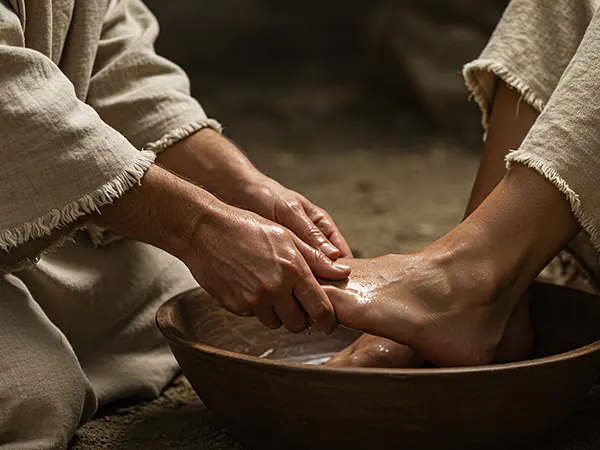
Footwashing
Bible Study by Richard T. RitenbaughThe Passover marks the beginning of a new cycle of God's festivals and holy days. In the annual service, Christians first participate in the footwashing ceremony before partaking of the unleavened bread and wine that symbolize Christ's body and blood. On the evening of Nisan 14, after the meal commonly known as the Last Supper, Jesus washed His disciples' feet and later introduced the bread and wine, establishing the order followed by the church. This ceremony supplies an object lesson in humility and mutual service, countering the disciples' disputes over greatness by showing that the one who governs must serve as the younger. Jesus performed the act with the same attitude of self-emptying that led Him to surrender the power and glory of equality with God and take the form of a man, revealing that the Creator serves even His own servants. The footwashing renews the perfect cleansing received at baptism by removing the defilement accumulated in daily life, yet the ritual remains symbolic and effective only when accompanied by genuine repentance, self-examination, and faith in Christ's sacrifice. Judas participated outwardly but derived no benefit because he lacked inward cleansing. The ceremony is therefore commanded for Christians, who are instructed to walk as Jesus walked, and those who do so receive the blessing of divine favor and satisfaction. In this shared renewal of the New Covenant, participants repent of failings, seek forgiveness, and are cleansed by God.
The Night to be Much Observed
Sermon by John W. RitenbaughThe material distinguishes Passover as the festival occurring on the fourteenth day of the first month, beginning at evening with the killing of the lamb. This event centers on two elements: the slaying of the lamb, which recalls humanity's part in the death of the Savior, and the eating of the lamb, which stresses the ongoing relationship sustained by receiving its life-giving provision. Instructions for this observance require participants to remain inside their houses until morning after applying the blood to the doorposts and lintels with hyssop. The account separates these Passover activities from those of the following night, the fifteenth, when the Israelites departed Egypt. The two cannot coincide because one requires staying indoors until morning while the other requires leaving by night. Numbers 28 confirms the separation by assigning Passover to the fourteenth and the feast to the fifteenth. Deuteronomy 16 further locates the exodus at night on the fifteenth and describes additional sacrifices offered then, distinct from the Passover lamb itself because they could come from the herd and were boiled rather than roasted. These distinctions fit a larger pattern established centuries earlier. The 430-year period ending on the fifteenth traces back to the covenant God confirmed with Abraham on that same date, marked by circumcision and sealed by the promise of land and descendants. The exodus on the fifteenth therefore fulfills and expands that covenant, now extended to the entire nation at Sinai through blood ratification. The material presents Passover and the Night To Be Much Observed as two festivals with separate emphases within one continuous divine plan: the former highlighting the Savior's death and relational sustenance, the latter highlighting the active departure from bondage that keeps the relationship alive and growing.
Listen To The Lamb's Voice
Sermon by Mark SchindlerThe sermon develops its message about the Passover by drawing on the story of Ben-Hur to illustrate the need for careful self-examination as the observance approaches. The film shows how a man consumed by hatred and the desire for vengeance is ultimately transformed when he hears the voice of Jesus Christ and responds by releasing the sword of revenge. This narrative is presented as grasping the essence of what Christ does for His people and what their response must be. As the Passover draws near, the call is to examine the Passover Lamb closely through prayerful study and by living as He lives, so that His voice may remove every trace of hardness and unbelief. The text emphasizes that the Passover Lamb is the great High Priest who has passed through the heavens, one who sympathizes with human weakness because He was tempted in every point yet without sin. Because He resisted unto blood, those who hold fast their confession and follow His way of peace receive mercy, grace, and the healing that leads to holiness. The broader message connects this examination directly to the choice between hardening the heart through the deceitfulness of sin and heeding the voice that offers rest, forgiveness of enemies, and the peace that replaces the destructive sword of vengeance. Those who truly believe the Lamb understands their suffering and who keep His commandments are promised the abiding presence of the Father and the Son, along with the assurance that they will see the Lord.

What Does 'Examine Yourselves' Mean?
'Ready Answer' by StaffPassover is only a short time away. As Christians, we need to consider the self-examination process God's Word says we should be undergoing as the spring festivals approach. God expects us to prepare ourselves as mature Christians to rededicate ourselves to Him afresh at Passover and to put sin out of our lives diligently and actively, which is the lesson of the Feast of Unleavened Bread. We have no need to be discouraged at Passover time. It is our opportunity to reaffirm our commitment to Almighty God and renew our dedication to putting on the new man.
Eating: How Good It Is! (Part Four)
'Personal' from John W. RitenbaughThe teaching recorded in John 6 presents a figurative reference to taking the Passover. Jesus identifies Himself as the true bread from heaven whose flesh must be eaten and whose blood must be drunk if one is to possess everlasting life. This requirement points directly to the symbols of the Passover, yet the passage makes plain that far more is involved than merely consuming the bread and wine that represent His body and blood. The act signifies personally and with comprehension reconfirming acceptance of His voluntary, vicarious sacrifice, thereby taking into oneself both the death and the life of Christ. In this way the Passover becomes the appointed means by which believers assimilate the living Word, allowing His person and sacrifice to abide in them and they in Him. The same principle extends to receiving every instruction contained in God's Word and making it practical in daily conduct. Just as the Israelites in the wilderness ate manna and drank water that sustained them on their journey, so those who feed on Christ are empowered to endure to the end. The process is one of continual spiritual nourishment that produces the fruit of transformation, for without this abiding union no one can bear fruit or accomplish what God requires.